

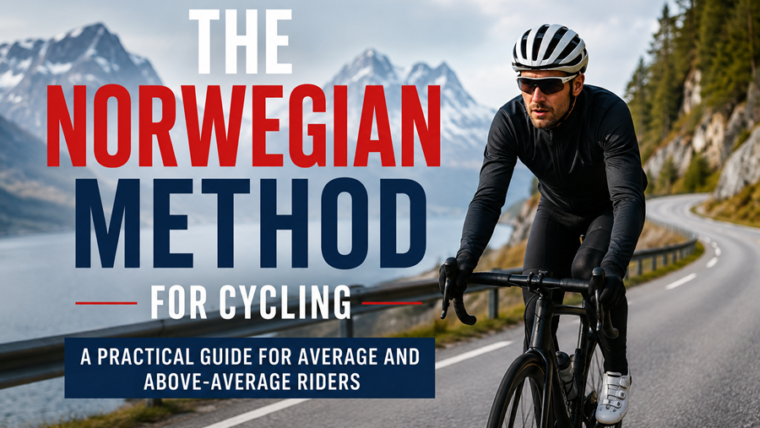
Quick Answer: The Norwegian Method is a training system built on two ideas: keep your easy days genuinely easy (below your first lactate threshold, or LT1) and keep your hard days controlled rather than maximal (at or just below your second lactate threshold, or…

Quick Answer: Progressive overload is the gradual, structured increase in training stress — intensity, duration, or frequency — that forces your body to adapt and get stronger. For cyclists, the safest approach is raising workload by roughly 5–10% every 1–2 weeks, paired with regular…

Quick Answer: Extending your cycling season means adapting your gear, ride timing, and training focus as daylight shrinks and temperatures drop — rather than shutting down in October and restarting in March. The riders who stay out longest do four things well: they layer…

Quick Answer: Your fueling needs to shift with your training phase, not just your ride length. Base phase calls for moderate, steady carbs to support high-volume aerobic work; Build phase demands precise in-ride carb intake to fuel threshold and VO2 efforts and recover between…
By James Hickman, Former USA Cycling Expert Coach
Amazon Affiliate I earn from qualified purchases Quick Answer: Muscular endurance is a cyclist's ability to sustain a strong, steady pedaling effort over long periods without fatigue setting in. The most effective way…

Quick Answer: FTP in cycling is the highest average power you can hold for about 60 minutes, and it's the number most training plans use to set your zones. Critical Power (CP) is a related but more precise metric, built from several maximal efforts…