

Quick Answer
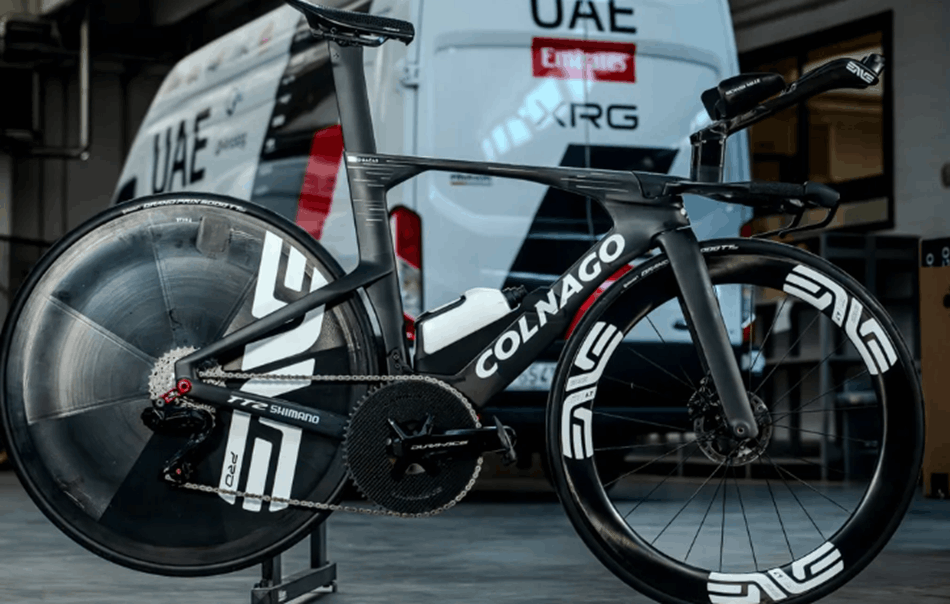
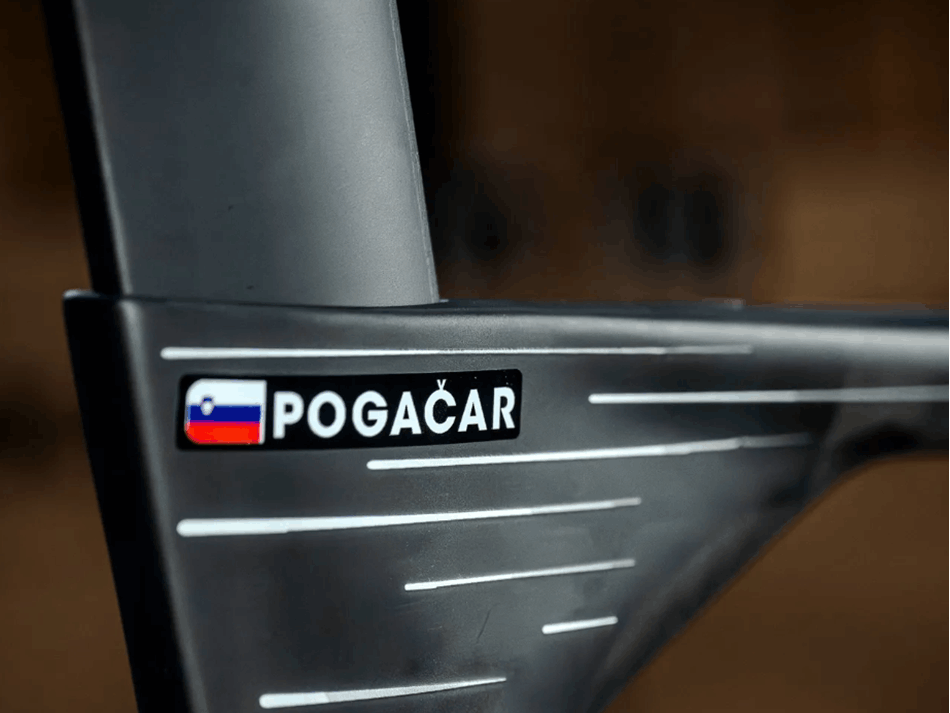
The Colnago TT2 is the 2026 WorldTour TT bike first raced by Tadej Pogačar at the Tour de Romandie prologue on April 28, 2026. The frameset — frame, fork, and seatpost — is 550 grams lighter than the TT1 it replaces and claims a 2-watt drag reduction at 50 km/h. Consumer availability begins late September 2026 in four sizes (XS–L) at $7,500 USD.
When Tadej Pogačar rolled to the start ramp at the Tour de Romandie prologue on April 28, 2026, he was on a TT bike nobody had raced before in sanctioned competition. Not a refreshed colorway — a prototype. That the Colnago TT2 made its competitive debut six weeks before the Tour de France tells you everything about UAE Team Emirates-XRG’s confidence in the platform.
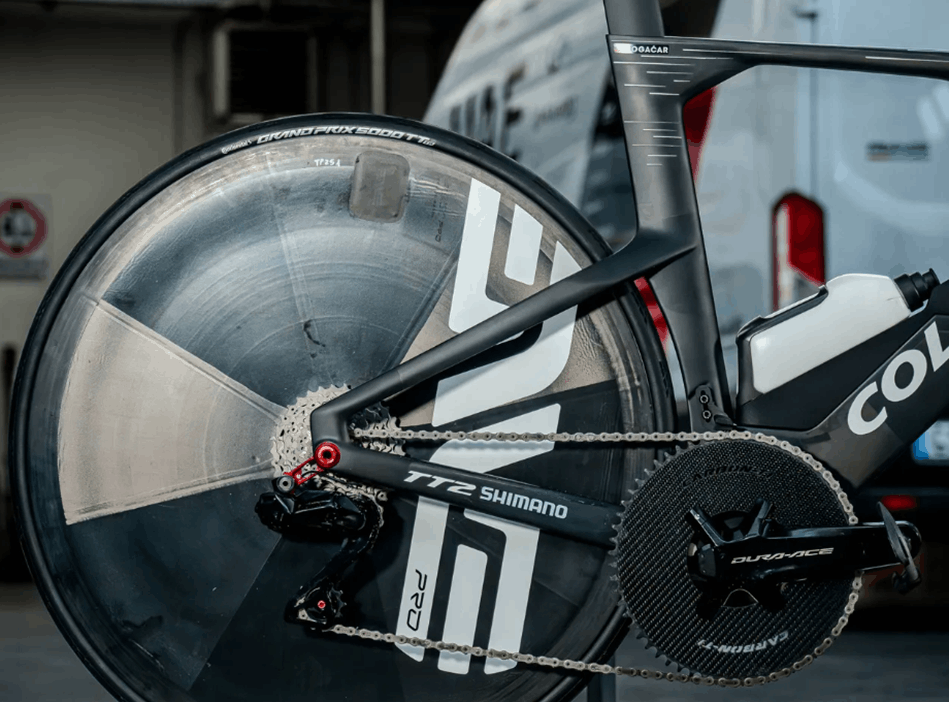 SPECIAL THANKS TO CYCLINGUPTODATE.COM FOR THE IMAGES CONTAINED IN THIS ARTICLE!
Why Replace the TT1?
The TT1 debuted at the 2022 Giro d’Italia and served as Pogačar’s TT bike through all four of his Tour victories. It was not replaced because it underperformed. It was replaced because the nature of TT racing has changed. According to BikeRadar, Colnago identified that time trial courses have become increasingly punchy and technical, with weight now a more important factor than in prior years. The 2026 Tour de France makes the case directly: Stage 1 is a team TT finishing on a steep climb to Barcelona’s Olympic stadium, and Stage 16’s individual TT climbs 500 meters before the finish. The flat, straight TT drag strip is no longer the standard.
Pogačar validated this in 2025, when he chose a stripped road bike over the TT1 for a mountain time trial stage. The TT2 is the engineering answer to that decision.
550 Grams: Where the Weight Went
The headline number is a 550-gram reduction in frame kit weight — frame, fork, and seat post combined in size S. As reported by BikeRadar, the unpainted size S frame kit claims 2,240 grams, down from 2,785 grams on the TT1. A complete TT2 build with extensions and a disc rear wheel can be configured to hit the UCI 6.8 kg limit.
The savings are distributed throughout the TT bike. The fork alone drops from 530g to 393g by switching from the TT1’s bayonet-style fork to a conventional steerer. The head tube narrows to 32mm at its waisted section — near the minimum possible with a 25mm steerer — with brake hose routing moved to the rear of the head tube to achieve that dimension. Tube junctions were simplified, and carbon layup was revised using techniques from the Y1Rs road bike program, including embedded pressure sensors that mapped real-world aerodynamic loads to identify where material could be removed without losing stiffness.
Upgrading your own TT bike setup? Competitive Cyclist carries a full range of time trial and triathlon bikes from the top WorldTour brands.
Aerodynamics: Secondary Goal, Real Gains
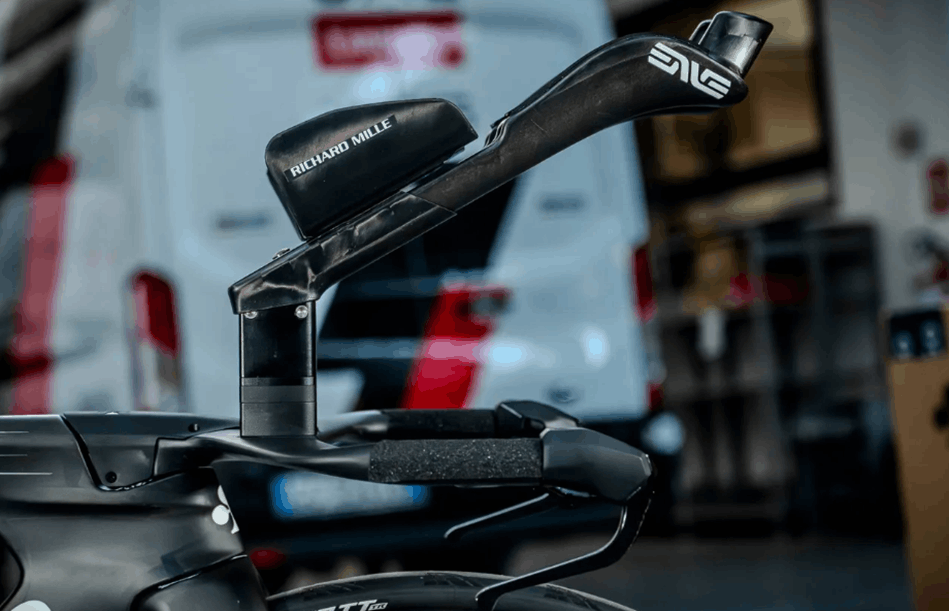
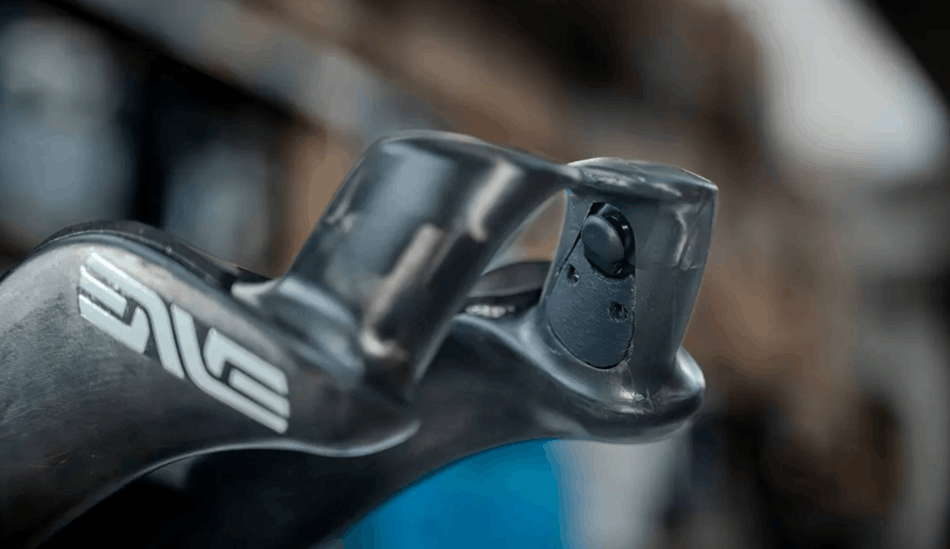
Weight was the primary objective. Aerodynamics were secondary — but measurable. Colnago claims 2 watts of drag reduction at 50 km/h as a weighted average across yaw angles. In stand-alone wind tunnel testing at 54 km/h, Bikerumor reports the TT2 registered 66.7 watts weighted average drag, versus 68.5W for the TT1 and 74.9W for a reference competitor. The aero work focused on the front end: a slimmer head tube with softened trailing edges, a redesigned fork with a wider crown and shallower blades, and a 360mm center-to-center base bar — narrower than the TT1’s — to reduce frontal area through technical sections. Updated tube profiles also improve crosswind stability, limiting the rider corrections that bleed speed on exposed courses.
Sizing and Specification
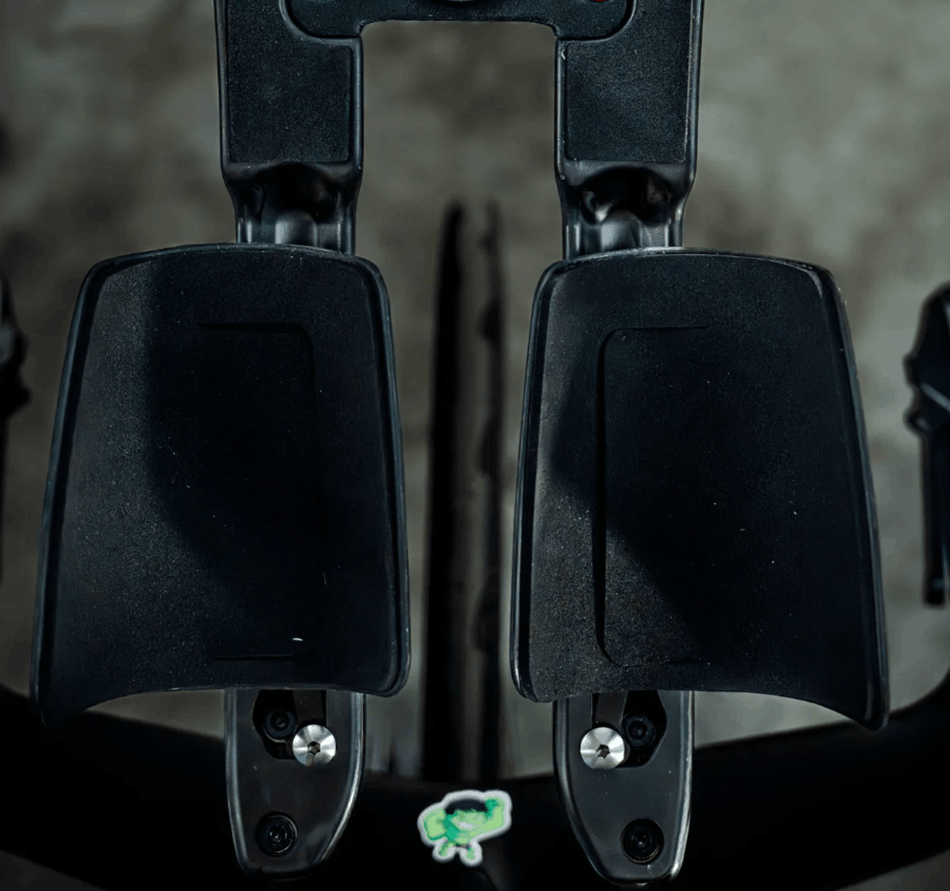
The TT2 is offered in four sizes — XS, S, M, L — with the S geometry carried over unchanged from the TT1. The XS addresses smaller riders who were poorly served by the TT1’s size range, an important consideration given UAE Team ADQ’s involvement. M and L frames receive taller front ends, increasing stack without relying on spacers. Tyre clearance expands to 30mm on a modern wide rim. The TT bike runs a BSA 68 bottom bracket, accepts a UDH-compatible rear hanger, and accommodates up to a 70-tooth chainring for 1x flat-course builds. A 2x drivetrain is also compatible.
For TT cockpit components including aero bars and extensions, Competitive Cyclist stocks the helmets and accessories used by the pros.
Race Debut and Tour de France Plans
Pogačar finished sixth at the Romandie prologue on the prototype — a 3.2 km course that was anything but flat. His teammate Ivo Oliveira placed third on the existing TT1. The result was functional validation, not a headline-chasing performance. Pogačar won the overall race that week. According to Cyclingnews, the production TT2 made its official debut at the Tour de Suisse individual TT before targeting both key Tour de France time trial stages.
Pricing and Availability
The TT2 frame kit — frame, fork, seat post, base bar, Colnago Aero Bottle System with Fidlock, bottle cage, headset, and bearings — is priced at $7,500 / £6,499 / €7,040, matching the TT1 at launch. Available through Colnago’s global dealer network from late September 2026. Note: UAE Team Emirates-XRG races an Élite aero bottle in a custom Colnago cage due to sponsorship; the full Colnago bottle system ships with every consumer TT2 frame kit.
What the TT2 Signals About TT Bike Design
The TT2’s development priorities are a clear read on where the discipline is heading. Pure drag reduction — the dominant TT bike design brief since the 1990s — is being rebalanced against weight and handling on courses that now include climbs, descents, and technical sections. The TT bike that wins in 2026 needs to be fast on flat ground and not a liability when the road goes up. The TT2 is engineered for that reality. For amateur riders, the expanded sizing and simplified fit system address a persistent problem: purpose-built TT bikes have historically been difficult to set up correctly without professional support. Colnago’s stated goal of making the TT2 more accessible to the amateur market is built into the geometry decisions across all four sizes.
Frequently Asked Questions
What is the Colnago TT2?
The Colnago TT2 is a WorldTour TT bike developed by Colnago with UAE Team Emirates-XRG and UAE Team ADQ. It replaces the TT1 and was first raced by Tadej Pogačar at the Tour de Romandie prologue on April 28, 2026. The TT2 frameset is 550 grams lighter than the TT1 and claims a 2-watt drag reduction at 50 km/h. It is available through Colnago dealers from late September 2026 in four sizes (XS–L), priced at $7,500 USD.
How much lighter is the Colnago TT2 compared to the TT1?
The Colnago TT2 frameset — frame, fork, and dedicated seatpost — is 550 grams lighter than the TT1 in size S. The unpainted size S frame kit weighs a claimed 2,240 grams, down from 2,785 grams for the TT1. Complete TT2 builds including extensions and a disc rear wheel can be configured to reach the UCI 6.8 kg weight limit.
When will the Colnago TT2 be available to buy?
The Colnago TT2 will be available through Colnago’s global dealer network from late September 2026. The frame kit — including frame, fork, seatpost, base bar, integrated aero bottle system, headset, and bearings — is priced at $7,500 / £6,499 / €7,040 in four sizes: XS, S, M, and L.
Want a Training Plan Built Around Your FTP?
Stop guessing at your zones. Answer 7 quick questions and get a personalized FTP roadmap built around your equipment, schedule, and biggest limiter.
James Hickman is a former USA Cycling Expert-level coach who has worked with cyclists at every level, from beginners to competitive racers. He served as a coach for the Leukemia & Lymphoma Society’s Team In Training program, helping riders prepare for and complete century events. A Masters-category racer himself, he competed and earned podium finishes in Southern California events and holds a Platinum finish at El Tour de Tucson, completing the 100 miles+ in under five hours.
Related Reading
Sponsored · Competitive Cyclist
We are an Amazon affiliate and earn from qualified Amazon purchases with no cost to you. This is for ANY product that you purchase through our links. We are also an affiliate for Competitive Cyclist and JensonUSA. This way we can provide you with competitive pricing and products.