

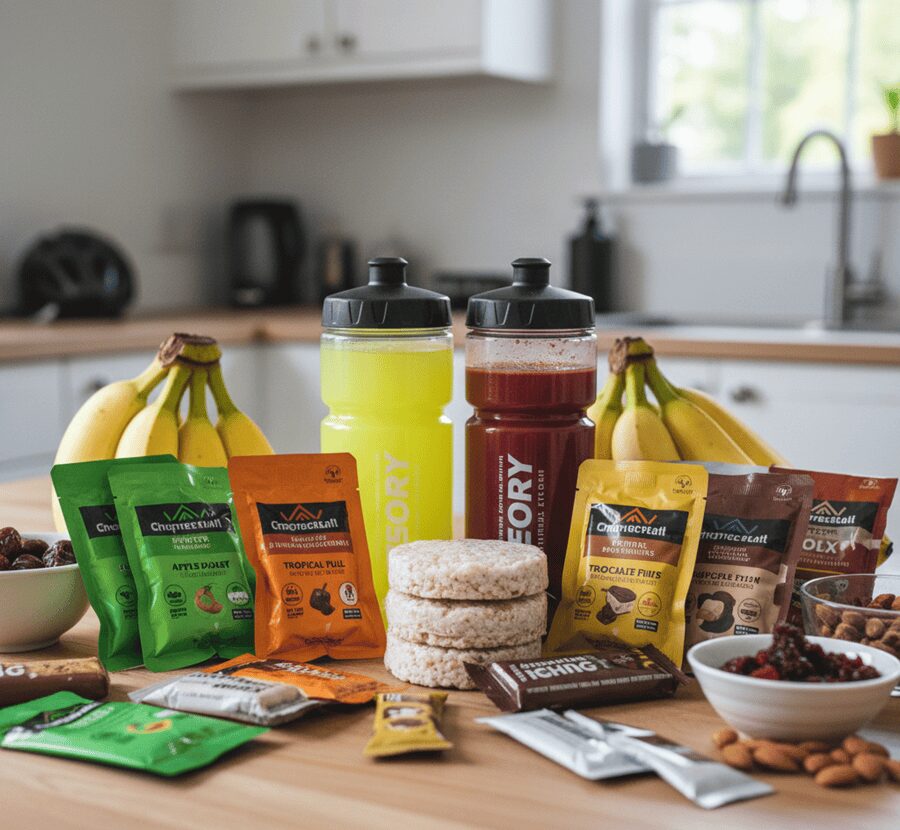
| Quick Answer: Your fueling needs to shift with your training phase, not just your ride length. Base phase calls for moderate, steady carbs to support high-volume aerobic work; Build phase demands precise in-ride carb intake to fuel threshold and VO2 efforts and recover between hard sessions; Peak/Taper phase requires a deliberate carb-loading protocol and dialed-in race-day timing. Matching intake to phase — not eating the same way year-round — is what actually moves your FTP number. |
| By James Hickman, Former USA Cycling Expert Coach Amazon Affiliate I earn from qualified purchases |
Why “Eat the Same Way Year-Round” Undermines FTP Progress
Most cyclists periodize their training — swapping high-volume base miles for structured threshold work, then tapering into peak form — but keep eating almost exactly the same way through all three phases. That mismatch quietly caps FTP gains. In my years coaching riders through structured plans, the single most common fueling mistake I see isn’t a bad diet — it’s a static one. Riding fasted through a Build-phase VO2 session, or under-fueling a six-hour Base ride because “it’s an easy day,” both leave adaptation on the table. Below is a phase-by-phase breakdown with actual numbers you can apply, not just the general reminder to “eat enough.”
Base Phase Fueling

Daily Carb Range for High-Volume, Low-Intensity Weeks
During Base phase, most of your work sits in Zone 2, but the accumulated volume still demands real carbohydrate support — this isn’t a low-carb block. Aim for roughly 5–7g of carbohydrate per kg of bodyweight per day on high-volume weeks, scaling toward the lower end on rest days and the higher end when weekly hours climb. Protein should sit around 1.6–2.0g/kg — within the range supported by endurance-athlete protein research from Burke and colleagues — to support the connective tissue and mitochondrial adaptations Base phase is built around.
Hitting 70–90g of carbs an hour means carrying more fuel than a single bottle allows. A top-tube or frame bag from Competitive Cyclist keeps gels and chews within easy reach without breaking your position mid-interval.
Protein Timing for Aerobic Adaptation
Spread protein intake across 3–4 meals rather than back-loading it at dinner. A 20–30g dose within an hour of finishing a long Zone 2 ride supports the aerobic enzyme and mitochondrial density gains this phase is designed to produce.
Common Mistake — Under-Fueling Long Zone 2 Rides
Because Base rides feel easy, riders often treat them like they don’t need in-ride fueling. Over a 3+ hour ride, that adds up to a meaningful calorie deficit that blunts next-day training quality. This is the mistake I flag most often with athletes coming off a lower-volume off-season — they carry an off-season eating pattern into a suddenly much bigger training week. A simple guideline: for anything over 90 minutes, take in 30–40g of carbohydrate per hour, even at low intensity.
Build Phase Fueling
Carb Targets During Threshold/VO2 Intervals
Build phase is where fueling precision starts to matter for the session itself, not just recovery. On days with threshold or VO2 work, push daily carbohydrate to 6–8g/kg — a range consistent with the joint ACSM/Academy of Nutrition and Dietetics/Dietitians of Canada position stand on carbohydrate needs for moderate-to-high training loads — with extra emphasis on the 3–4 hours before the session.
In-Ride Fueling Specifics by Session Length
Rather than the generic “30–60g per hour” range still floating around, match intake to session length: 60–90 minute threshold sessions call for 45–60g/hr; 90–150 minute sessions with VO2 blocks call for 70–90g/hr; anything past 2.5 hours with intervals late in the ride can push toward 90–100g/hr. Rates above roughly 60g/hr require a glucose-fructose blend (commonly a 2:1 ratio) rather than glucose alone, since a single sugar source caps absorption well below that threshold — this multiple-transportable-carbohydrate approach is well established in Jeukendrup’s research on exogenous carb oxidation. Riders new to higher rates should build tolerance gradually in training rather than testing it for the first time in a hard session.
Dialing in higher carb rates often means mixing your own glucose-fructose blend rather than relying on standard single-sugar drink mixes. Competitive Cyclist carries a range of multi-carb formulas built for exactly this kind of in-ride fueling.
Recovery Nutrition Window Post-Hard-Session
Within 30 minutes of finishing a threshold or VO2 session, target 1.0–1.2g/kg of carbohydrate plus 25–30g of protein. This window matters more in Build phase than any other, since you’re often stacking hard sessions within 48 hours of each other.

Peak/Taper Phase Fueling
Carb-Loading Protocol — Timing, Not Just “Consider It”
Start the carb-load 36–48 hours before your event, not the night before. Target 8–10g/kg/day of carbohydrate over that window while training volume drops, shifting toward easily digestible sources (rice, pasta, low-fiber fruit) as the event approaches to avoid GI load on race morning.
Race/Event-Day Meal Timing
Eat your pre-event meal 1–4 hours out, scaling carbohydrate to the window: closer to 1g/kg if you’re eating within an hour of the start, up to 4g/kg if you have a full 3–4 hours to digest — the wider window and higher end suit harder or longer events. This 1–4 hour, 1–4g/kg framework comes directly from the ACSM/AND/DC position stand on pre-exercise fueling. Keep the meal low fat and low fiber regardless of timing to reduce GI risk. A small 20–30g carb snack in the final 30–60 minutes (banana, gel, sports drink) tops off glycogen without sitting heavy.
Avoiding GI Issues on High-Carb Days
The most common Taper-phase mistake is introducing new foods or unusually high carb loads without testing them in training first. I’ve had riders show up to an event with a new gel they’d never tried, and it’s cost them the day. Any product you plan to use on race day — gels, drink mixes, bars — should already have been used in at least two Build-phase long rides.
A Simple Way to Track If Your Fueling Matches Your Phase
Rather than guessing, log your intake against your FTP test days. Note your average daily carbohydrate intake for the week leading into each test alongside your result. Over 2–3 training blocks, patterns emerge — riders often find their best FTP test results follow weeks where intake tracked closer to the phase-specific targets above, not their “default” eating habits. This is a more actionable signal than the generic advice to “track and adjust.”
Dialing in your nutrition works best alongside accurate baseline numbers — if you haven’t recently reassessed your FTP, that’s a good place to start before adjusting your fueling strategy.
FAQ
How many carbs per hour for a 90-minute threshold session?
Aim for 45–60g of carbohydrate per hour for a 90-minute threshold session, leaning toward the higher end if the intervals are dense or back-loaded late in the ride. At the top of that range, use a glucose-fructose blend rather than glucose alone.
Should I eat differently on rest days during Build phase?
Yes — drop daily carbohydrate intake to roughly 4–5g/kg on full rest days during Build phase, while keeping protein steady at 1.6–2.0g/kg to support ongoing recovery.
Do I need to carb-load for a century, not just a race?
A century ride benefits from the same 36–48 hour carb-loading window as a race, especially if you’re targeting a fast finish time rather than just completing the distance.
Not sure where to focus your training?
Answer 7 quick questions and get a personalized FTP roadmap built around your fitness level, available training time, and biggest limiter — in about two minutes.
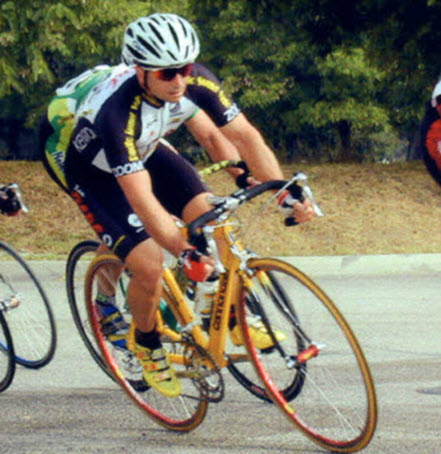
James Hickman is a former USA Cycling Expert-level coach who has worked with cyclists at every level, from beginners to competitive racers. He served as a coach for the Leukemia & Lymphoma Society’s Team In Training program, helping riders prepare for and complete century events. A Masters-category racer himself, he competed and earned podium finishes in Southern California events and holds a Platinum finish at El Tour de Tucson, completing the 100 miles+ in under five hours.
 Training |  Training |  Nutrition |
Sponsored · Competitive Cyclist
We are an Amazon affiliate and earn from qualified Amazon purchases with no cost to you. This is for ANY product that you purchase through our links. We are also an affiliate for Competitive Cyclist and JensonUSA. This way we can provide you with competitive pricing and products.