

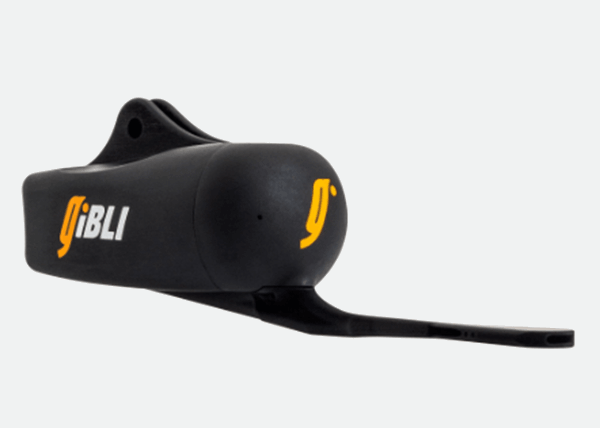
 SPECIAL THANKS TO GIBLITECH.COM FOR THE IMAGES CONTAINED IN THIS ARTICLE!
| Quick Answer: The GiBLI G10 is a handlebar-mounted sensor that estimates your aerodynamic drag (CdA) in real time by pairing its own wind-speed and yaw readings with data from a direct-force power meter you already own. In July 2026, USA Cycling named GiBLI its Official On-Bike Aerodynamic Sensor Partner through the 2028 Los Angeles Olympic Games. The sensor lists at $1,692 CAD, requires a power meter to function, and is not certified waterproof. It is a legitimate tool for riders who have already exhausted cheaper position gains, not a first purchase. |
| By James Hickman, former USA Cycling Expert Coach | Updated July 2026 Amazon Affiliate I earn from qualified purchases |
Aerodynamic drag is the largest force working against you above roughly 20 mph. Every rider knows this. What almost no rider has had is a way to measure it outside a wind tunnel, which means most of us have been guessing about position, helmet choice, and clothing for our entire racing lives.
A small Canadian company just received a significant endorsement for its attempt to solve that. Here is what the GiBLI G10 actually does, what the USA Cycling partnership does and does not prove, and whether it belongs in your training.
What USA Cycling Actually Announced
In July 2026, USA Cycling named GiBLI Tech Inc. its Official On-Bike Aerodynamic Sensor Partner. The agreement runs from immediately through the 2028 Olympic Games in Los Angeles, and the technology will be deployed inside the federation’s high-performance program. You can read the full announcement on the USA Cycling site.
According to the federation, its high-performance staff and athletes put the G10 through an extensive evaluation before the deal was signed. Jim Miller, USA Cycling’s Chief of Sports Performance, framed the value in terms every racer understands, noting that “speed in cycling is defined by small margins” and that the system lets his staff quantify aerodynamic performance and act on it immediately.
GiBLI is not new to federation and team work. The company announced a partnership with Cycling Canada in 2021, and in March 2026 became the official aerodynamic performance partner of UCI WorldTour team Lotto-Intermarché.
Why a Federation Partnership Is Not the Same as Independent Validation
This distinction matters, and it is the part most coverage will skip. A national governing body testing a product internally and then signing a sponsorship agreement is meaningful evidence. Those staff are competent and they have wind tunnel access to check the sensor against. But the results of that evaluation are not public, and a partnership is a commercial arrangement as well as a technical endorsement.
As of this writing I could not locate a peer-reviewed validation study of the G10 specifically. That is not an accusation. It is a gap, and it is worth naming. Treat the USA Cycling news as a strong signal, not as published proof.
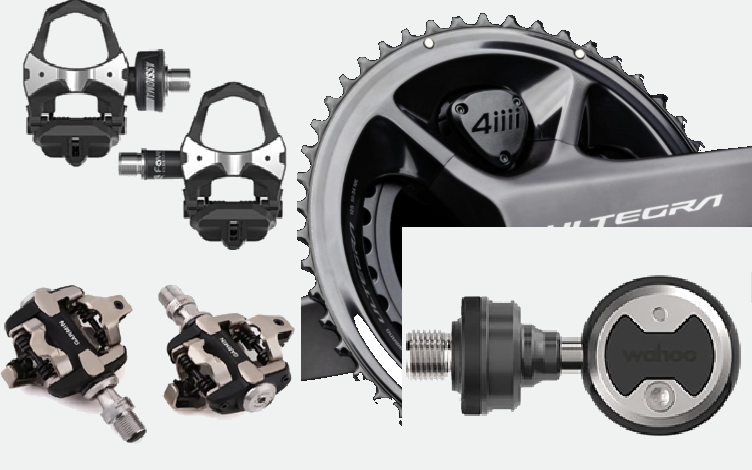
If you don’t already run one, the Garmin Rally RS210 is a dual-sided pedal-based power meter that pairs directly with the G10’s ANT+ input.Is and Why It Is the Metric That Matters.
CdA is the product of your drag coefficient and your frontal area, expressed in square meters. It describes how efficiently you and your bike move through air. A typical road rider on the hoods might sit somewhere around 0.35 to 0.40. A well-drilled time trialist can get into the low 0.20s.
Because drag scales with the square of velocity while the power required to overcome it scales with the cube, small reductions in CdA return disproportionate speed at racing pace. This is the entire argument for aero equipment, and it is also why the metric is worth measuring rather than assuming.
Getting Faster Without Getting Stronger
Raising your FTP by five percent takes months of consistent, well-structured work. Lowering your CdA by five percent might take an afternoon of position experiments and a helmet swap. Both produce speed. Only one of them is available to a rider who is already training near their ceiling, which describes most Masters racers I have coached.
Why Wind Tunnels Have Gated This Data
Tunnel sessions are expensive, geographically limited, and produce results under steady, clean airflow that does not resemble a windy Tuesday on your training loop. They are the gold standard for controlled comparison, but they are a snapshot, not a training tool. Nobody rides a tunnel every week.
How the G10 Measures Drag
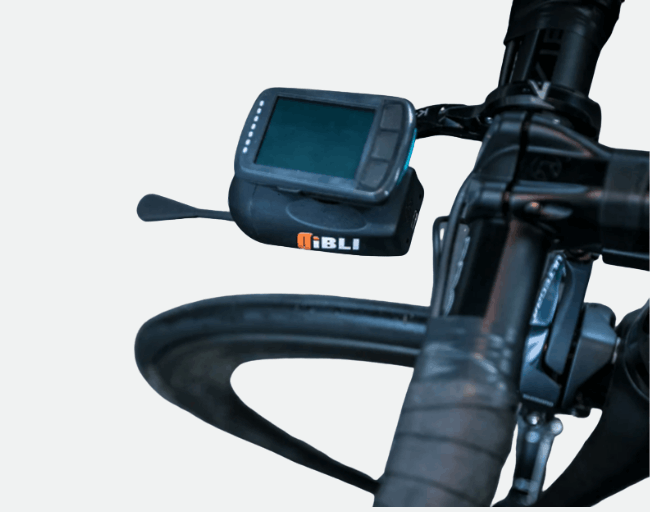
The sensor mounts at the front of the handlebars and reads the air the rider is actually moving through. It combines that with power, ground speed, and rider and bike mass to solve for CdA continuously.
The Wind Port
GiBLI’s central technical claim is a rejection of borrowed aviation hardware. A pitot tube works well on an aircraft partly because at those speeds a crosswind barely registers as a fraction of the apparent wind. On a bicycle it registers constantly. The company’s answer is a wind port it designed from scratch for the speed range and yaw range cyclists actually ride in, and it argues that resolving wind direction — not just magnitude — is what separates a real-world CdA figure from a laboratory approximation. GiBLI lays out the design rationale on its G10 product page.
Yaw and Crosswind: The Hard Problem
This is where on-bike sensors succeed or fail. A 12 km/h crosswind is a substantial fraction of the apparent wind for a rider moving at 40 km/h, and your CdA changes considerably as yaw angle changes. GiBLI states that measuring crosswind is a hard requirement for producing real-world CdA rather than a refinement, which is why the sensor measures wind direction and not just wind speed.
Development and Wind Tunnel Work
The wind port geometry came out of Computational Fluid Dynamics modeling combined with Particle Image Velocimetry testing. Calibration work has been done in several wind tunnels, with GiBLI citing the University of Alberta and Silverstone facilities, using sweeps of plus and minus 30 degrees of yaw across a range of wind speeds. The company has also run the sensor at Catesby Tunnel in Northamptonshire, a former rail tunnel repurposed for aerodynamic testing.
The Indirect Measurement Caveat
The G10 does not measure drag force. It measures the inputs and solves for drag, which means the answer inherits every assumption in the equation. Rolling resistance, drivetrain losses, elevation change, and combined system mass all feed the calculation. Get your Crr figure wrong and your absolute CdA number will be wrong too.
Practically, this matters less than it sounds. If you are comparing two helmets on the same bike, same tires, same course, same session, the assumption errors are largely constant and cancel out. Repeatability is what you need for equipment testing. Absolute accuracy is what you need for bragging on forums. Do not confuse the two.
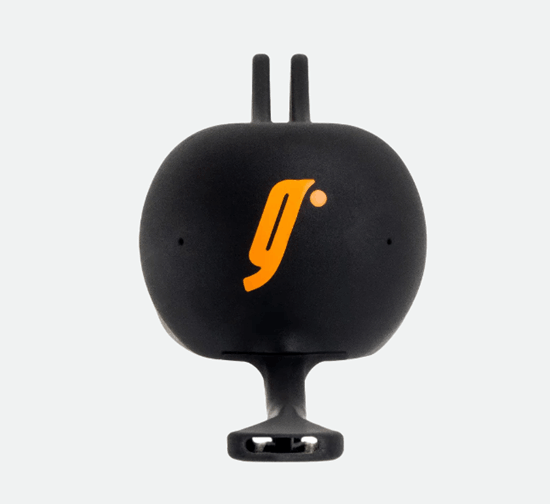
Hardware, App, and What You Need to Own First
The G10 requires a direct-force power meter to operate. GiBLI states this emphatically, and it is the buying decision for most riders. If you do not already run a crank, spider, or pedal-based meter, budget for one before you budget for this.
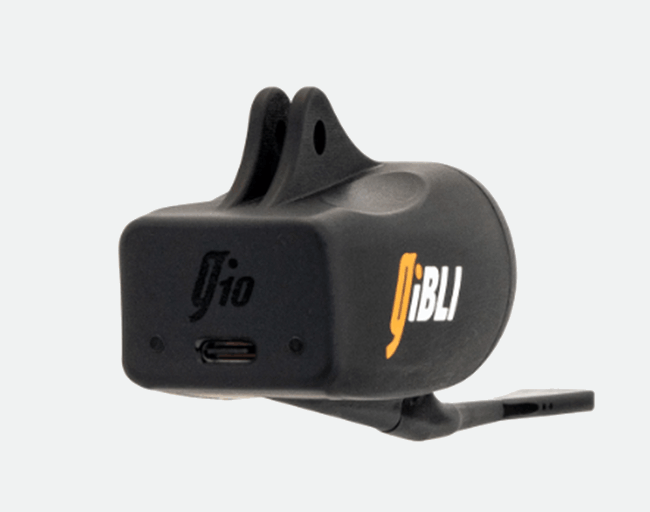
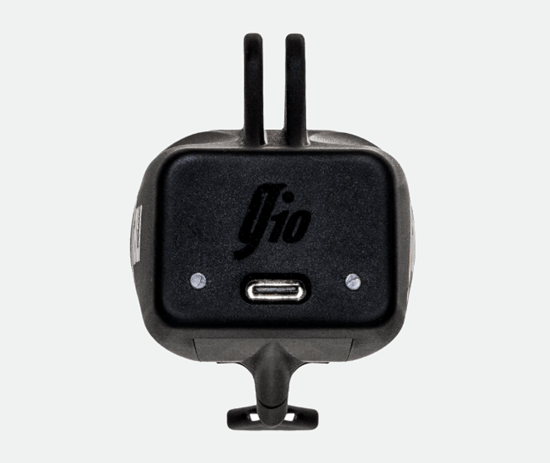
The unit carries a high-accuracy onboard GPS, which handles speed outdoors without a separate sensor. Indoor velodrome use does require a speed sensor. It communicates over ANT+ and Bluetooth and will pair with heart rate, cadence, and speed devices alongside the power meter. Additional features include motion-triggered wake-up and detection of passing vehicles and braking events. Early published figures from a 2021 Cycling Industry News interview put the unit at 98 grams with a claimed ten-hour battery life. Treat those as dated and confirm current specs before purchase. It is not certified waterproof.
Garmin Integration
This is a genuine improvement over the product’s early years. GiBLI now publishes a Connect IQ data field that displays live CdA on a Garmin head unit or watch. At launch the sensor was app-only, which meant looking at a phone mid-effort, a real limitation for anyone testing in an aero position.
Running an older Garmin without Connect IQ support? The Garmin Edge 840 supports the G10’s live CdA data field out of the box.
The App
The iOS and Android app provides live CdA plus cloud-based post-ride analysis, with deeper reporting available on desktop. It includes ride history, a bike garage for tracking multiple setups, rider profile, and a sensor levelling routine. That last one matters, since mounting angle affects readings. The test comparison tool takes two runs and calculates the time saved over a given distance and the power required for a given speed, which is the format that actually communicates a change to an athlete.
Price, Contents, and Availability
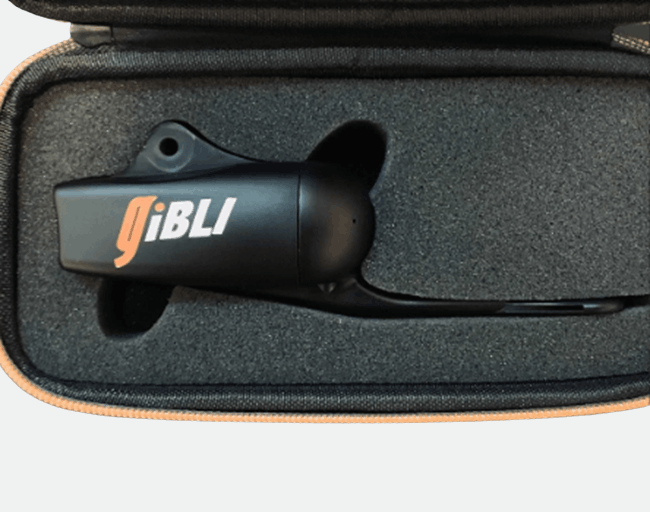
The G10 lists at $1,692 CAD direct from GiBLI with free shipping. Import duties and taxes are the buyer’s responsibility and will vary by country. US buyers should check the current converted price rather than relying on any figure quoted in an article. The box includes a carrying case, a USB to USB-C charging cable, and a cleaning kit, the last of which is not decorative, since a fouled wind port is a corrupted measurement.
Supply has been the persistent complaint. Enthusiast forums spent much of 2024 and 2025 noting that stock was effectively unavailable. Recent listings show small batch quantities with published ship dates, which suggests production is running but limited. If you want one, watch for a batch rather than assuming it will be in stock when you decide.
Before you spend on drag measurement, make sure the equipment you are measuring is worth optimizing. A well-fitted aero helmet and a proper skinsuit deliver more return per dollar than almost anything else on this list. Competitive Cyclist carries the aero apparel and helmet options most riders should sort out before adding a sensor to the cockpit.
Where the G10 Sits in the Aero Sensor Market
GiBLI is not alone in this category, and the competing approaches differ in ways that affect what you get.
| System | Method | Power Meter Needed | Published Price |
|---|---|---|---|
| GiBLI G10 | Wind port, indirect | Yes, direct force | $1,692 CAD |
| Aerosensor | Dual-side pressure probe plus pitot, indirect | Yes | Approx. £779 |
| Notio Aerometer / Konect | Pitot, indirect | Yes | Approx. $599 USD |
| Body Rocket | Direct force at saddle, bar, pedals | Included | Approx. £2,950 |
Prices are as published by each manufacturer or in review coverage at various dates and should be verified before purchase. Aerosensor and Notio figures come from Cycling Weekly’s Aerosensor review; the Body Rocket figure from BikeRadar’s first ride.
What the Peer-Reviewed Research Says About This Category
No published study covers the G10. But there is a body of work on comparable indirect sensors, and it is worth reading carefully, because the results are less uniformly positive than the marketing in this category suggests.
Indoor velodrome, trained amateurs. Valenzuela and colleagues (2020) tested 15 trained cyclists on the Notio Konect across three positions: upright, aero on the bars, and optimized aero with a time trial helmet. Six one-minute trials per position, compared against the Track Aero System and Martin’s validated mathematical model. Notio returned an intraclass correlation coefficient of 0.92 and correlated well with the established systems. It reliably distinguished upright from aero. It could not distinguish aero from optimized aero, meaning it missed the helmet change entirely. The authors explicitly called for outdoor validation.
Indoor velodrome, elite riders. Kordi and colleagues (2022) tested the same device with elite track cyclists, including world champions, and reported sensitivity around 0.002 square meters with a coefficient of variation of 0.47 percent. That is dramatically better than the amateur result. The likely explanation is not that the device changed, but that elite riders hold a position far more consistently over a sustained effort. The rider is a variable in the measurement.
Outdoors. This is the sobering one. Bruez and colleagues (2023), presenting at the Science and Cycling Congress in Bilbao, ran an incremental protocol using progressively larger disks to create known drag changes. They measured Notio’s sensitivity at 4.5 percent and its reliability at 8 percent under outdoor conditions. For comparison, the Aeroscale service they tested alongside it returned 0.5 percent and 1 percent respectively.
Direct-force systems. Hopker and colleagues (2025) validated the Body Rocket system, which measures force at the rider’s contact points rather than solving for drag. In wind tunnel and indoor velodrome conditions it produced a mean coefficient of variation of 1.67 percent, an ICC of 0.99, and typical error of 0.004 square meters. The authors note that outdoor validation, with variable wind and elevation, remains to be done.
The pattern across all of it: these devices are generally good at telling you whether a large change helped. Their ability to resolve small equipment differences depends heavily on the environment and on how consistently the rider holds position. Outdoor performance is meaningfully worse than indoor performance. That is a limitation you can design a testing protocol around, but it is not a limitation you can ignore.
What We Still Do Not Know About the G10
No independent published resolution figures. No third-party crosswind accuracy testing. Enthusiast forum consensus is broadly positive on the G10’s crosswind handling relative to competitors, but that is anecdote, not data. GiBLI’s awards, which include a EUROBIKE Start-Up Award, a Taipei Cycle d & i Award, and recognition from the STA Group Sports Technology Awards, reflect design and commercial promise rather than measurement validation.
If GiBLI’s crosswind approach is as good as the company argues, the outdoor gap identified in the Bruez work is exactly where it should show up. That study has not been run on the G10. Until it is, the honest position is that the sensor is promising and well-endorsed but not independently characterized.
Manufacturer Claims Worth Reading Carefully
GiBLI has publicly stated that riders working with the sensor have typically found 12 to 16 percent in savings through equipment swaps and position changes, and that riders with prior aerodynamic experience have found around 5 percent. In triathlon contexts the company has referenced savings of 10 to 15 minutes over a long-course bike leg.
These are the company’s own figures, drawn from working with its own customers. They are not implausible for a rider who has never optimized anything, and they are not what an experienced time trialist should expect. A published test-ride account in Canadian Cycling Magazine described the sensor resolving a 0.007 CdA difference between a time trial helmet vent cover on and off. If that is repeatable, it is meaningfully finer resolution than what the published Notio literature shows in amateur hands.
A Realistic Expectation
If you already race a fitted TT position in a decent helmet and skinsuit, expect to find refinements measured in single-digit watts, not double-digit percentages. That is still worth having in a 40k time trial. It is not the transformation the marketing implies.
How You Would Actually Test With One
Protocol Basics
Use a flat, closed or low-traffic course. Run out-and-back repeats to average out wind and any residual grade. Test in the calmest conditions you can find, which usually means early morning. Warm your tires before the first run and keep pressure constant across the session.
Control Your Variables
Change one thing per run. Same kit, same bottles, same helmet strap position, same hand placement. Ride the same speed on every run, because your position changes subtly with effort. Log everything, because you will not remember run six accurately by run eleven.
Sources of Error to Watch
Shifting wind during a long session is the biggest one. Elevation drift on courses that are not truly flat is second. Guessed rolling resistance values corrupt absolute numbers, though not comparisons. And position creep, where you get tired and your head comes up, will quietly contaminate late runs. The research on rider consistency is clear enough on this point that it is worth keeping sessions under about 90 minutes.
Test Order
Position first, because it is free and it is the largest lever. Then helmet, which is the biggest equipment return per dollar. Then clothing. Wheels last, because they matter least and cost most.
Who Should Buy This, and Who Should Not
Good fit: time trialists and triathletes whose results turn on sustained aerodynamic efficiency. Track riders with velodrome access, where the published research shows these sensors perform best. Coaches with a client roster, where the cost amortizes across many athletes and where the operator learns the protocol well enough to trust the numbers.
Poor fit: riders without a direct-force power meter, since the sensor simply will not function. Riders without access to a safe, flat, repeatable test venue, because a sensor you cannot use properly is an expensive handlebar ornament. Road racers whose results are decided by tactics and climbing rather than sustained solo speed. And anyone who has not yet done the free work.
The Cheaper First Steps Most Riders Skip
Get a proper bike fit from someone who understands aero positions and can keep you sustainable in one. Wear a skinsuit that actually fits rather than a jersey. Stop wearing a loose jacket in a time trial. Get your hands and forearms into a narrower position and hold it. Shave the obvious drag off your setup: no dangling straps, no bar bag, no unnecessary bottle cage on a TT bike.
These cost little or nothing and will return more than a sensor will tell you about a marginal helmet difference. The G10 is a tool for the rider who has already done all of that and wants to know what is left.
The Bottom Line
The USA Cycling partnership is real news and a legitimate credibility signal. A federation with wind tunnel access tested this sensor against its own standards and committed to it through an Olympic cycle. That is not nothing.
What it is not is a substitute for independent validation, which the G10 still lacks. The published research on comparable devices shows real limitations outdoors and real dependence on rider consistency. Buy this if you race against the clock, already own a power meter, have a venue to test on, and will invest the time to build a disciplined protocol. Skip it if any one of those four is missing.
Sources
- USA Cycling. GiBLI and USA Cycling Partner to Bring Real-Time Aerodynamic Intelligence to Race Preparation. July 2026.
- Valenzuela PL, Alcalde Y, Gil-Cabrera J, Talavera E, Lucia A, Barranco-Gil D. Validity of a novel device for real-time analysis of cyclists’ drag area. Journal of Science and Medicine in Sport, 2020; 23:421–425. doi:10.1016/j.jsams.2019.10.023
- Bruez A, Caillou Q, Dugenne T, Peron T, Perrey S, Lambolais T. Reliability and Sensitivity of the Notio Device and Aeroscale Service to Quantify Cyclists’ Drag Coefficients in Outdoor Conditions. Journal of Science and Cycling, 2023; 12(2):18–20.
- Kordi M, Galis G, van Erp T, Terra W. Reliability and Sensitivity of the Notio Konect to quantify Coefficient of Drag Area in Elite Track Cyclists. European Journal of Sport Science, 2022; 22:774–779. doi:10.1080/17461391.2021.1891296
- Hopker J, et al. Validity and Reliability of an On-Bike Sensor System for the Determination of Aerodynamic Drag in Cycling. European Journal of Sport Science, 2025. doi:10.1002/ejsc.70098
- GiBLI Tech Inc. G10 Sensor product information and store listing.
- Cycling Industry News. The GiBLI G10, aero testing for the masses? December 2021.
- Canadian Cycling Magazine. GiBLI, your personal wind tunnel.
- Cycling Weekly. Aerosensor review.
- BikeRadar. Body Rocket first ride.
- Catesby Projects. GiBLI Tech test real-time aerodynamic sensor at Catesby Tunnel.
Frequently Asked Questions
Does the GiBLI G10 replace a wind tunnel?
No. A wind tunnel measures drag force directly under controlled airflow and remains the reference standard. The G10 estimates CdA from wind, power, and speed inputs in real-world conditions. Its advantage is repeated access, not superior accuracy. Think of it as a tool you can use weekly rather than a replacement for a tool you use once.
Do I need a power meter to use the GiBLI G10?
Yes, and specifically a direct-force power meter such as a crank, spider, or pedal-based system. GiBLI states this as a hard requirement. The sensor cannot calculate CdA without a power input, so estimated-power systems will not work.
Does the G10 work indoors on a velodrome or trainer?
Indoor velodrome use is supported, but requires a separate speed sensor because the onboard GPS will not function reliably indoors. Indoor trainer use is not the intended application, since there is no airflow to measure.
Can I see CdA on my Garmin head unit?
Yes. GiBLI publishes a Connect IQ data field that displays real-time CdA on compatible Garmin cycling computers and watches. This was added after the product’s initial app-only launch.
How much does the GiBLI G10 cost?
The G10 lists at $1,692 CAD direct from GiBLI with free shipping included. Import duties and taxes are additional and vary by destination country. US and international buyers should check the current converted price at checkout.
Is the GiBLI G10 waterproof?
No. GiBLI explicitly states the product is not certified waterproof. Plan your test sessions accordingly and do not leave it mounted in wet conditions.
Has the GiBLI G10 been independently validated?
Not in published peer-reviewed literature, as far as I have been able to determine. GiBLI reports wind tunnel calibration at the University of Alberta and Silverstone, and USA Cycling conducted internal testing before its partnership, but neither dataset is public. Published validation studies exist for competing devices such as the Notio Konect and Body Rocket, not for the G10.
What is the difference between the G10, Aerosensor, and Notio?
All three are indirect systems that estimate CdA from wind measurement combined with power and speed data, and all three require your own power meter. They differ in probe design, crosswind handling, price, and head unit integration. The G10 is the most expensive of the three and emphasizes its proprietary wind port design for crosswind accuracy. Body Rocket takes a fundamentally different approach, measuring force directly at the rider’s contact points, and includes its own power meter pedals.
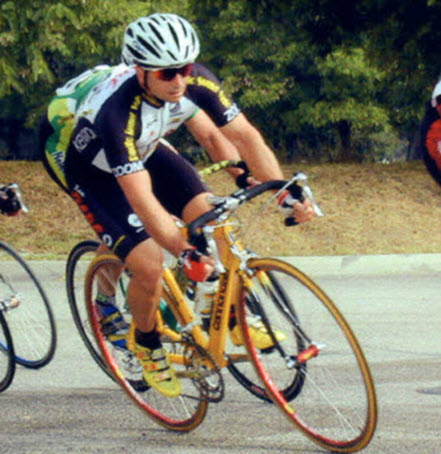
James Hickman is a former USA Cycling Expert-level coach who has worked with cyclists at every level, from beginners to competitive racers. He served as a coach for the Leukemia & Lymphoma Society’s Team In Training program, helping riders prepare for and complete century events. A Masters-category racer himself, he competed and earned podium finishes in Southern California events and holds a Platinum finish at El Tour de Tucson, completing the 100 miles+ in under five hours.
Related Reading
 Technical |  |  |
Sponsored · Competitive Cyclist
We are an Amazon affiliate and earn from qualified Amazon purchases with no cost to you. This is for ANY product that you purchase through our links. We are also an affiliate for Competitive Cyclist and JensonUSA. This way we can provide you with competitive pricing and products.