

Quick Answer:
Modern cycling power meters now offer dual-sided measurement, USB-C charging, seamless app integration, and pedal-based portability — delivering more accurate, actionable data than ever for cyclists at every level.
If you have been training with a power meter for a few seasons, you already know the value of objective data. But the latest generation of cycling power meters has raised the bar considerably — with improvements in accuracy, usability, and the depth of metrics available. Whether you are shopping for your first unit or considering an upgrade, here is what the current technology delivers and how it translates into smarter training.
How Cycling Power Meter Technology Has Evolved
Early power meters were expensive and limited to professional teams. Over time, measurement moved closer to the pedaling interface, accuracy improved, and prices dropped enough to make power-based training accessible to serious amateur cyclists. The current generation narrows the gap between entry-level and professional-grade units further than ever, with features that once required premium pricing now standard across mid-range models.
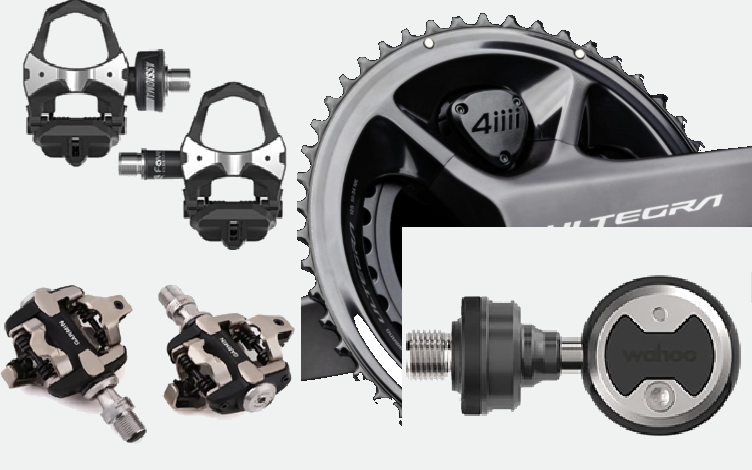
Competitive Cyclist carries a deep selection of cycling power meters from Garmin, Favero, Quarq, and more — browse the full lineup at CompetitiveCyclist.com.
Dual-Sided Power Measurement
Single-sided power meters measure one leg and double the result — a practical compromise, but one that masks left-right imbalances. Dual-sided units measure each leg independently, giving you a precise balance reading on every pedal stroke.
That data matters beyond aesthetics. A rider returning from a knee injury can track whether the recovering leg is pulling its share of the workload. A cyclist with a subtle pedaling asymmetry — often undetected for years — can use balance data to correct technique before the imbalance compounds into overuse injury. According to TrainingPeaks, recorded left-right imbalances are common even among experienced cyclists and can be meaningfully addressed with dual-sided data. As dual-sided models have become lighter and more affordable, the case for skipping single-sided measurement has grown stronger.
Smart Device Integration
ANT+ and Bluetooth dual transmission is now standard on quality power meters. That means your power data flows simultaneously to a Garmin head unit, a Wahoo computer, and a training app on your phone — without pairing conflicts or signal dropouts.
For zone-based training, real-time power feedback removes the guesswork that heart rate monitoring introduces. Power responds instantly; heart rate lags by 30 to 90 seconds. If a workout calls for Zone 4 intervals at 95 to 105 percent of FTP, a power meter tells you exactly where you are on the first pedal stroke of each effort.
Rechargeable Power Meters
Battery-powered power meters have long been the norm, but swapping coin cells mid-season is an irritant that modern units have largely eliminated. USB-C rechargeable power meters now dominate the market, with most quality units delivering 50 or more hours of riding on a single charge.
The practical benefit goes beyond convenience. Rechargeable units maintain consistent voltage throughout the battery cycle, which contributes to measurement stability. With coin cell batteries, voltage drops gradually as the battery depletes — a variable that introduces measurement drift some riders never account for.
Pedal-Based Power Meters
For cyclists who train on multiple bikes — a road setup and a gravel rig, or an indoor trainer with a dedicated wheel — pedal-based power meters offer an advantage no other form factor can match: they move between bikes in minutes with no recalibration.
Current pedal-based systems have closed the accuracy gap with crank and spider-based units. According to Cycling Weekly‘s testing, top pedal-based models deliver accuracy within one percent — on par with premium crank-based systems. Models from Favero and Garmin offer dual-sided measurement, long battery life, and weatherproofing adequate for most training conditions. For a rider who wants consistent power data across every platform they ride, pedal-based is the logical choice.
Pair your power meter with a quality cycling computer to get the most from your data — Competitive Cyclist carries Garmin, Wahoo, and Hammerhead at CompetitiveCyclist.com.
How to Use Power Meter Data to Train Smarter
Hardware improvements only matter if you use the data effectively. A few principles apply regardless of which unit you ride with.
Establish your FTP first. Every power zone, every interval target, and every training stress calculation anchors to your functional threshold power. Test it accurately, retest every four to six weeks during a training block, and keep the number current. Outdated FTP data makes zone-based training imprecise.
Monitor left-right balance over time. A single ride’s balance reading means less than a trend across several weeks. Look for consistent asymmetries rather than reacting to day-to-day variation. A drift of more than five percent sustained across multiple rides warrants investigation.
Trust the number over perceived effort. One of the primary values of a power meter is that it removes subjective bias from training. On a hot day, a fatigued rider will perceive Zone 3 effort as harder than it is. The power meter does not care about conditions — it reports what you are producing.
Keep firmware current. Most power meters now update via companion app. Manufacturers regularly push calibration refinements and metric improvements. A two-minute firmware update can meaningfully improve data quality.
Related Reading
 Training |  Training |  Training Cycling Strength Training: Build Power, Prevent Injury, Ride Faster |
Not Sure How to Use Your Power Data?
Take the free FTP quiz and get a personalized training plan built around your numbers.
Frequently Asked Questions
Do I need a dual-sided power meter?
Not necessarily. Single-sided power meters are accurate for tracking overall power output and training zones. Dual-sided measurement adds value if you are recovering from injury, want to diagnose a pedaling asymmetry, or simply want the most complete data picture available. If budget allows, dual-sided is the better long-term investment.
Are pedal-based power meters as accurate as crank-based units?
Yes, at the quality level that matters for training. Current dual-sided pedal power meters from established manufacturers measure within one to two percent accuracy — the same tolerance as premium crank and spider-based systems. The portability advantage of pedal-based units is real, and accuracy is no longer a meaningful trade-off.
How long do rechargeable power meters last on a charge?
Most current rechargeable units deliver 50 to 100 hours per charge depending on the model and transmission mode. A rider logging ten hours per week can typically go four to eight weeks between charges. Actual runtime varies with temperature, transmission frequency, and whether the unit uses ANT+ only or simultaneous ANT+ and Bluetooth.

James Hickman is a former USA Cycling Expert-level coach who has worked with cyclists at every level, from beginners to competitive racers. He served as a coach for the Leukemia & Lymphoma Society’s Team In Training program, helping riders prepare for and complete century events. A Masters-category racer himself, he competed and earned podium finishes in Southern California events and holds a Platinum finish at El Tour de Tucson, completing the 100 miles+ in under five hours.
The Performance Setup: Coach’s Essentials
Precision data is the foundation of every successful training block. These are the three pillars of a professional setup.
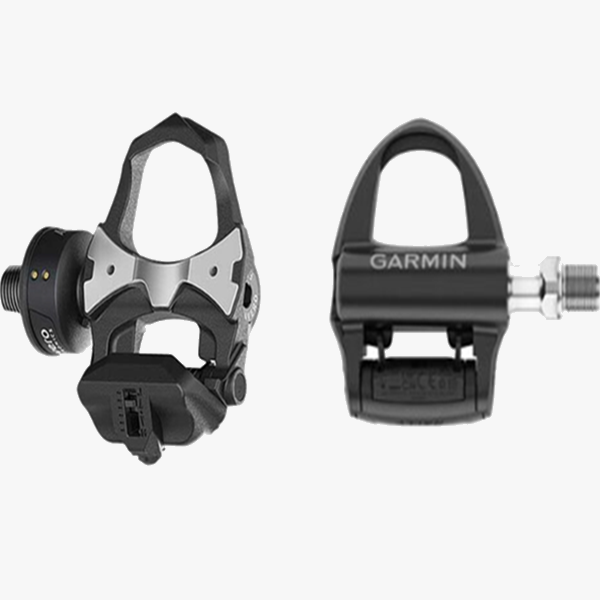
Power Measurement
Accuracy is vital for FTP results. The Favero Assioma Duo provides dual-sided data, while the Garmin Rally offers a reliable Shimano-compatible entry.
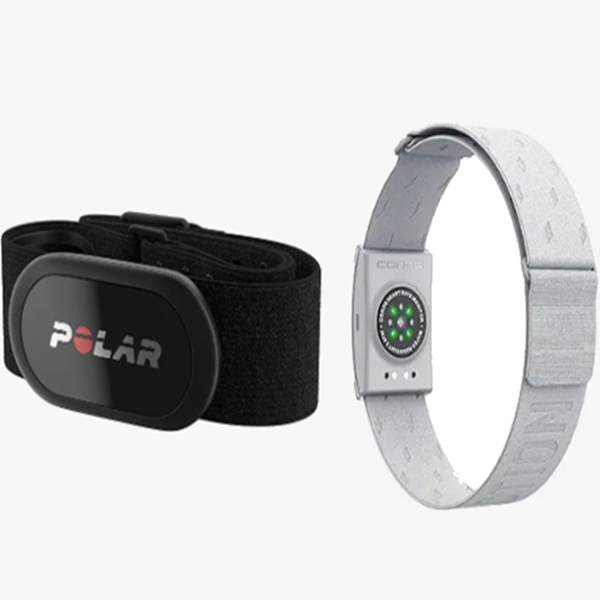
Heart Rate Precision
Map your training zones correctly with the Polar H10 chest strap—the industry standard—or the COROS Armband for added comfort.
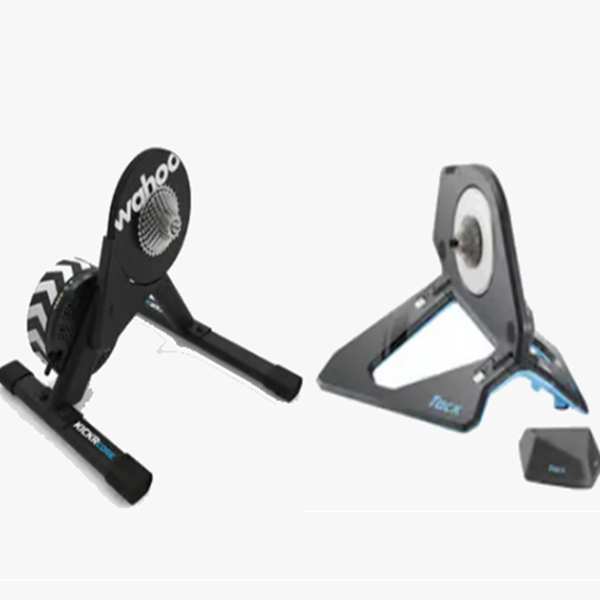
Indoor Training
Testing indoors removes variables. The Wahoo KICKR CORE is stable and quiet, while the Tacx NEO 2T offers calibration-free precision.
We are an Amazon affiliate and earn from qualified Amazon purchases with no cost to you. This is for ANY product that you purchase through our links. We are also an affiliate for Competitive Cyclist and JensonUSA. This way we can provide you with competitive pricing and products.