

Quick Answer: FTP testing measures your functional threshold power to set accurate training zones. Most cyclists should repeat FTP testing every 4-6 weeks during a focused training block, which gives the body time to adapt and show measurable gains. Testing more often risks fatigue masking real fitness improvements.
What Is FTP Testing?
FTP testing is a maximal cycling effort used to estimate functional threshold power—the highest power output you can sustain for roughly one hour, measured in watts. The result sets your power training zones. If your FTP is inaccurate, every workout built on those zones is mis-targeted: easy rides drift too hard, and threshold intervals fall below threshold.
Three protocols are common. The 20-minute test takes your average power over a 20-minute maximal effort and subtracts about 5%. The ramp test increases resistance until failure and estimates FTP from your final minutes. A field test uses a known outdoor course. All three work; the rule is to pick one and stay with it so results remain comparable over time.
How Often Should You Do FTP Testing?
For most cyclists in a structured training block, retest every 4-6 weeks. During general base or maintenance phases, every 6-12 weeks is sufficient.
The 4-6 week window exists because physiological adaptations—aerobic development and threshold changes—take roughly three to six weeks to register as measurable power. Testing weekly mostly captures day-to-day fatigue and noise rather than real fitness. A test also costs training time: it requires freshness beforehand and recovery afterward, so over-testing eats into the work that actually drives improvement.
When to Retest Outside the Schedule
Some situations call for an off-schedule test. After illness or a layoff, retest and expect a lower number—this is normal. Reset your zones to the new figure and avoid chasing pre-break results. Also retest after a major event, an injury, or a significant change in training focus. Avoid testing during a taper or a heavy fatigue week, when results will understate your true fitness. This also applies to any mental stress points at work or family obligations.
How to Get Accurate FTP Testing Results
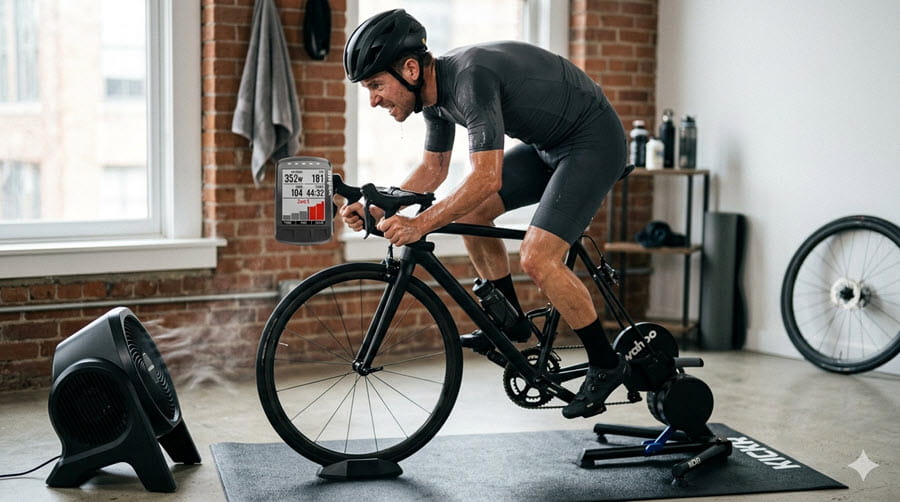
Consistency is what makes FTP testing useful. Be rested: an easy or de-load week before the test can lift your result by 3-7% compared with testing under fatigue. Standardize your conditions—same trainer, same warm-up, same time of day, same fueling. Eat a carbohydrate-focused meal three to four hours beforehand, and for indoor tests, run a fan to manage heat, which otherwise inflates heart rate and shortens your effort.
Reliable numbers also depend on reliable equipment. A consistent power source—a quality smart trainer or power meter—removes a major variable from your testing, so the change you see reflects fitness, not gear. Consider a quality smart trainer like the Wahoo KICKR CORE 2 for repeatable indoor numbers. Finally, never compare results across different protocols; a ramp test and a 20-minute test are not interchangeable.
What to Do After FTP Testing
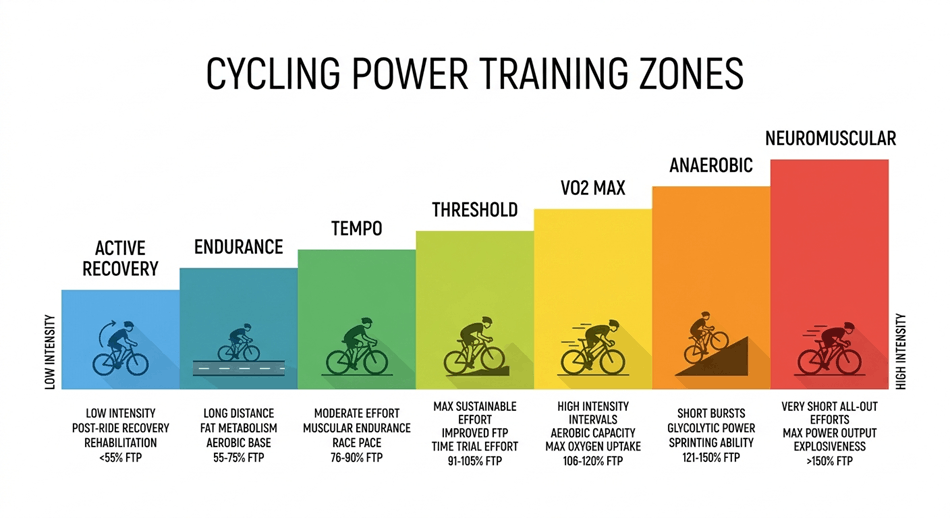 Cycling power training zones as a percentage of FTP. After FTP testing, recalculate these zones so each workout targets the right intensity. (Note: these are power-based zones; heart-rate zones from the Karvonen formula are calculated separately.)
Your result tells you what to change.
If FTP went up: Recalculate your power zones immediately so your workouts stay correctly targeted.
If FTP stalled: A plateau usually means you need more volume or a new training stimulus rather than simply more intensity. Confirm you tested rested, then adjust the block.
If FTP dropped: Assess recovery, illness, or accumulated fatigue before pushing harder. A lower number under fatigue is information, not failure.
Common FTP Testing Mistakes
Avoid these errors: testing too often and mistaking fatigue for lost fitness; comparing tests done under different conditions or protocols; updating your training but never updating your zones; and chasing last season’s number after a break. Each one quietly degrades training quality. If you’re unsure where to start, find your training focus first, then build a testing schedule around it.
Frequently Asked Questions
How often should I do FTP testing?
Every 4-6 weeks during a focused training block, and every 6-12 weeks during general base or maintenance training.
What is the best FTP testing protocol?
The 20-minute test and the ramp test are the most common. Both are reliable—pick one and use it consistently so your results stay comparable.
Should I redo FTP testing after time off?
Yes. Expect a lower number, reset your training zones to it, and avoid comparing the result to your pre-break fitness.
Want a Training Plan Built Around Your FTP?
Stop guessing at your zones. Answer 7 quick questions and get a personalized FTP roadmap built around your equipment, schedule, and biggest limiter.
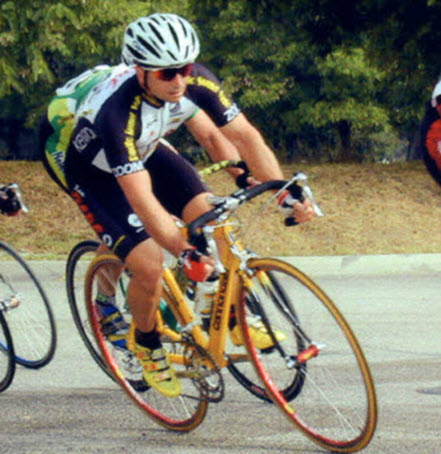
James Hickman is a former USA Cycling Expert-level coach who has worked with cyclists at every level, from beginners to competitive racers. He served as a coach for the Leukemia & Lymphoma Society’s Team In Training program, helping riders prepare for and complete century events. A Masters-category racer himself, he competed and earned podium finishes in Southern California events and holds a Platinum finish at El Tour de Tucson, completing the 100 miles+ in under five hours.
Sponsored · Competitive Cyclist
We are an Amazon affiliate and earn from qualified Amazon purchases with no cost to you. This is for ANY product that you purchase through our links. We are also an affiliate for Competitive Cyclist and JensonUSA. This way we can provide you with competitive pricing and products.