

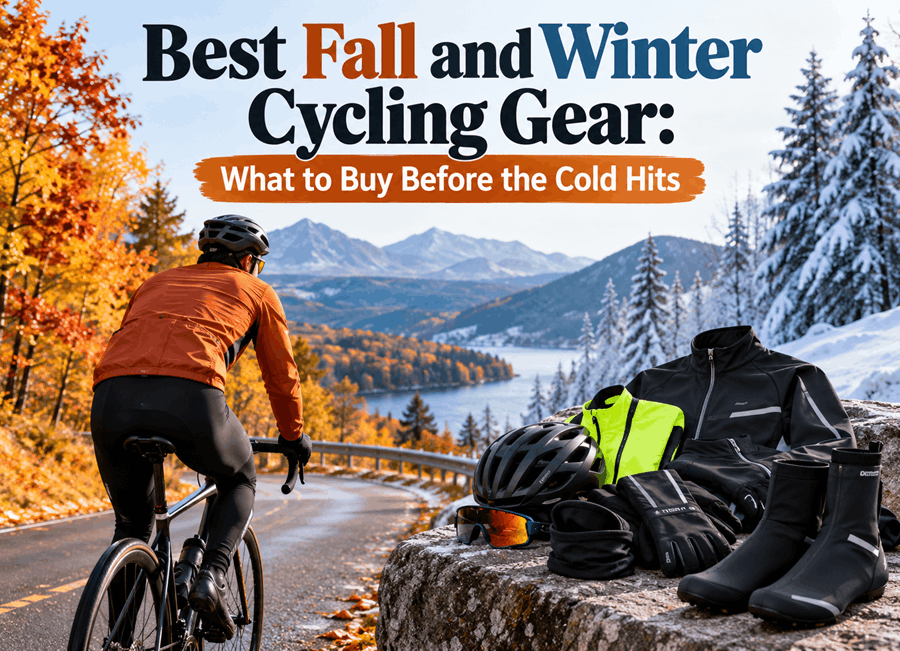
| Quick Answer: Cold and wet riding is comfortable if you dress in layers, run tougher and slightly wider tires, and add lights for the shorter days. A waterproof shell, thermal gloves and reliable lights give you the biggest improvement per dollar. Everything below can be ordered on Amazon, with a budget and a splurge pick for each category. |
By James Hickman, former USA Cycling Expert-level coach and Masters-category racer
Budget vs. Splurge: The Short List
If you just want the picks, here they are. The rest of the guide explains why each one earns its spot and how to use it. We are an Amazon affiliate: We earn from qualified purchases
| Category | Budget Pick | Splurge Pick |
|---|---|---|
| Tires | Continental Gatorskin | Continental GP5000 AS TR |
| Rain Jacket | BALEAF Cycling Rain Jacket | Showers Pass Elite 111 |
| Gloves | Aerynx Winter Cycling Gloves | Pearl Izumi AmFIB Lobster |
| Front Light | Cygolite Dash Pro 600 | Knog Blinder 1000 |
| Rear Light | Cygolite Hotshot | Garmin Varia RTL515 (radar) |
| Base Layer | Under Armour ColdGear | Smartwool Merino |
| Fenders | SKS Raceblade Pro (clip-on) | SKS Germany S-Blade Mudguard |
Why Your Gear Matters More Right Now
Fall is when most riders lose fitness, and it rarely happens because they stop caring. It happens because a 45-degree morning with wet roads feels miserable in summer kit, so the ride gets skipped. Then another. The days are shorter, so more of your riding happens at dawn or dusk. Leaves, grit and standing water turn the road edge into a puncture zone. The right gear removes each of those excuses. After years of coaching riders through the off-season, I can tell you the ones who arrive in spring fit are rarely the toughest. They’re the ones who were comfortable enough to keep riding.
What to Wear by Temperature
Use this as a starting point, then adjust for wind, rain and how hard you’re riding. A good rule is to feel slightly cool for the first ten minutes. If you’re warm standing in the driveway, you’re overdressed.
| Temperature | Upper Body | Legs and Extremities |
|---|---|---|
| 60°F and up | Short-sleeve jersey, arm warmers below 65°F | Shorts, summer gloves |
| 50–60°F | Light base layer, jersey, arm warmers, wind vest | Knee warmers, light full-finger gloves |
| 40–50°F | Base layer, thermal long-sleeve jersey or softshell | Thermal bib tights, insulated gloves, toe covers, skull cap |
| 32–40°F | Thermal base layer, softshell jacket | Thermal bibs, lobster gloves, neoprene shoe covers, wool socks, balaclava |
| Below 32°F | Everything above plus a windproof outer layer | Heaviest gloves and covers; watch for ice or move indoors |
Winter Road Tires: Tougher, Wider, Softer
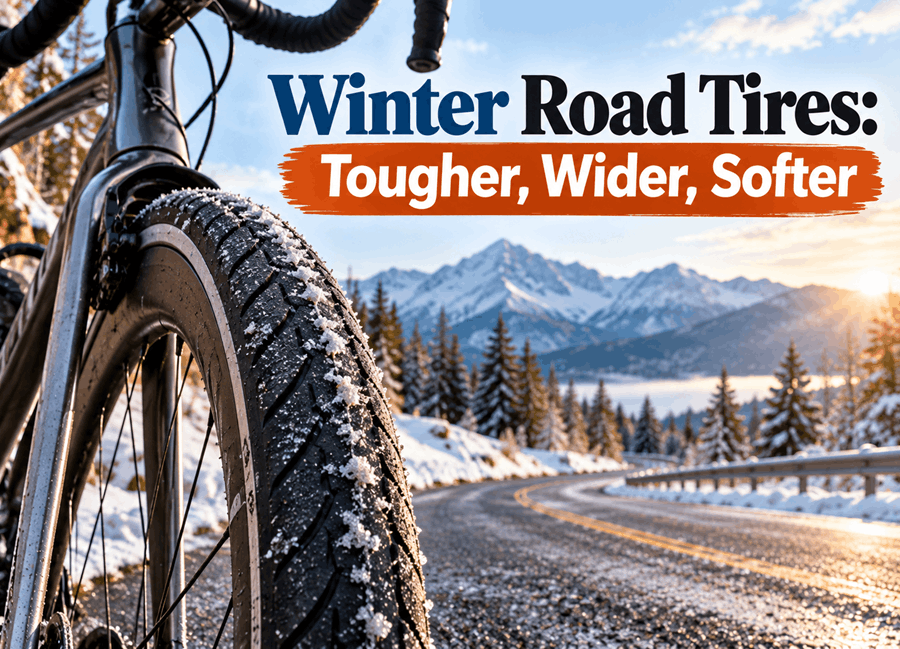
Your summer race tires are the first thing to swap. Wet roads wash glass, flint and wire into the shoulder, and fixing a flat with numb fingers in the rain is the fastest way to end a winter ride. Winter tires use a puncture-resistant belt and a grippier compound, and the weight penalty is small.
Go with 28 mm or wider if your frame allows it. The extra volume lets you run lower pressure, which gives the tire a bigger contact patch on wet pavement and a smoother ride over broken winter roads. For most riders, dropping 5 to 10 psi from your normal dry pressure is the right move in the rain.
My budget pick is the Continental Gatorskin, a long-time commuter and training favorite that is very hard to flat. It rolls slower than a race tire, but that doesn’t matter in January. If you want protection without giving up speed, the Continental GP5000 AS TR is the all-season version of the tire many of us race on. It’s tubeless-ready, grips well in the wet and is Cyclingnews’ top pick for winter riding this year.
Rain Jackets vs. Wind Vests vs. Softshells
These three pieces do different jobs, and buying the wrong one is the most common mistake I see.
A rain jacket keeps water out, but even the best ones trap some heat and sweat. Wear it when it’s actually raining, not as your default cold-weather layer. Look for taped seams, a dropped tail to block road spray and bright colors or reflective details. The BALEAF Cycling Rain Jacket packs small enough for a jersey pocket. For all-day downpours, the Showers Pass Elite 111 is built in rainy Portland and has vents that make a real difference on climbs.
A wind vest is the most underrated piece of fall kit. It blocks wind on your chest, where you feel cold first, while your back and arms still breathe. It folds to the size of a gel and handles cool mornings that warm up by noon.
A softshell jacket is what you actually want for dry, cold rides between about 30°F and 45°F. It blocks wind, sheds light drizzle and breathes far better than a rain shell, so you don’t end up soaked from the inside.
The Layers That Actually Make the Difference
Heavy jackets get the attention, but comfort in the cold comes from the pieces touching your skin and covering your hands, feet and head.
Base layers move sweat away from your skin. Wet skin is cold skin, even under a good jacket. A synthetic like Under Armour ColdGear is affordable and dries fast. Smartwool Merino costs more, stays warm when damp and doesn’t hold odor.
Thermal bib tights keep your knees covered, which matters more than comfort. Cold knee joints and tendons are an injury risk, and I’ve always told the riders I coach to cover their knees below about 60°F.
Gloves decide whether a ride is pleasant or awful. Fleece-lined ROCKBROS thermal gloves are a solid budget choice down to around 40°F. Below that, the split-finger design of the Pearl Izumi AmFIB Lobster keeps fingers together for warmth while still letting you shift and brake.
Socks and shoe covers go together. Cycling shoes are built to vent air, which is great in July and terrible in December. Merino socks plus neoprene shoe covers will add more warmth than any upgrade to your jacket.
Headwear finishes the system. A thin skull cap or headband fits under your helmet, and a Buff neck gaiter can be pulled over your mouth and nose on cold descents.
Lights and Visibility
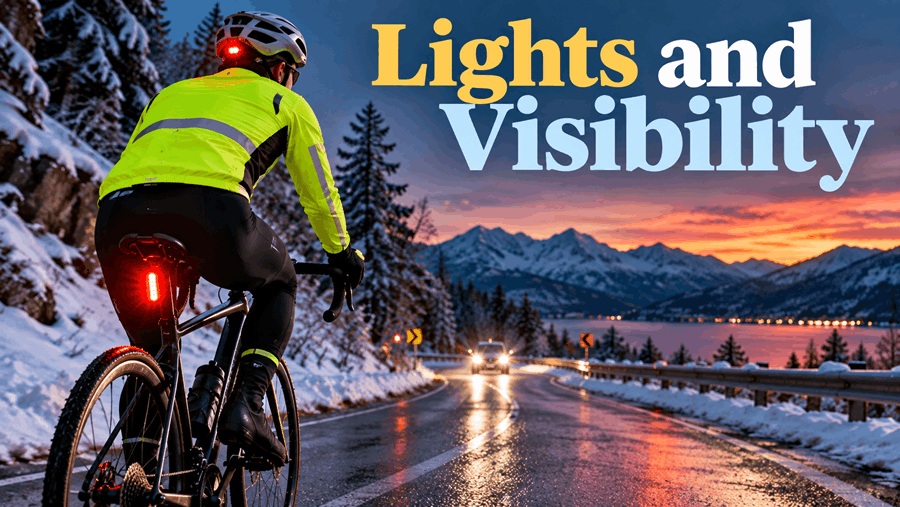
Shorter days mean more rides in low light, and low sun in fall is exactly when drivers struggle to see cyclists. Run a front and rear light on every ride, day or night. A flashing daytime mode is visible from far greater distances than you’d expect and uses little battery.
The Lezyne Fusion Drive Pro 600 is a budget front light with a dedicated daytime flash mode, and the Cygolite Hotshot is a bright, simple rear light with a daytime flash mode. If you want the upgrade, the Garmin Varia RTL515 adds radar that alerts your bike computer when a car is coming up behind you. It’s the single piece of safety gear I’d most like every rider to own.
Reflective details matter too. Reflective material on your ankles, shoe covers or gloves moves as you pedal, and drivers recognize that motion as a person faster than a static patch on your back.
Fenders and Wet-Weather Bike Care
Fenders keep a stripe of road grime off your back and keep your drivetrain cleaner. If you ride in a group, your friends will thank you. Clip-on SKS Raceblade Pro (clip-on) fenders fit most road bikes without eyelets. If your frame has mounts, full-coverage SKS Germany S-Blade Mudguard fenders do a much better job.
Switch to a wet lube like Finish Line Wet, which resists being washed off. After wet rides, wipe the chain, clean it with a citrus degreaser every week or two and re-lube. Check your brake pads often, too. Grit turns into grinding paste in the rain, and rim and disc pads can wear out in a few hundred wet miles.
Trainer-Season Backup
Some days just aren’t worth it: ice, sleet or dark evenings on busy roads. Have a plan instead of skipping the workout. Can’t ride outside? A smart bike trainer keeps your structured workouts going on the days the weather wins, so one bad forecast doesn’t turn into a two-week gap in your training.
Stocking Stuffer Gift Ideas
Shopping for a cyclist this season? These small gifts are all things riders actually use and rarely buy for themselves:
DeFeet Cyclismo Wool Blend or warm, dry feet. A Buff neck gaiter for cold descents. Neoprene shoe covers, the fastest fix for frozen toes. A Cygolite Hotshot rear light for daytime visibility. A All Weather lube and degreaser kit for winter chain care. A thermal skull cap that fits under a helmet.
Frequently Asked Questions About Fall and Winter Cycling Gear
What tire pressure is best in wet weather?
Drop 5 to 10 psi below your normal dry-road pressure. The lower pressure gives the tire a bigger contact patch and more grip on wet pavement. Wider tires, 28 mm and up, let you go lower without risking pinch flats.
How do I stay warm without overdressing?
Dress so you feel slightly cool for the first ten minutes. Use layers you can adjust, like a wind vest, arm warmers and a zip-front jersey, and put your money into gloves, shoe covers and a base layer. Those do more than a heavier jacket.
Are waterproof jackets worth it?
Yes, if you ride in steady rain. Being wet and cold drains energy fast. For cold, dry days, a softshell breathes better and is the more useful jacket.
Do I need lights during the day?
Yes. A flashing rear light and a front light in daytime mode make you noticeable to drivers from much farther away, especially in low fall sun, shade and overcast weather.
How do I lube my chain in winter?
Use a wet lube, which holds up to rain. Wipe the chain after wet rides, degrease it every week or two, apply one drop per roller, let it soak in and wipe off the excess.
James Hickman is a former USA Cycling Expert-level coach who has worked with cyclists at every level, from beginners to competitive racers. He served as a coach for the Leukemia & Lymphoma Society’s Team In Training program, helping riders prepare for and complete century events. A Masters-category racer himself, he competed and earned podium finishes in Southern California events and holds a Platinum finish at El Tour de Tucson, completing the 100 miles+ in under five hours.
As an Amazon Associate I earn from qualifying purchases. This article also contains affiliate links to Competitive Cyclist and JensonUSA. If you buy through these links, Paceline Bikes may earn a commission at no extra cost to you.