

By James Hickman, Former USA Cycling Expert Coach
Amazon Affiliate I earn from qualified purchases
Quick Answer: Muscular endurance is a cyclist’s ability to sustain a strong, steady pedaling effort over long periods without fatigue setting in. The most effective way to build it is with tempo rides — sustained efforts at 76–90% of Functional Threshold Power (FTP), or Zone 3, held for 30–60 minutes within a longer ride.
If your power or pace consistently fades in the second half of a long ride — on a climb, into a headwind, or simply after a few hours in the saddle — that’s often a muscular endurance limiter, not a fitness limiter in the general sense. Muscular endurance is a specific, trainable quality, and tempo riding is the most direct way to build it.
Why Muscular Endurance Matters
Muscular endurance is what separates riders who hold their power steady over a long climb from riders who fade halfway up it. It’s the quality that lets a rider stay in a fast group ride without getting shelled on a rolling section, hold a breakaway effort until the finish, or push through hours of exposed, windy terrain without their power output drifting downward.
Unlike top-end power or sprint ability, muscular endurance develops specifically through sustained, moderate-intensity work — which is exactly what tempo riding provides. It’s a distinct training target from Zone 2 endurance riding (which builds aerobic base) and from threshold or VO2 max work (which raises your ceiling). Tempo sits in between, and it’s the zone most directly responsible for how long you can hold a strong effort before your legs give out.
TrainingPeaks notes that incorporating longer Zone 3 efforts during the late base training phase is a key way to build this kind of muscular endurance and reduce fatigue late in a race.
It’s worth noting that research on the ideal split between easy, moderate, and hard training is mixed — some studies favor a more polarized approach, with the bulk of training spent at low intensity and only a small amount at high intensity, and relatively little time at tempo. That doesn’t make tempo riding wasted work; it means tempo is best used as one tool alongside endurance riding and harder intervals, not a replacement for either.
What Is Muscular Endurance in Cycling?
Muscular endurance is the ability to hold a strong, steady power output for an extended period of time. It’s distinct from raw aerobic fitness or top-end power — a rider can have a high FTP and still fade over a long stretch of rolling terrain if their muscular endurance isn’t developed. Riders who maintain steady pacing on long climbs, in sustained breakaways, or through hours of rolling terrain typically have well-developed muscular endurance.
Gear Note: Long tempo efforts often run through exposed roads in full sun. A lightweight arm sleeve with UV protection helps you stay comfortable through a 60-minute block without breaking form to adjust clothing. Available at Competitive Cyclist and Amazon. See disclosure below.
What Are Tempo Rides?
Tempo rides sit between easy endurance riding and harder interval work. The effort is firm but sustainable:
- Intensity: 76–90% of FTP, or Zone 3 on a standard power scale
- Feel: Breathing is elevated but controlled — you can speak in short sentences, not full conversation
- Duration: Sustained efforts of 30–60 minutes within the ride
Because the intensity is moderate rather than maximal, tempo work can be repeated multiple times per week without the extended recovery that harder interval sessions require.
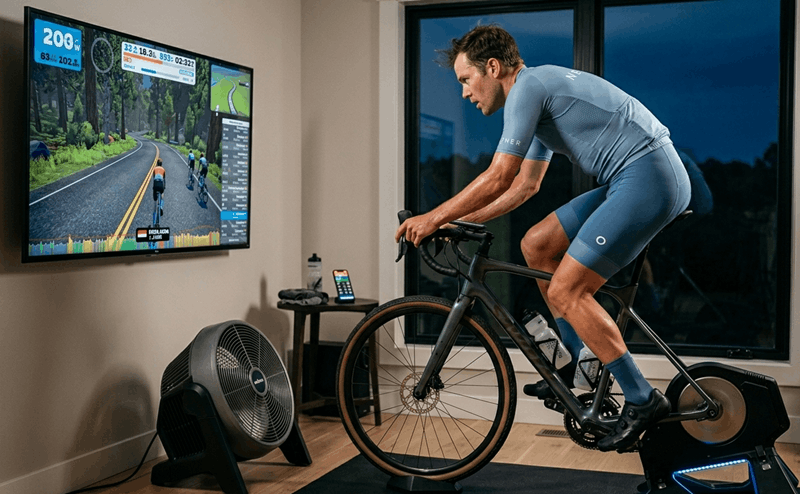
How to Structure a Tempo Ride
A simple, repeatable tempo session:
- Warm up: 15–20 minutes of easy spinning
- Tempo block: 30–60 minutes at 76–90% FTP, focused on steady power and smooth pedaling
- Cool down: 10–15 minutes easy
If you’re new to tempo work, start with shorter blocks — two 20-minute efforts with a few minutes of easy spinning between them — and build toward a single unbroken hour as your muscular endurance develops.
A power meter or heart rate monitor is the most reliable way to confirm you’re in the right zone. Without one, a simple check is the talk test: if you can hold a short sentence but not a full conversation, you’re likely in the tempo range. A common mistake is drifting too high, into sweet spot territory (88–94% FTP) or beyond, which changes both the training stimulus and the recovery required afterward. If your effort feels like it demands your full concentration to sustain, back off slightly — tempo should feel firm, not maximal.
Most riders benefit from including tempo work 2–3 times per week, spaced around easier endurance rides and any harder threshold or interval sessions. Stacking tempo directly before or after a hard interval day can blunt recovery, so it’s worth spreading these sessions through the week rather than clustering them.
For a full breakdown of power zones and how tempo fits into your overall training structure, see our FTP Power Zones guide.
Gear Note: Sustained efforts at tempo intensity increase fluid and electrolyte loss, especially in warm conditions. A reliable electrolyte mix combination helps you get through a full tempo block and recover faster afterward. Available at Competitive Cyclist and Amazon. Disclosure below.
Tracking Progress
Reviewing your ride data after each tempo session is the best way to confirm you’re training the right zone and to track whether your sustainable power is improving over time. A steady or rising average power at the same perceived effort is the clearest sign muscular endurance is developing.
For a structured, week-by-week plan built around this kind of training, our FTP Training Plans walk through the full progression.
Short on training time? The Time Crunch Fix is a free tool built for riders who need to make the most of limited hours in the saddle. Download this free app on your phone or computer and use it whenever your short on training time.
Frequently Asked Questions
What is muscular endurance in cycling?
Muscular endurance is a cyclist’s ability to sustain a strong, steady power output over an extended period without significant fatigue or power drop-off.
What power zone should I ride tempo at?
Tempo effort falls at 76–90% of Functional Threshold Power (FTP), commonly referred to as Zone 3.
How long should a tempo ride be?
A typical tempo block runs 30–60 minutes within a longer ride, following a 15–20 minute warm-up and a 10–15 minute cool-down.
How often can I do tempo rides each week?
Because tempo intensity is moderate rather than maximal, most riders can include it 2–3 times per week without excessive recovery demands.
What’s the difference between tempo and sweet spot training?
Tempo sits at 76–90% of FTP, while sweet spot training is slightly higher, generally 88–94% of FTP. Both build muscular endurance, but sweet spot work is more demanding and requires more recovery.
Related Reading
 Training |  Training |  Training |
James Hickman is a former USA Cycling Expert-level coach who has worked with cyclists at every level, from beginners to competitive racers. He served as a coach for the Leukemia & Lymphoma Society’s Team In Training program, helping riders prepare for and complete century events. A Masters-category racer himself, he competed and earned podium finishes in Southern California events and holds a Platinum finish at El Tour de Tucson, completing the 100 miles+ in under five hours.
Sponsored · Competitive Cyclist
We are an Amazon affiliate and earn from qualified Amazon purchases with no cost to you. This is for ANY product that you purchase through our links. We are also an affiliate for Competitive Cyclist and JensonUSA. This way we can provide you with competitive pricing and products.