

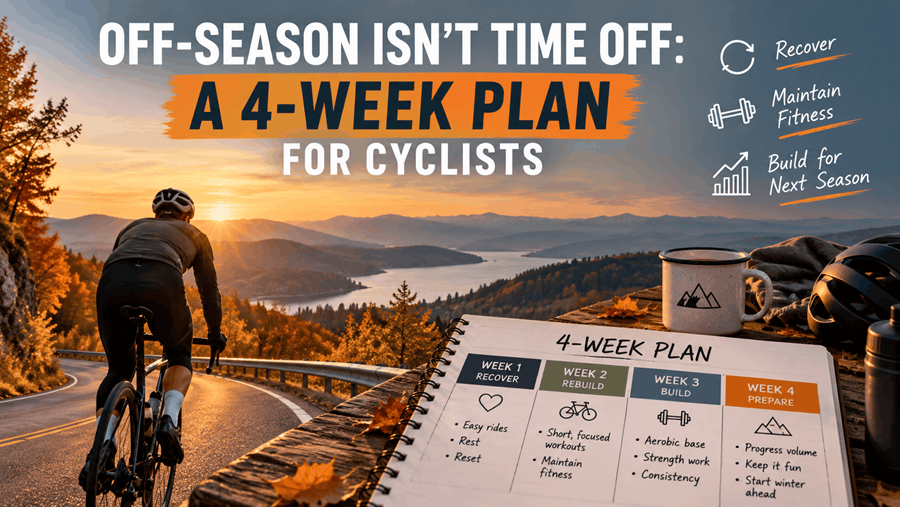
| Quick Answer: The off-season is a transition, not a break. October is the time to recover from summer racing, hold onto your fitness with short, focused workouts, and lay the aerobic and strength foundation for next season. Research on detraining shows measurable fitness loss within two to four weeks of stopping completely, so a week or two of easy riding followed by light structure beats a month on the couch.[1] Riders who use this time well start winter training ahead of everyone else. |
By James Hickman, former USA Cycling Expert-level coach and Masters-category racer
The last race is done, the group rides are thinning out, and the evenings are getting dark. For a lot of riders, that means the bike goes on the hook until January. I understand the impulse. After a long season, your body and your head both want a break. But there’s a difference between a break and walking away, and the riders who know the difference are the ones who show up in spring already fit.
Why the Off-Season Matters More Than You Think
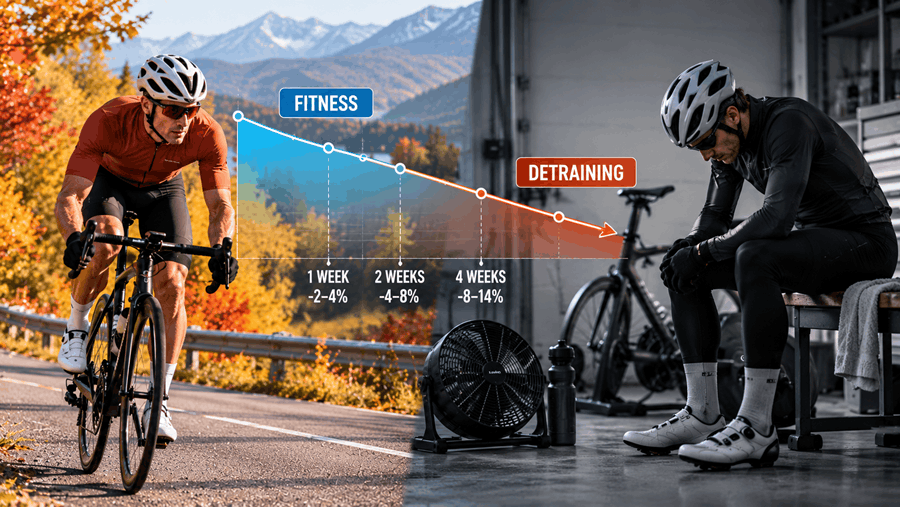
Detraining: How Fast Fitness Fades Without Structure
Fitness you built over months starts slipping in weeks. In their widely cited review of detraining, Mujika and Padilla reported that highly trained endurance athletes lose roughly 4 to 14% of their VO2max during short periods (under four weeks) of stopping training.[1] Much of that early loss comes from a drop in blood volume, which can begin within the first few days, so your heart pumps less blood with every beat.
A 2022 study in the European Journal of Sport Science put a shorter window on it. After just two weeks of detraining, 15 endurance-trained men showed significant drops in VO2max, time to exhaustion, maximal stroke volume and knee-extensor strength.[2] Two weeks. That’s a typical “I’ll get back to it after the holidays” gap.
The good news is that fitness is much easier to keep than to rebuild. Research reviewed in the same detraining literature shows that reduced training holds onto far more fitness than complete training cessation.[3] In one study of well-trained endurance athletes, a single high-intensity 35-minute session per week was enough to maintain VO2max over four weeks, although endurance capacity still fell by about 20%.[3] That’s the whole case for an off-season with some structure: a little work holds a lot of fitness.
Mental Burnout and Why a Reset Is Part of the Plan
None of this means you should keep grinding intervals in October. A season of structured training, racing and early alarms wears on you mentally as much as physically. A short, deliberate reset is part of the plan, not a failure of it. The key word is short. One to two weeks of unstructured, easy riding, or even a few days completely off the bike, lets you come back hungry instead of flat.
What Pros Actually Do in October
Professional riders do take time off after their final race, commonly a couple of weeks with little or no riding. What separates them from many amateurs is what comes next: a gradual return to easy volume, gym work, and a planned buildup into winter base. Their break has an end date. Yours should too.
The Three Goals of Your Transition Phase
Recover. Active rest and easy riding let tendons, joints and your nervous system catch up after a season of load. Ride for fun, try a different bike, hike, swim. Keep the effort conversational.
Maintain. Short, specific sessions hold fitness without needing big hours. One or two quality efforts a week is enough to keep your top end from fading while volume stays low. It’s also a good time to check your drivetrain with a chain wear checker before winter training begins.
Build. This is the time to lay down the aerobic base and the strength foundation that winter training will sit on. If you want to know how much easy riding your base actually needs, our guide to Zone 2 training for cyclists breaks it down by weekly hours.
Your 4-Week October Training Plan
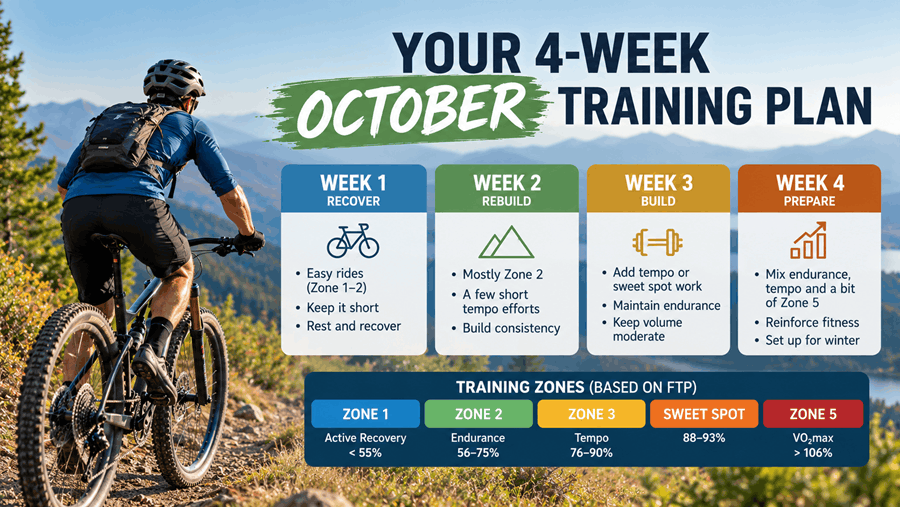
This plan assumes you’ve just finished a season of regular riding and have roughly four to seven hours a week. Zones refer to standard power zones based on your current FTP: Zone 1 is active recovery, Zone 2 is endurance, Zone 3 is tempo, sweet spot is about 88 to 93% of FTP, and Zone 5 is VO2max.
Week 1: Active Recovery
Ride three or four times, all easy, nothing structured. Take two or three full days off. If you’re mentally fried, take the whole week off the bike and stay active in other ways. The goal is to feel restless by the end of the week.
Week 2: Easy Endurance Plus One Short Intensity Session
Bring back steady Zone 2 riding and add one short session with a few hard efforts to remind your body what intensity feels like. Start your first light strength session this week.
Week 3: Add Structure
Now introduce tempo and sweet spot work. These sessions build the aerobic engine with a manageable recovery cost, which is exactly what you want heading into winter. Strength goes to two sessions a week.
Week 4: FTP Test to Set Winter Zones
Keep the week light so you test fresh, then retest your FTP. Your number has probably changed since mid-season, and winter training built on an outdated FTP is either too easy to work or too hard to sustain. Our FTP testing guide walks through the protocols. Whatever test you choose, use the same one each time so your numbers are comparable.
The Plan at a Glance
| Week | Day | Session | Duration | Zone |
| 1 | Tue / Thu | Easy spin, no data required | 30–60 min | Z1–Z2 |
| 1 | Sat / Sun | Fun ride or cross-training | 60–90 min | Z1–Z2 |
| 2 | Tue | 5 × 1 min hard, 3 min easy between | 60 min | Z5 efforts |
| 2 | Wed | Strength session 1 (light) | 30–40 min | Gym |
| 2 | Thu / Sat | Steady endurance | 60–120 min | Z2 |
| 3 | Mon / Thu | Strength sessions | 30–45 min | Gym |
| 3 | Tue | 2 × 15 min tempo | 60–75 min | Z3 |
| 3 | Wed | Easy spin | 45 min | Z1–Z2 |
| 3 | Sat | 3 × 10 min sweet spot, 5 min easy between | 75–90 min | 88–93% FTP |
| 3 | Sun | Longest endurance ride of the month | 2–3 hr | Z2 |
| 4 | Mon | Strength session (lighter load) | 30 min | Gym |
| 4 | Tue | Easy spin with 3 short openers | 45 min | Z2 |
| 4 | Thu | FTP test | 60 min with warm-up | Test |
| 4 | Sat / Sun | Endurance at your new zones | 90–120 min | Z2 |
Days not listed are rest days or optional easy spins. If you have fewer hours, keep the intensity sessions and the strength work and trim the endurance rides first.
Add Strength Training Now
Why Fall Is the Best Time to Start Lifting
Your riding volume and intensity are at their lowest of the year, which means you have the recovery room to absorb gym work. The first few weeks of lifting leave your legs sore and heavy. Better to get through that now than in March when you’re trying to nail intervals.
The research supports it. In a 12-week study by Rønnestad and colleagues, well-trained cyclists who added heavy strength training twice a week to their normal endurance training improved their 40-minute all-out performance and increased thigh muscle size without gaining body weight.[4] In a related analysis from the same group, the strength-trained riders improved their power in a 5-minute all-out effort at the end of a three-hour ride by about 7%, more than the endurance-only group.[5] That’s exactly the moment that decides group rides and races: the hard effort when you’re already tired.
Key Lifts for Cyclists
- Squat (goblet or barbell): the foundation for the whole pedaling chain.
- Romanian deadlift: hamstrings and glutes, the muscles most riders neglect.
- Bulgarian split squat or step-up: single-leg strength, which exposes and corrects left-right imbalances.
- Hip thrust: direct glute work for hip extension, the main driver of the downstroke.
- Plank and side plank: a stable trunk transfers power to the pedals and supports your back in the drops.
Two Sessions a Week
Start with two or three sets of 10 to 12 reps at a weight you could lift a few more times. Focus on form for the first two to three weeks. As winter goes on, build toward heavier loads in the 4 to 8 rep range, which is closer to what the Rønnestad studies used. Schedule lifting on easy-ride days or before rest days, never the day before a key interval session. For full programs and exercise demonstrations, see our guide to cycling strength training.
Moving Indoors: Getting Ready for Winter
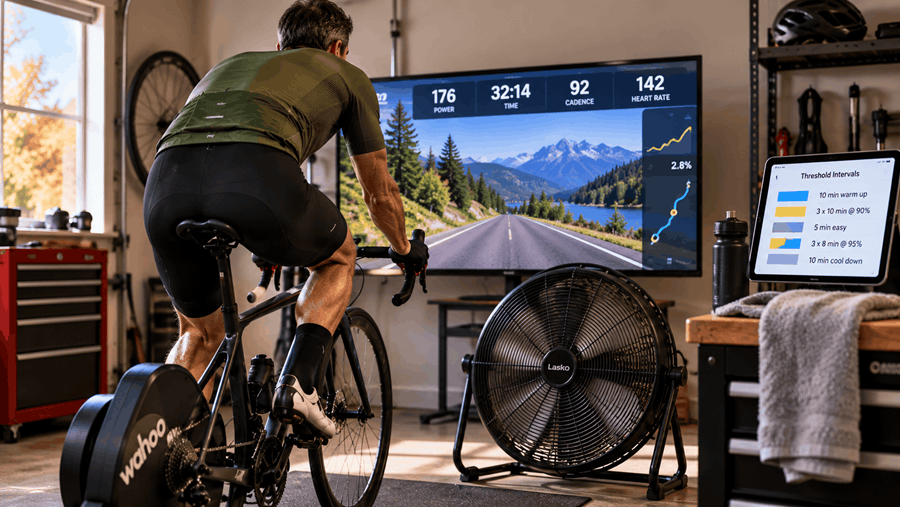
Trainer Setup and Apps
October is the time to get your indoor setup sorted before you actually need it. A smart trainer or a power meter on a basic trainer gives you controlled, repeatable workouts. Add a good fan, because overheating is the number one reason indoor sessions feel harder than they should. A training app gives you structured workouts and keeps the hour moving. Do the calibration, test your connections, and ride a session or two now so the first cold, rainy week doesn’t turn into a week of troubleshooting.
As an Amazon affiliate we earn from qualified purchases
Indoor vs. Outdoor Balance
Use the trainer for what it does best: structured intervals, tempo and sweet spot, where steady power matters more than scenery. Save outdoor time for long endurance rides when weather allows. Indoor riding is efficient. An hour on the trainer with no coasting is a more consistent workload than an hour outside. But long Zone 2 rides indoors wear on most people quickly, so mixing the two keeps you training through the winter.
Riding Outside Year-Round in the Sunbelt
If you live somewhere like Tucson, Phoenix or Southern California, winter is often the best riding of the year. That’s an advantage, but it comes with a trap: good weather makes it easy to skip the transition phase entirely and ride hard straight through. The off-season rules still apply. Take your recovery weeks, keep most of your riding easy, and use the extra outdoor time for long base miles rather than turning every weekend into a race.
Common Off-Season Mistakes
Doing nothing for weeks. A week or two off is healthy. Six weeks off means rebuilding fitness instead of building on it. Put an end date on your break before it starts.
Going hard too soon. The opposite mistake is jumping straight into VO2max blocks in October because you’re motivated. You’ll peak in January and burn out by spring. Keep intensity limited to short reminders until your base is built.
Skipping the FTP retest. Training off your mid-season number means every zone is wrong. Retest at the end of the transition and again after your base block.
Gaining excess weight. Training volume drops but habits from the season, like big post-ride meals, often stay the same. Adjust portions to match the riding you’re actually doing, and keep fueling longer and harder rides properly. A few pounds over the winter is normal. A lot of pounds is a spring project you don’t need.
Frequently Asked Questions About Off-Season Cycling Training
How long should a cycling off-season last?
For most amateur riders, the true break should last one to two weeks of easy or no riding, followed by two to three weeks of gradually increasing structure. That’s a four-week transition phase before winter base training begins. Longer breaks lead to measurable fitness losses that take time to rebuild.
How much fitness do you lose in the off-season?
It depends on how long you stop and how fit you were. Research on highly trained endurance athletes shows VO2max declines of roughly 4 to 14% during less than four weeks of complete training stoppage, with measurable drops after as little as two weeks. Reduced training preserves far more fitness than stopping entirely.
Should I do intervals in the off-season?
Yes, but keep them short and limited. One brief high-intensity session a week helps maintain your top end, and one study found a single weekly high-intensity session maintained VO2max over four weeks in well-trained athletes. Save longer, harder interval blocks for later in winter once your base is built.
When should I start base training?
Start base training after a three- to four-week transition phase, which for riders whose season ends in September or October means November. Use an FTP test at the end of the transition to set your training zones before base training begins.
Should I retest my FTP in the fall?
Yes. Your FTP has likely changed since mid-season, and your winter training zones depend on it. Test after a light week so you’re fresh, use the same protocol you’ll use for future tests, and retest after your base block to track progress.
References
- Mujika I, Padilla S. Detraining: loss of training-induced physiological and performance adaptations. Part I: short term insufficient training stimulus. Sports Medicine. 2000;30(2):79-87. View abstract
- Two weeks of detraining reduces cardiopulmonary function and muscular fitness in endurance athletes. European Journal of Sport Science. 2022. View summary
- García-Pallarés J, Carrasco L, Díaz A, Sánchez-Medina L. Post-season detraining effects on physiological and performance parameters in top-level kayakers: comparison of two recovery strategies (reviewing Madsen et al., 1993). Journal of Sports Science and Medicine. 2009;8(4):622-628. View article
- Rønnestad BR, Hansen EA, Raastad T. Effect of heavy strength training on thigh muscle cross-sectional area, performance determinants, and performance in well-trained cyclists. European Journal of Applied Physiology. 2010;108(5):965-975. View abstract
- Hansen EA, Rønnestad BR, Vegge G, Raastad T. Cyclists’ improvement of pedaling efficacy and performance after heavy strength training. International Journal of Sports Physiology and Performance. 2012. View abstract
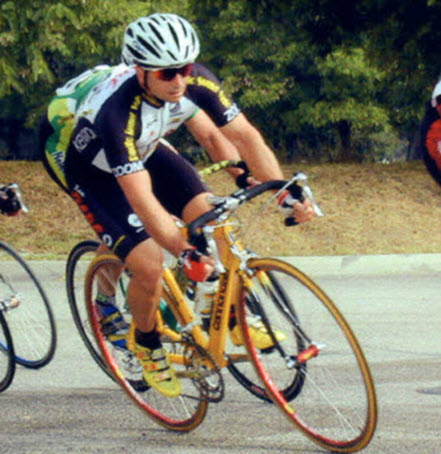
James Hickman is a former USA Cycling Expert-level coach who has worked with cyclists at every level, from beginners to competitive racers. He served as a coach for the Leukemia & Lymphoma Society’s Team In Training program, helping riders prepare for and complete century events. A Masters-category racer himself, he competed and earned podium finishes in Southern California events and holds a Platinum finish at El Tour de Tucson, completing the 100 miles+ in under five hours.
Related Reading
 FTP Testing FTP Testing: How to Accurately Measure Your Functional Threshold Power |  Strength Training Cycling Strength Training: Build Power, Prevent Injury, Ride Faster |  Endurance Base |
Building base miles this winter? Fuel them right.
Longer endurance rides need a fueling plan, not guesswork. Enter your weight, ride length, intensity and temperature, and the free Race & Ride Day Nutrition Planner gives you carbohydrate, fluid and sodium targets, a ride schedule and a pack checklist.
Sponsored · Competitive Cyclist
We are an Amazon affiliate and earn from qualified purchases with no cost to you. This is for ANY product that you purchase through our links. We are also an affiliate for Competitive Cyclist and JensonUSA. This way we can provide you with competitive pricing and products.