

Quick Answer: Power zones are seven intensity ranges based on your Functional Threshold Power (FTP), from active recovery (under 55% of FTP) up to all-out neuromuscular sprints (above 150%). Training in the correct zone gives every ride a clear purpose — building aerobic endurance, raising your threshold, or sharpening top-end speed — so your time on the bike produces measurable, repeatable progress.
Most riders have seen the seven-zone chart, but a list of percentages doesn’t tell you what each zone actually does to your body or when you should be in it. This guide explains each of the power zones in plain terms — what it trains, how it feels, and where it fits in your week — so the numbers on your screen finally mean something.
What Power Zones Actually Are
power zones are intensity bands defined as a percentage of your FTP — roughly the highest power you can hold for about an hour. Because they’re tied to your own threshold rather than a generic number, the zones scale to your fitness. A beginner and a Cat 2 racer can both train in “Zone 4,” and it will be the right intensity for each of them even though the actual wattage is very different.
The reason this matters is that each zone stresses a different energy system. Train low and you build the aerobic engine that carries you through long rides; train high and you sharpen the top-end power that wins sprints. Ride without reference to your zones and most of your training collapses into the same vague “medium-hard” effort that builds little of either. Understanding what each zone means is what turns a ride into a workout.
The Seven Power Zones, Explained
This breakdown follows the percentage ranges originally developed by exercise physiologist Dr. Andrew Coggan, built from decades of lab and field experience with power-based training and now the standard used by most coaches and training platforms.
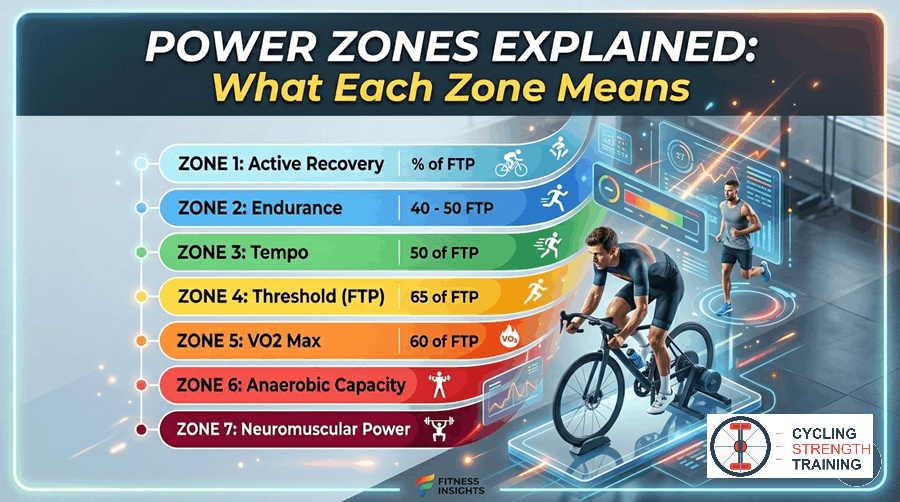
Zone 1 — Active Recovery (under 55% of FTP). This is genuinely easy spinning. It feels almost too light to count, and that’s the point: it promotes blood flow and recovery without adding fatigue. Use it on rest days, between hard intervals, and during warm-ups and cool-downs.
Zone 2 — Endurance (55–75% of FTP). The aerobic foundation of cycling. You can hold a conversation, and you can stay here for hours. Zone 2 builds capillary density and fat-burning efficiency — the base that every higher zone depends on. This is where most of your weekly volume should live, even though it feels deceptively unremarkable.
Zone 3 — Tempo (76–90% of FTP). A purposeful, working effort — talking gets choppy and you’re aware you’re pushing. Tempo builds muscular endurance and is the backbone of sustained climbing and group-ride pace. It’s productive but costly, so it shouldn’t crowd out your easy Zone 2 time.
Zone 4 — Threshold (91–105% of FTP). Riding right around your FTP. This is hard but sustainable for 10–30 minutes, and it directly raises the ceiling on the power you can hold for long efforts. Threshold intervals are the most efficient way to move your FTP number itself — improve here and every other zone shifts up with you.
Zone 5 — VO2 Max (106–120% of FTP). Very hard, sustainable only for three to eight minutes. This zone develops your maximum aerobic capacity — the size of your engine. VO2 work is brutal and demands full recovery between efforts, but it produces fast, noticeable gains in high-end fitness.
Zone 6 — Anaerobic Capacity (121–150% of FTP). Short, explosive efforts of roughly 30 seconds to two minutes, far above what your aerobic system can supply. This zone trains your tolerance for the searing, repeatable accelerations that decide races — bridging gaps, attacking, surging over short climbs.
Zone 7 — Neuromuscular Power (above 150% of FTP). All-out, maximal bursts lasting only a few seconds. Here the limit is raw force and coordination, not aerobic fitness, which is why these efforts are too brief and intense for FTP percentages to mean much. This is the sprint zone — pure top-end speed.
⚡ Coach’s Pick: You can’t train by power zones without measuring power. A Garmin cycling computer paired with a power meter is the simplest way to see your zones in real time, every ride.
How to Put the Zones to Work
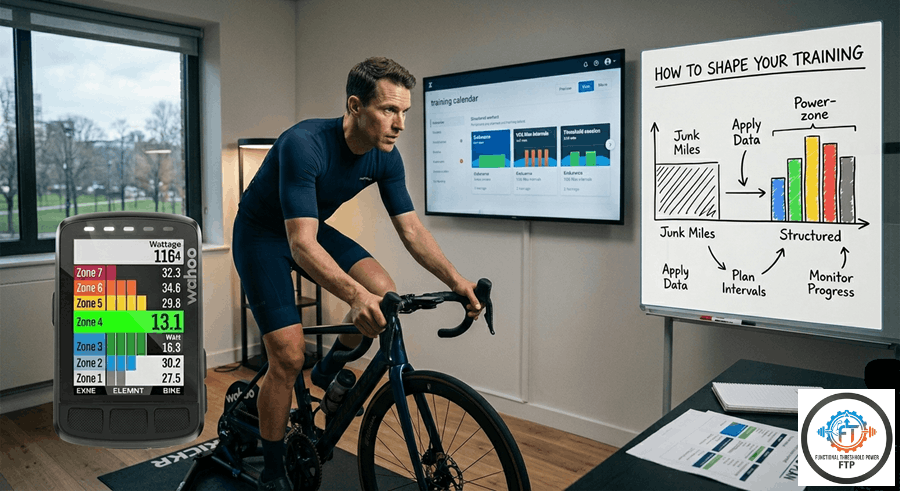
Knowing what each zone means is only useful if your FTP is accurate, because every zone is calculated from it. Retest every 4–8 weeks using a reliable FTP testing protocol, then plug the result into an FTP zone calculator to get your exact wattage ranges. A number that’s months out of date will quietly shift all seven zones off target.
From there, the principle is simple: match the workout to the zone’s purpose. Build the week on Zone 2 endurance, raise your ceiling with Zone 4 threshold work, and add Zone 5 and above sparingly to sharpen speed. The classic mistake is spending too much time in Zone 3 — hard enough to tire you, not hard enough to drive adaptation — instead of polarizing between easy and genuinely hard.
Not sure where your FTP really stands?
Take the free 60-second FTP quiz and get a clear starting point for your zones.
Featured Resource: Master Your Power Zones
For a deeper dive into calculating, interpreting, and applying power zones, work through the complete guide to FTP Power Zones. It breaks down each zone in detail, gives practical workout examples, and lays out actionable strategies to get the most from every ride — a natural next step once you understand the basics here.
Related Reading
 Training Zone 2 Training vs. Sweet Spot: The 2026 Cycling Debate Guide |  Training |  Training |
📘 Coach’s Pick: The definitive text on this subject is Training and Racing with a Power Meter — the book that turned power-based zone training into a mainstream method.
Take Action: Train With Purpose
Power zones turn a screen full of numbers into a plan. When you know that Zone 2 is building your engine and Zone 4 is raising your threshold, every ride has a job to do — and your progress stops being accidental. Ready to apply it? Start with a structured FTP training plan built around the zones explained here.
Frequently Asked Questions
How many power zones are there? Most power-based systems use seven zones, each defined as a percentage of your FTP — from Zone 1 active recovery (under 55%) to Zone 7 neuromuscular power (above 150%). Each one trains a distinct physiological system.
What does each power zone train? Lower zones (1–2) build aerobic endurance and recovery, the middle zones (3–4) develop muscular endurance and raise your threshold, and the upper zones (5–7) sharpen VO2 max, anaerobic capacity, and sprint power.
Which power zone should I spend the most time in? Zone 2 (55–75% of FTP). Steady endurance riding here builds the aerobic base that supports every higher-intensity zone, which is why it should make up the bulk of your weekly training volume.
James Hickman is a former USA Cycling Expert-level coach who has worked with cyclists at every level, from beginners to competitive racers. He served as a coach for the Leukemia & Lymphoma Society’s Team In Training program, helping riders prepare for and complete century events. A Masters-category racer himself, he competed and earned podium finishes in Southern California events and holds a Platinum finish at El Tour de Tucson, completing the 100 miles+ in under five hours.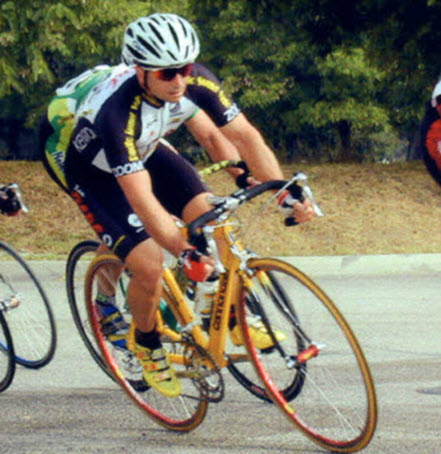
Sponsored · Competitive Cyclist
We are an Amazon affiliate and earn from qualified Amazon purchases with no cost to you. This is for ANY product that you purchase through our links. We are also an affiliate for Competitive Cyclist and JensonUSA. This way we can provide you with competitive pricing and products.