

By James Hickman, former USA Cycling Expert Coach and Masters racer. James has coached riders of all levels, including Leukemia & Lymphoma Society Team In Training century riders, and is a Platinum finisher at El Tour de Tucson.
Amazon Affiliate I earn from qualified purchases
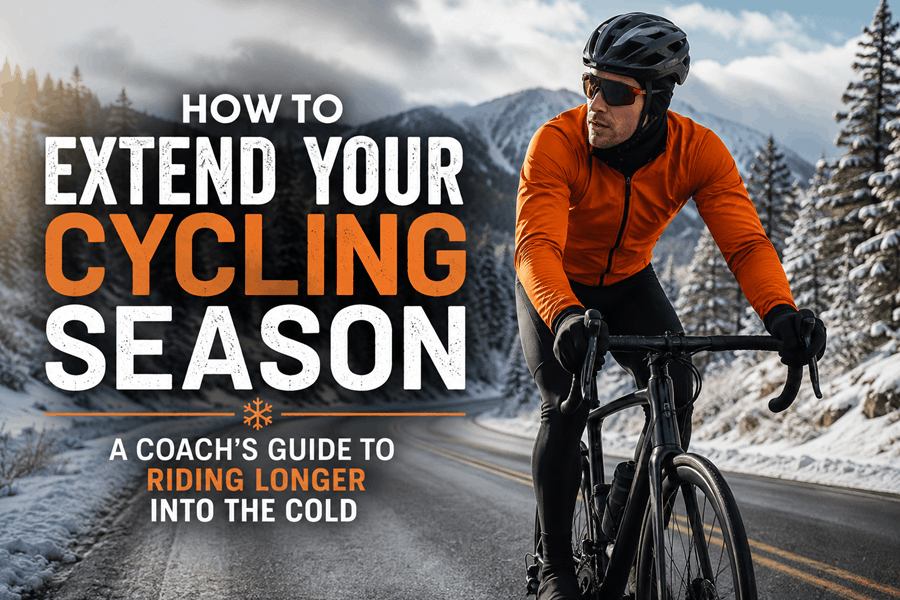
How to Extend Your Cycling Season: A Coach’s Guide to Riding Longer Into the Cold
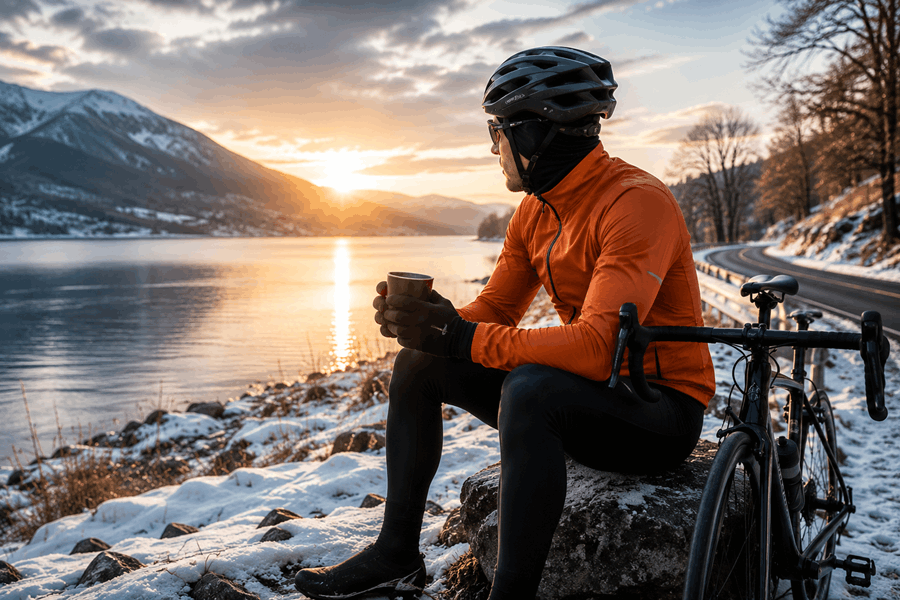
Most riders don’t decide to end their season. It ends by default — a week of rain, a Sunday where sunset beat them home, a morning cold enough that even a thermal cycling jacket couldn’t convince you to head outside.
Six weeks later they’ve lost fitness they spent all spring building, and they start the next year from a lower baseline than they finished this one.
That’s the real cost of a short season. It isn’t the missed rides in November; it’s the extra eight weeks of rebuilding you’ll do next March. In two decades of coaching riders through this exact transition, I’ve found the ones who ride deepest into the year aren’t tougher than everyone else. They just solved four specific problems before those problems ended their season for them.
Problem One: You’re Dressing for the Temperature, Not the Wind Chill
The single most common reason riders quit early is that they had one genuinely miserable ride and decided the season was over. Almost always, that ride was a clothing failure rather than a weather event.
The number on your phone is air temperature standing still. On the bike you’re generating your own 18–22 mph headwind, and on a descent you might hit 30. A 40°F day with a fast descent feels closer to the high 20s on exposed skin. Riders who dress for the forecast get cold; riders who dress for the wind chill of their fastest descent stay comfortable.
The framework that actually works is the standard three-layer system, applied honestly. A moisture-wicking base layer — merino or synthetic, never cotton — moves sweat off your skin so it can’t chill you when you slow down. A mid layer traps warm air. A wind-blocking outer shell stops the convective heat loss that’s doing most of the damage. What separates riders who understand this from riders who don’t is the base layer: cotton holds sweat against your skin and turns every stoplight into a shivering session.
Extremities fail first because they’re small, exposed, and last in line for blood flow. Full-finger gloves, a neck gaiter to close the collar gap, and shoe covers extend your comfortable range further than another jersey layer will. And the most useful pieces in fall are the removable ones — arm and knee warmers let you start a 45°F morning dressed correctly and finish a 65°F afternoon without carrying a backpack.
Getting the layering system right is the difference between a season that ends in October and one that runs through the holidays — JensonUSA carries the base layers, warmers, and windproof shells that make cold-weather riding sustainable.
Problem Two: Daylight Runs Out Before Your Motivation Does
Every fall, riders lose their weekday rides not to weather but to the clock. Once the evening ride starts in twilight, most people stop going.
This is the cheapest problem on the list to fix, and the one riders most often postpone. A rechargeable headlight and taillight turn a hard sunset deadline into a soft one. The mental shift matters as much as the safety benefit: when darkness stops ending your ride, you stop negotiating with yourself about whether there’s “enough time.”
Two practical notes from experience. First, charge your lights the night before, on a schedule, the way you’d air up tires — the ride you skip because your light is dead is a ride you lost to logistics, not weather. Second, when the time change hits, plan your route around lit or familiar roads rather than riding your usual summer loop in unfamiliar darkness. Wet leaves are genuinely slick, and they cover potholes you’d normally see and avoid. Fall crashes are disproportionately traction and visibility crashes, not fitness crashes.
Problem Three: You’re Still Training Like It’s July
Here’s where coaching judgment matters more than gear. Many riders try to extend the season by holding their summer training plan in place — same intervals, same intensity, same weekly structure — and burn out by Thanksgiving.
That’s the wrong goal. The purpose of late-season riding isn’t to hold peak form; peak form is not sustainable, and trying to hold it is what produces the crash in motivation that ends seasons. The purpose is to preserve your aerobic base so that next spring starts from a higher floor.
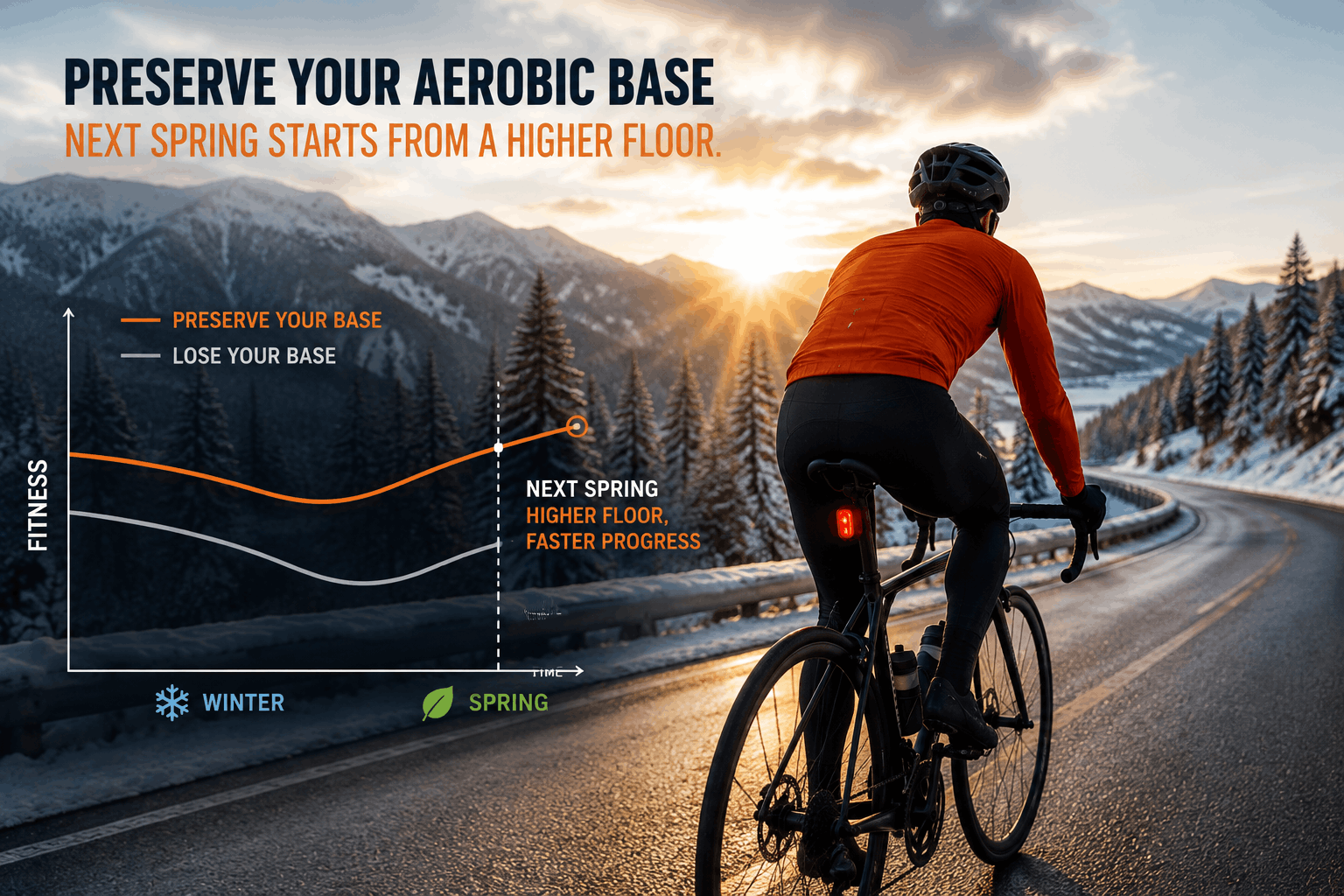
Practically, that means volume at moderate intensity does more for you now than another VO2 max block. Fewer maximal efforts, more steady endurance riding, and one genuinely hard day a week if you want it — rather than three. This is also the best window of the year for strength work, which builds the durability that makes next season’s intensity possible and which most riders skip entirely during racing season.
It also means giving yourself permission to change what a ride is for. Riding gravel, joining a social group ride, or exploring routes you skip in summer because they’re “too slow” all deliver the same aerobic benefit while removing the pressure of a target number. The physiological value is identical. The psychological value is much higher.
When the weather does eventually win a day — and it will — having a structured indoor option is what keeps the streak alive rather than starting a two-week gap; Zwift turns a rained-out afternoon into a session that still counts toward next spring.
Problem Four: Your Bike Isn’t Set Up for the Season You’re Riding Into
Summer setup fails in fall for reasons that have nothing to do with fitness. Fenders keep road spray off you and your drivetrain, and staying dry is a warmth issue before it’s a cleanliness one. Slightly wider tires at slightly lower pressure buy real traction on wet leaves and cold pavement. And your chain needs a wet-weather lubricant, since a dry-conditions lube washes off in the first serious rain and leaves you grinding through a drivetrain that will wear noticeably faster.
If you ride anywhere roads get salted, chain and drivetrain maintenance stops being optional. Salt is aggressively corrosive, and a drivetrain that’s cleaned and re-lubed regularly through the winter will last years longer than one that isn’t.
Knowing When to Stop Extending
There’s a version of this article that tells you to ride through everything. That’s bad coaching. A genuine off- season break — one to three weeks of little or no structured riding after your last goal event — is not lost fitness. It’s what allows the next build to work.
The signals worth listening to are consistent loss of motivation (not a bad day, a bad month), lingering fatigue that sleep doesn’t resolve, and irritability around training. Those are the body and mind asking for a reset, and honoring that request in October is far cheaper than forcing it in February. During this period, using a foam roller and focusing on recovery can help your body stay ready for the next training block.
The distinction I’d draw is this: extending your season means adapting how you ride so that riding stays possible and enjoyable. It doesn’t mean refusing to rest. The riders who show up strongest in spring took a real break — they just took a short, deliberate one instead of a four-month accidental one.
Frequently Asked Questions
What temperature is too cold to ride outside?
There’s no universal cutoff, since wind chill, humidity, road conditions, and your clothing matter more than the number itself. Most riders with proper layering ride comfortably into the 30s°F. Ice on the road, not temperature, is the genuine stopping point — traction loss carries real crash risk that no amount of fitness compensates for.
Will I lose fitness if I ride less in the fall and winter?
Some detraining is normal and not harmful. Consistent moderate riding through the colder months preserves most of your aerobic base, meaning you start the next season from a higher baseline rather than rebuilding from scratch. Quality and consistency matter more than volume during this period.
Should I do intervals or base miles in the off-season?
It depends on your goal events. Riders targeting long endurance events generally benefit from aerobic base work now, while time-crunched riders may get more from shorter, higher-intensity sessions. The common mistake is holding summer race intensity year-round, which reliably produces burnout.
Do I need a bike trainer to extend my season?
No, but it removes weather as a reason to skip. A trainer or indoor platform is most valuable as a backstop for days when riding outside genuinely isn’t safe, rather than as a full replacement for outdoor riding.
How do I stay motivated to ride in the cold?
Change what riding is for rather than forcing the same summer structure. Social rides, gravel exploration, and route variety deliver the same aerobic benefit without the pressure of hitting target numbers — and reduced pressure is usually what keeps riders going through the shortest days of the year.
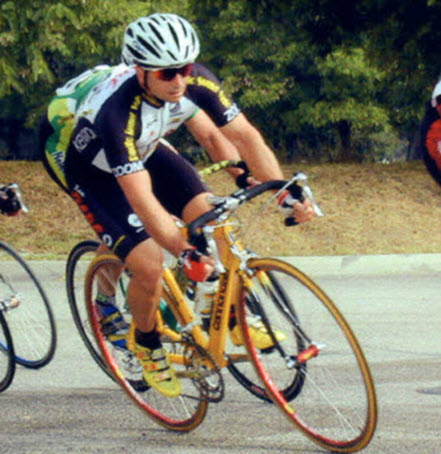
James Hickman is a former USA Cycling Expert-level coach who has worked with cyclists at every level, from beginners to competitive racers. He served as a coach for the Leukemia & Lymphoma Society’s Team In Training program, helping riders prepare for and complete century events. A Masters-category racer himself, he competed and earned podium finishes in Southern California events and holds a Platinum finish at El Tour de Tucson, completing the 100 miles+ in under five hours.
Related Reading
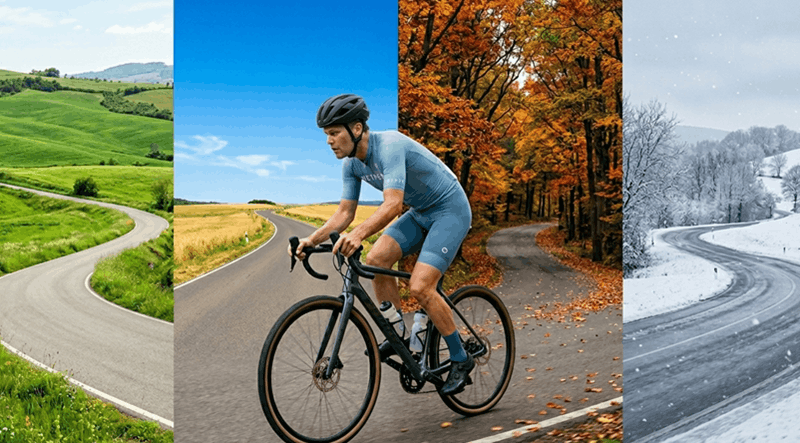 Training Seasonal Cycling Training: How to Adjust Your Plan Year Round |  Training |  Training |
Sponsored · Competitive Cyclist
We are an Amazon affiliate and earn from qualified Amazon purchases with no cost to you. This is for ANY product that you purchase through our links. We are also an affiliate for Competitive Cyclist and JensonUSA. This way we can provide you with competitive pricing and products.