

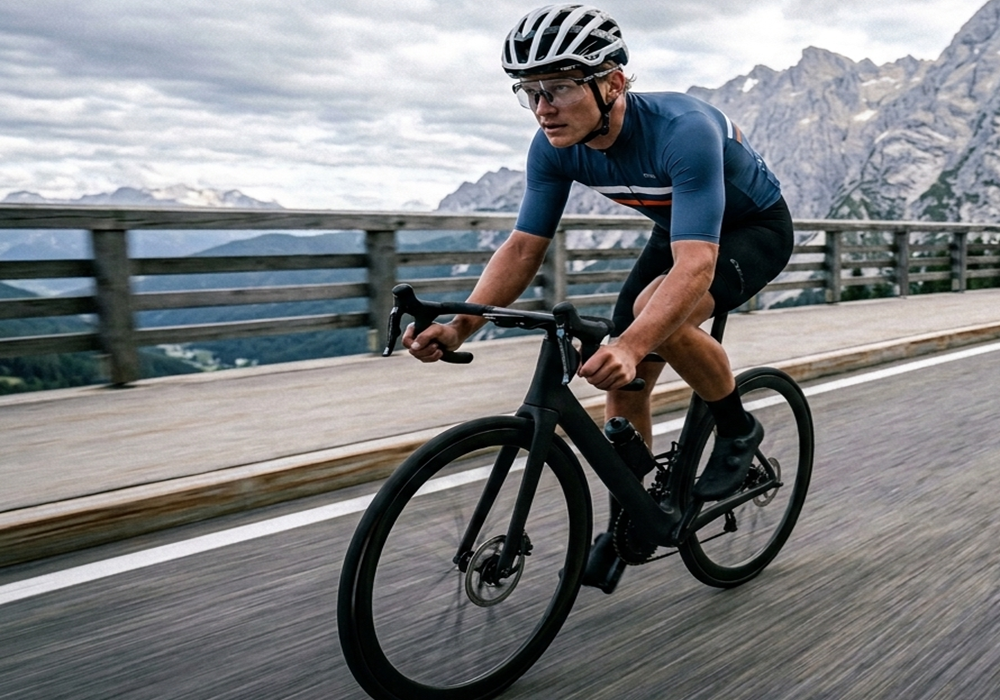
Quick Answer:
Balance endurance and intensity by dedicating 75–80% of training volume to Zone 2 aerobic work, then adding one or two targeted high-intensity sessions per week — sweet spot intervals (88–94% FTP), threshold efforts (95–105% FTP), or VO2max blocks (110–115% FTP). Periodize your training across base, build, and peak phases, and retest FTP every 6–8 weeks to adjust zones as fitness improves.
Every cyclist faces the same tension: build the aerobic base needed for long rides without losing the top-end power required for hard efforts. Log too many easy miles and your ability to surge fades. Go too hard too often and you accumulate fatigue that undermines both goals. The answer isn’t choosing one over the other — it’s structuring them so each type of training reinforces the other.
Why Endurance Work Is Non-Negotiable
Zone 2 training — roughly 55–75% of FTP — builds the aerobic engine that underlies every other aspect of your cycling fitness. At this intensity, your body increases mitochondrial density, expands capillary networks in working muscles, and improves fat oxidation. These adaptations reduce reliance on glycogen during long endurance rides, improve your ability to recover between hard efforts, and raise the ceiling for how much high-intensity work you can absorb.
Research and coaching practice consistently point to the same ratio. Exercise physiologist Stephen Seiler’s analysis of elite endurance athletes across sports like Nordic skiing and rowing found that more than 80% of training volume occurred at easy, low-lactate efforts, with the remaining roughly 20% spent largely above threshold. Elite cyclists maintain massive Zone 2 endurance volume not despite being fast — but because of it.
Practical approach:
- Target 3–4 Zone 2 sessions per week during base phases
- Build endurance ride duration progressively — start at 90 minutes and add 15–30 minutes weekly until you reach 3–4 hour capacity
- Maintain 85–95 RPM cadence to build pedaling efficiency alongside aerobic capacity
Where Intensity Fits
High-intensity sessions provide the specific stimulus that raises your FTP and sharpens top-end power. But they only work when built on an adequate endurance foundation — and they require genuine recovery between sessions. Two quality intensity sessions per week is the upper limit for most cyclists; more than that accumulates fatigue faster than your body can adapt.
Three intensity types that produce results:
Sweet Spot (88–94% FTP) — The most time-efficient FTP builder. Sweet spot intervals deliver roughly 90% of the adaptation from full threshold work while requiring significantly less recovery. A beginner protocol: 2×15 minutes at 88–90% FTP with 5-minute recovery. Intermediate: 3×15 minutes. Advanced: 2×20 minutes at 92–94% FTP. Run these twice weekly with at least 48 hours between sessions.
Threshold Intervals (95–105% FTP) — Direct, demanding, and the most specific training for raising FTP. The classic 2×20 protocol — two 20-minute efforts at 95–100% FTP with 10 minutes recovery — remains the benchmark. If 20-minute sustained efforts are difficult, start with 4×8 minutes at 100–105% FTP and build from there. These sessions require 48–72 hours of recovery; plan them accordingly.
VO2max Intervals (110–115% FTP) — Raising your aerobic ceiling pulls your FTP upward. Five-minute efforts at 110–115% FTP with equal recovery (5×5 protocol) are effective and manageable. Reserve VO2max work for build phases 8–12 weeks before your target events.
Coach’s Pick — Power Meter
Executing intensity work accurately requires knowing your actual watts. The 4iiii Precision 3+ Single-Sided Power Meter gives you real-time power data to hit your zones precisely — whether you’re grinding sweet spot intervals or pushing above threshold. Available at Competitive Cyclist.
Blending Both in a Weekly Structure
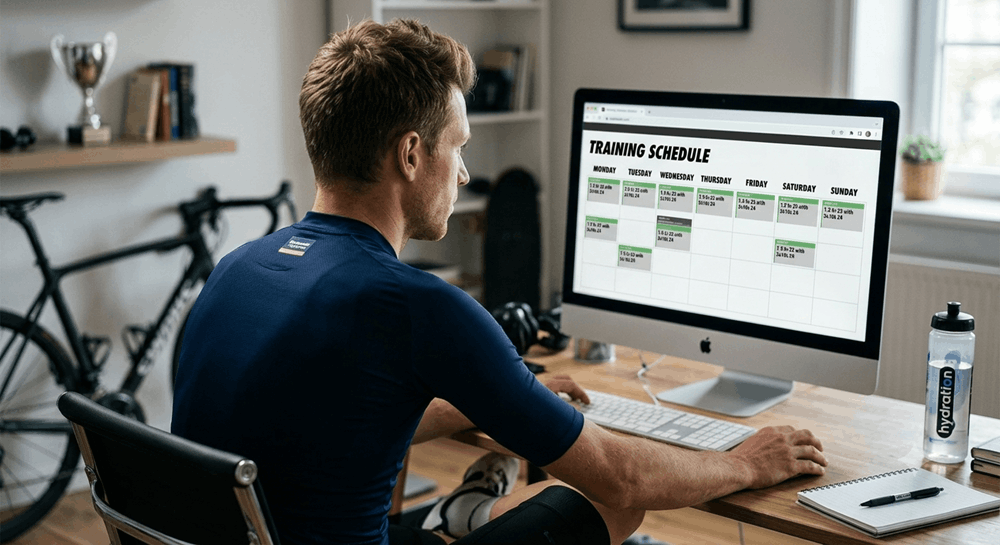
The simplest way to balance endurance and intensity is a structured weekly template. Here’s a workable model for a time-crunched athlete training 6–8 hours per week:
- Monday: Rest or easy Zone 1 spin (45 minutes)
- Tuesday: Sweet spot workout (90 minutes)
- Wednesday: Zone 2 endurance ride (60 minutes)
- Thursday: Threshold or VO2max session (90 minutes)
- Friday: Rest
- Saturday: Long Zone 2 endurance ride (2–3 hours)
- Sunday: Tempo or group ride (90 minutes)
Athletes with 12–15 hours available can add a second long endurance ride and a third intensity session. The principle holds either way: intensity sessions bookended by genuine aerobic work and recovery.
One practical addition: Insert short surges into endurance rides — five 2-minute efforts at threshold power during a 2-hour Zone 2 ride maintains neuromuscular sharpness without disrupting the aerobic intent of the session.
Periodization: The Framework That Makes It Work
Rotating between training phases prevents stagnation and reduces injury risk:
- Base phase (8–12 weeks): 80% Zone 2 endurance volume, minimal intensity. Establish aerobic capacity.
- Build phase (6–8 weeks): Maintain endurance base, increase sweet spot and threshold intensity to twice weekly.
- Peak phase (3–4 weeks): Reduce total volume 30–40%, maintain intensity. Sharpen for target events.
- Recovery week (every 3–4 weeks): Cut volume and intensity by 40–50% to allow adaptation to consolidate.
Retest FTP every 6–8 weeks. If your number has moved, your training zones have moved with it — update them and adjust workouts accordingly.
Putting It Into Practice
A power meter is the most reliable tool for executing this approach correctly. It confirms you’re actually in Zone 2 on endurance rides — easy to drift too high without data — and lets you hit precise targets during intensity sessions. Without it, you’re guessing at both ends of the spectrum.
For detailed protocols covering sweet spot progressions, threshold session structures, and weekly training templates, the FTP Training guide on functionalthresholdpower.com covers all of it in one place — including beginner through advanced interval protocols and how to structure phases around your event calendar.
Related Reading
 Training Zone 2 Training vs. Sweet Spot: The 2026 Cycling Debate Guide |  Training Seasonal Cycling Training: How to Adjust Your Plan Year Round | 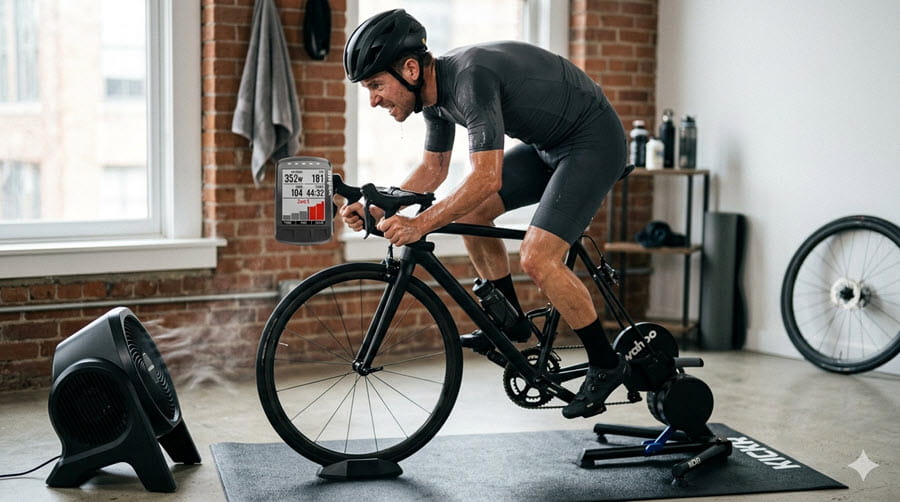 Training |
FAQs
How many high-intensity sessions should I do per week?
Two per week is the standard recommendation — one sweet spot or threshold session and one VO2max or threshold session, separated by at least 48 hours. More than two intensity sessions per week accumulates fatigue faster than most cyclists can recover from, especially when combined with adequate endurance volume.
Will doing more Zone 2 endurance work make me slower?
No. Zone 2 endurance volume improves the aerobic engine that supports every type of effort, including hard intervals and sprints. Two athletes doing identical interval workouts but different total training volumes will show different results — the higher-volume athlete, even if the extra time is all Zone 2, consistently improves FTP more.
What’s the sign I need more endurance work vs. more intensity?
If you fade badly on long rides or struggle to recover between intervals during a session, you likely need more aerobic endurance base. If you can complete long rides comfortably but lack the power to surge or climb hard, you need more targeted intensity. Most cyclists err toward too much intensity too soon.
Want a Training Plan Built Around Your FTP?
Stop guessing at your zones. Answer 7 quick questions and get a personalized FTP roadmap built around your equipment, schedule, and biggest limiter.
 James Hickman is a former USA Cycling Expert coach and Masters racer who has coached riders of all levels, including Leukemia & Lymphoma Society Team In Training century riders, and is a Platinum finisher at El Tour de Tucson.
Coach’s Pick — Training Computer
Tracking both endurance ride time-in-zone and intensity interval targets on the same device keeps your training clean and accountable. The GARMIN EDGE 850 Bike Computer
displays real-time power zones, lap data, and interval timers in one unit. Available at Competitive Cyclist.
We are an Amazon affiliate and earn from qualified Amazon purchases with no cost to you. This is for ANY product that you purchase through our links. We are also an affiliate for Competitive Cyclist and JensonUSA. This way we can provide you with competitive pricing and products.
 to Support the Site! Any amount helps, Thank you!