

Quick Answer
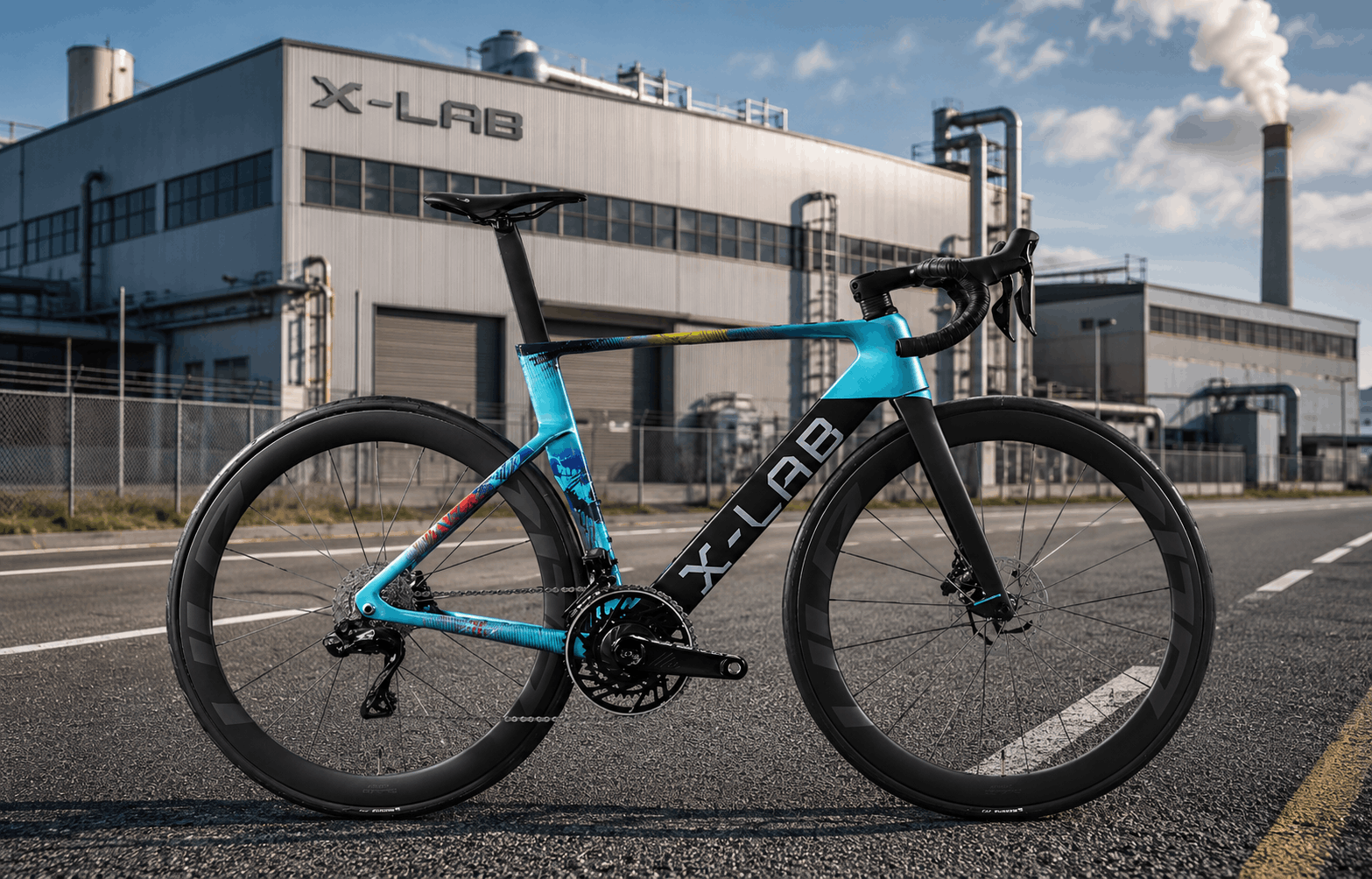
X-LAB is the premium bicycle brand of XDS Carbon-Tech, a Shenzhen manufacturer that builds roughly 8 million bicycles a year and has produced frames for major Western brands for three decades. X-LAB bikes are raced at WorldTour level by XDS Astana, and the brand entered the U.S. market in April 2026 through independent bike dealers rather than pure direct-to-consumer sales. Current U.S. pricing runs from $1,399 for the alloy RS5 to $9,150 for the Dura-Ace RT9, with the AD9 aero race bike at $7,999 and the AD8 at $4,499.
By James Hickman, former USA Cycling Expert-level coach and Masters-category racer
Amazon Affiliate I earn from qualified purchases
For thirty years, “Made in China” appeared on the frames, forks, wheels and components of bikes that carried American and European names on the downtube. The manufacturing was Chinese. The brand equity was not.
X-LAB changes that equation. The AD9 is being raced in the WorldTour by XDS Astana against Specialized, Trek, Canyon, Colnago and Cervélo — not as a budget alternative, but as team-issue equipment at the highest level of the sport. And as of April 2026, you can walk into a U.S. bike shop and buy one.
So the question worth asking isn’t whether the AD9 is a few watts faster than a Tarmac. It’s this: is X-LAB just another Chinese bike brand, or are we watching a serious new competitor arrive at the top of the market?
Who Is X-LAB?
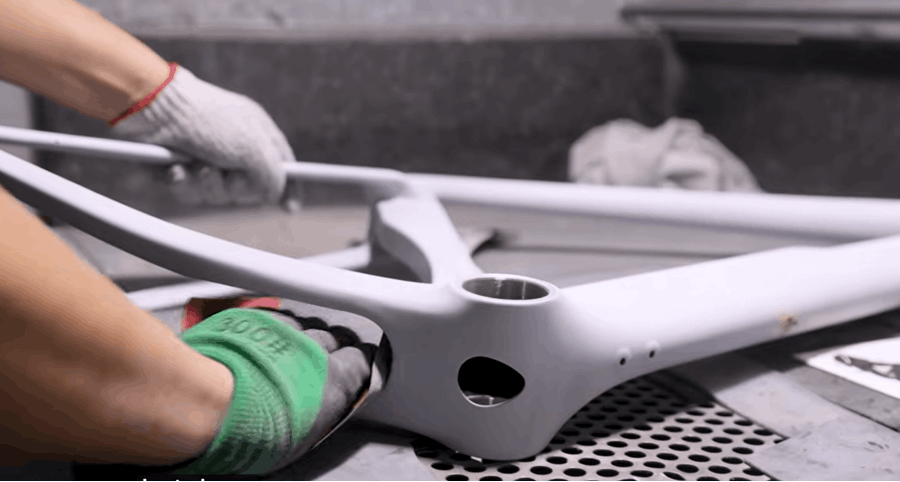
The first thing to get straight is that XDS and X-LAB are not the same thing. XDS is the parent company — founded in Shenzhen in 1995 and now, by its own numbers, producing around 8 million bicycles a year across five factories. Most of that output is mainstream consumer product for the Chinese domestic market.
X-LAB is the performance arm. Cyclingnews describes the relationship as roughly analogous to S-Works sitting above Specialized — the halo line, engineered to compete with the best road bikes on the market rather than to fill a price point.
What makes the structure unusual is how much of it happens under one roof. Frame design, carbon layup, testing and manufacturing are heavily vertically integrated, and XDS has extended that to in-house components sold under the Branta name — cranks, wheels, cockpits and power meters that appear on X-LAB complete builds. Very few bike brands own that much of their own supply chain.
From Building Other People’s Bikes to Selling Its Own
Chinese factories have manufactured cycling products for Western brands for decades. That part is old news. What’s new is the willingness to compete internationally under their own name.
XDS has been an OEM supplier for roughly 31 years, and Cyclingnews notes bluntly that there’s a real chance XDS built the bike you already own — the brands involved simply aren’t disclosed publicly. That history leads to an uncomfortable question for the established players:
Why shouldn’t the company with the tooling, the carbon expertise and the production capacity sell bikes under its own badge?
That’s not a rhetorical flourish. It’s the entire strategic premise of X-LAB.
X-LAB Enters the WorldTour
XDS Carbon-Tech took naming rights to the Astana WorldTour team and replaced Wilier as the bike supplier beginning with the 2025 season. Reporting from road.cc pegged the investment as large enough to lift Astana’s budget toward the level of the sport’s superteams, on a deal understood to run somewhere between five and ten years.
That buys X-LAB something almost no emerging bike brand can manufacture: credibility earned in public. The AD9 isn’t marketed as a race bike. It is a race bike, ridden in Grand Tours, in crosswinds, in bunch sprints, by professionals who would complain loudly if it didn’t work.
The X-LAB AD9 — The Bike That Got Everyone’s Attention
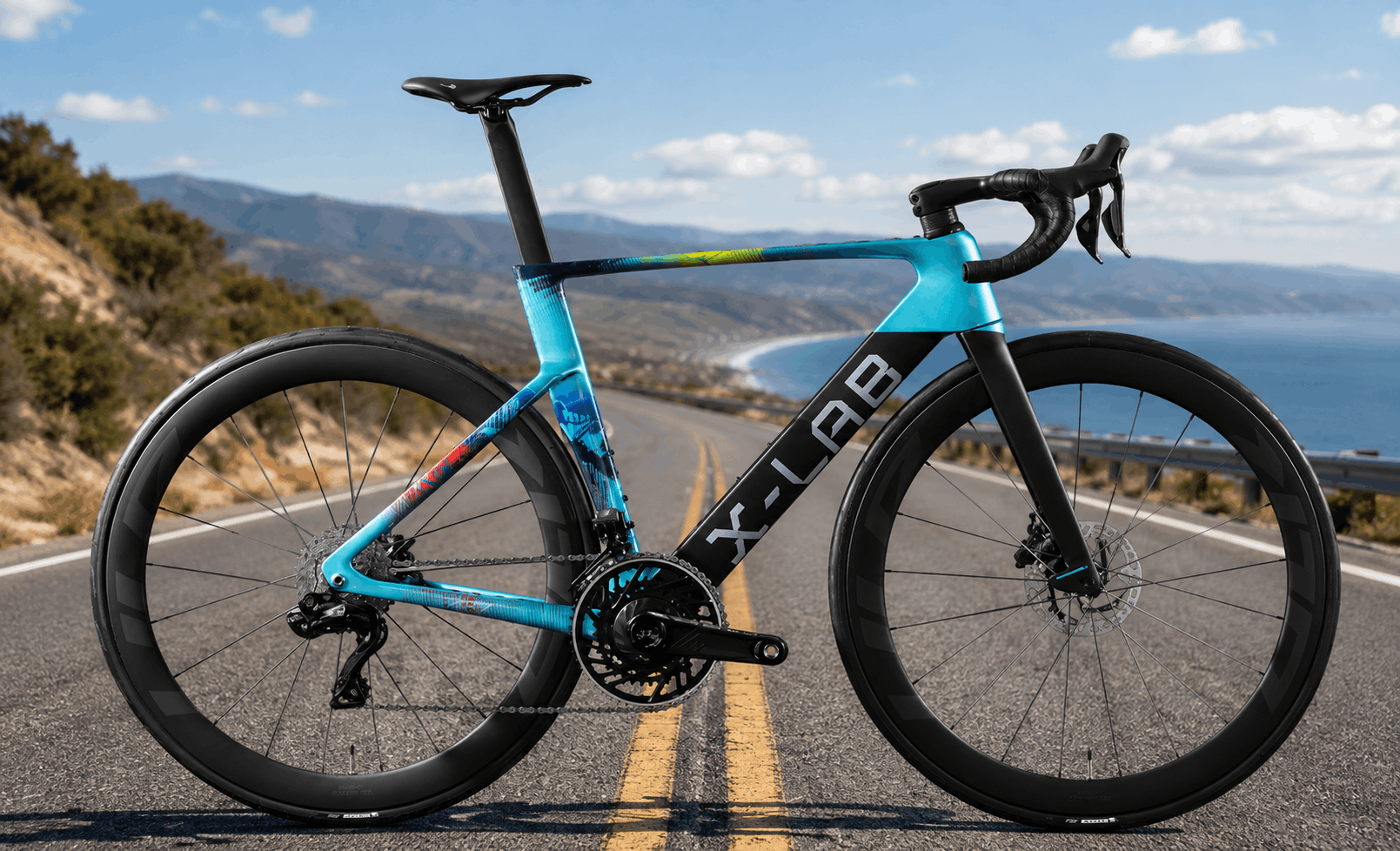
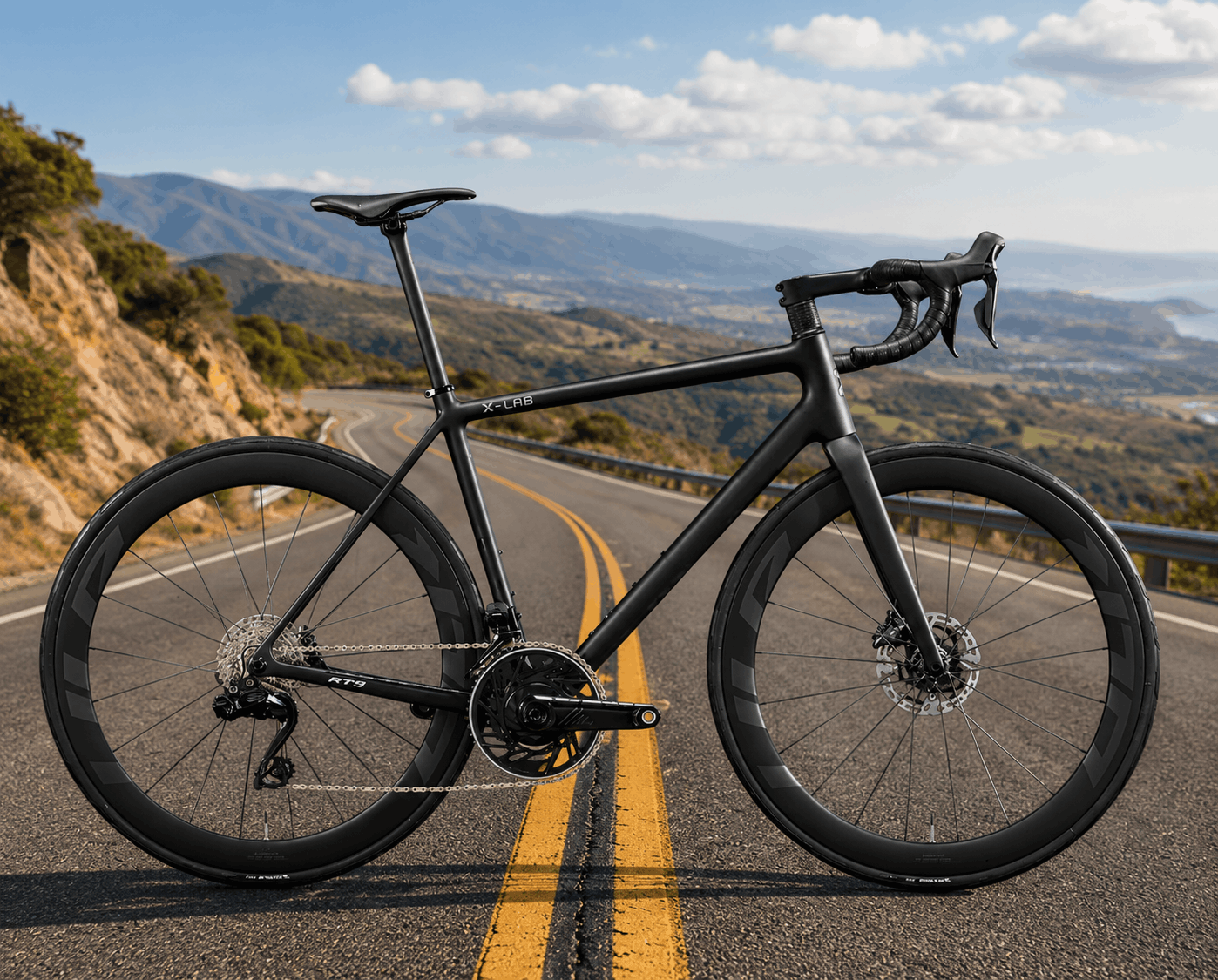
The AD9 is the flagship: a Toray T1100 carbon aero road frame with deep tube profiles, dropped seat stays, a rear wheel cutout, fully integrated cockpit and internal routing. The complete Dura-Ace Di2 build sells for $7,999 with Branta carbon-spoke wheels and an integrated power meter.
Context matters on that number. Equivalent Dura-Ace builds from the major European and American brands routinely sit between $12,000 and $14,000. The Astana replica build with Vision Metron wheels lists around $13,500 — so X-LAB isn’t simply undercutting everyone across the board. The value is concentrated in the standard builds.
Is the AD9 Actually Aerodynamic?
This is where independent testing matters more than marketing claims. Cyclingnews put the AD9 through wind tunnel testing alongside other high-end aero bikes and came away with a measured verdict: a genuinely competent, sure-footed machine that holds its own against established World Tour competition, without being the outright fastest thing in the tunnel or the most engaging bike to ride.
That’s a more useful conclusion than either extreme. The AD9 doesn’t need to beat a Tarmac SL8 to matter. It needs to be close — and it is.
Shopping WorldTour-level road bikes and want to compare the AD9 against the established brands? Competitive Cyclist carries road and performance bikes from Specialized, Santa Cruz, Pinarello and more — worth checking current pricing before you commit.
The AD8 May Be the X-LAB Most Riders Should Actually Buy
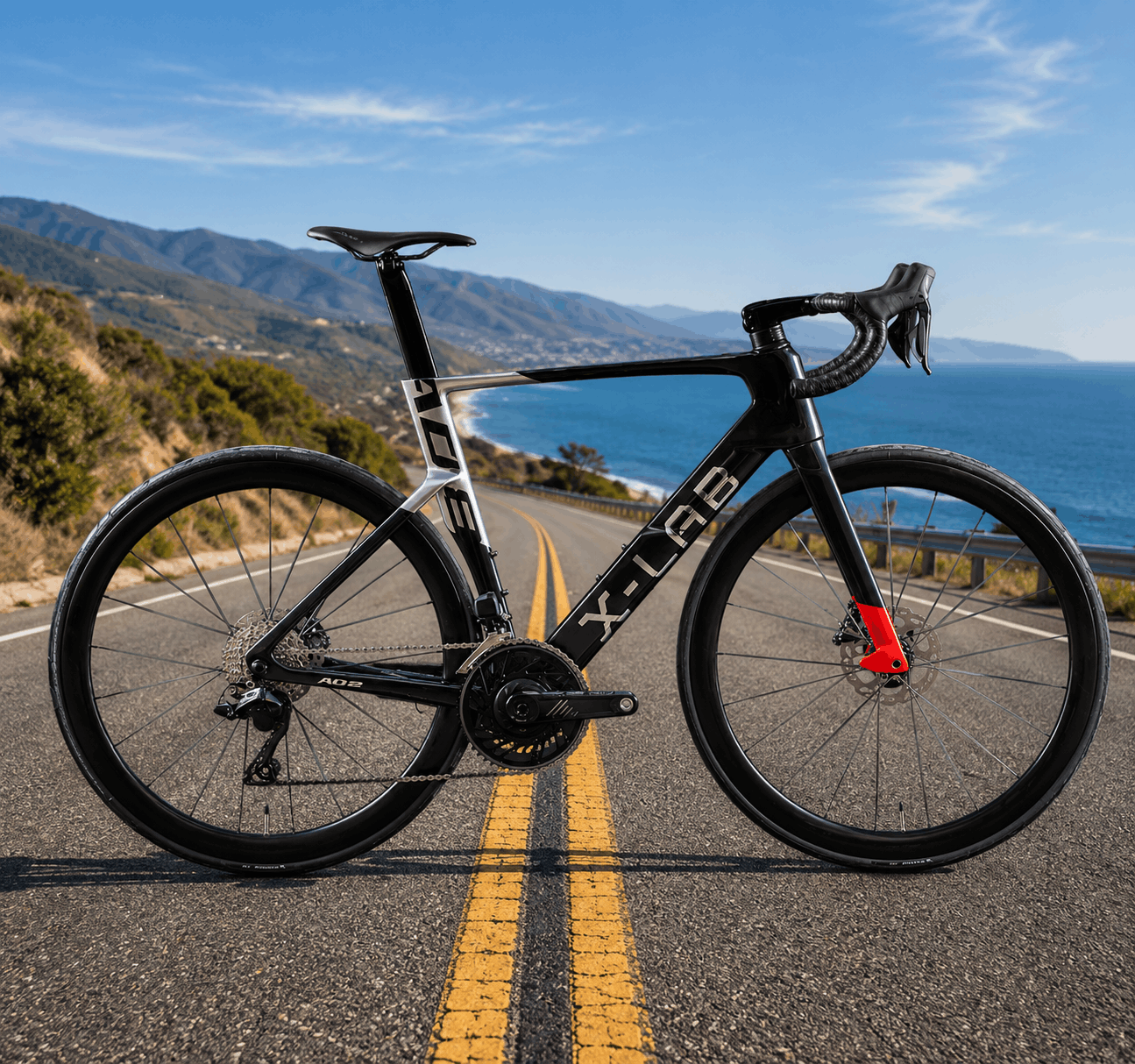
Here’s where the story gets interesting for riders who aren’t on a WorldTour salary. The AD8 sits one rung below the AD9 at $4,499 and shares the aero silhouette and geometry, dropping to Toray T800 carbon and a Shimano 105 Di2 build.
What’s included at that price is the part that should concern the established brands: electronic shifting, a 1,330g carbon-spoke Branta C45 UL wheelset and a carbon power meter crankset, at a claimed 7.41 kg complete in size Large.
From most Western brands, $4,500 buys you an aluminum or entry-carbon frame, mechanical 105, alloy wheels and no power meter. As a coach, I spend a lot of time telling riders that a power meter is the single most valuable training purchase they can make. Getting one bundled at this price point changes the math on the whole bike.
X-LAB RT9 — Going After the Weight Weenies
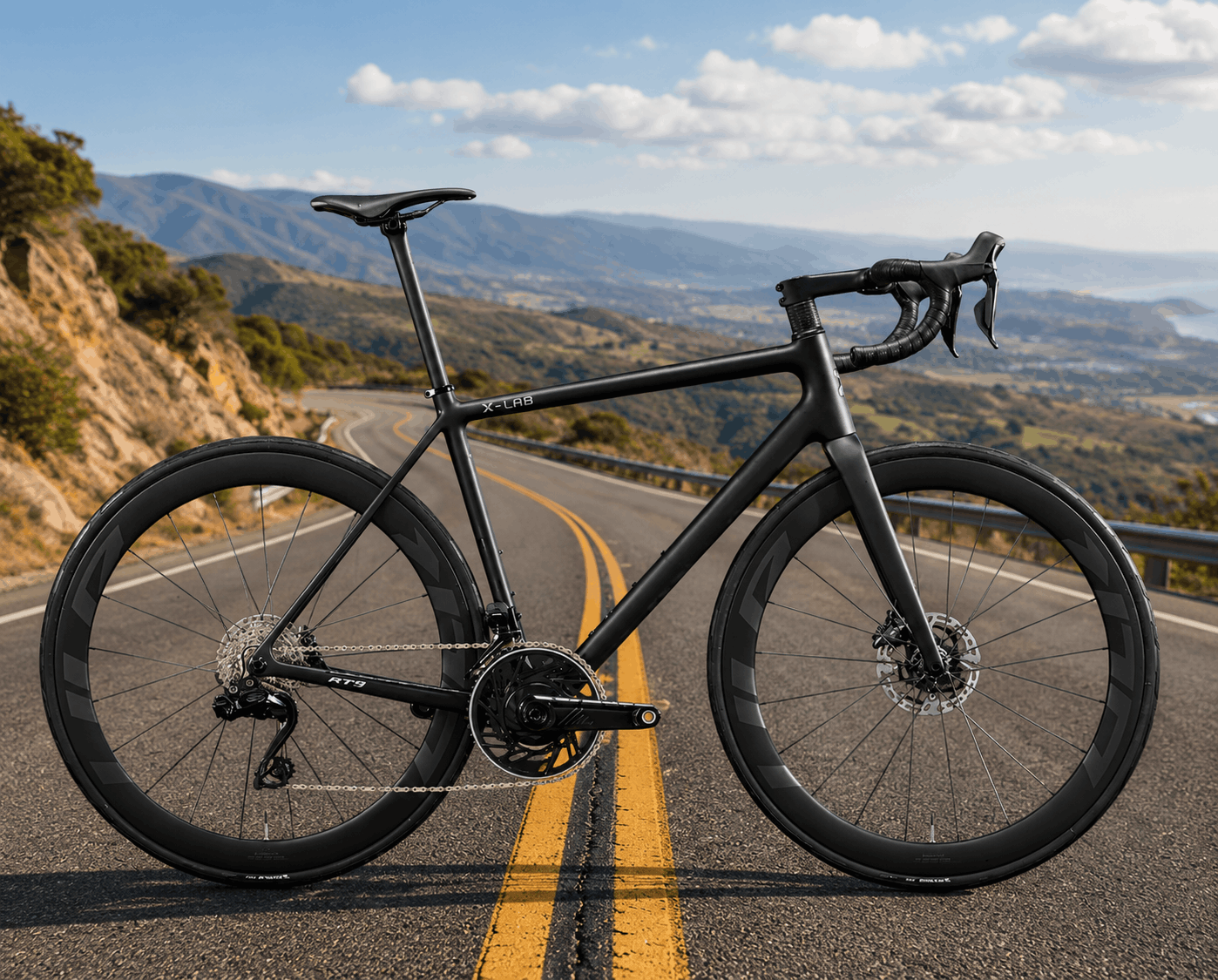
Aero is one front. Climbing is the other. The RT9 uses a Toray T1100 and M40X carbon blend, and X-LAB claims a frame weight of roughly 550 grams with a complete Dura-Ace build at 6.2 kg — putting it in the ultralight conversation with the S-Works Aethos and Pinarello Dogma. X-LAB markets it as the lightest production road frame in the world.
Treat that claim as unverified for now. Independent scale verification is thin, and claimed frame weights are notoriously optimistic across the entire industry — not just at X-LAB. At $9,150 for the Dura-Ace build, the RT9 is also the one X-LAB model where the pricing stops being remarkable.
The broader point stands, though. X-LAB isn’t building one attention-grabbing World Tour bike. It’s contesting multiple premium road categories simultaneously, which is a very different level of ambition.
The Affordable X-LABs May Be the Bigger Threat
Everyone is looking at the superbikes. The more disruptive product may be further down the range.
The RS7 at $2,099 is a full-carbon all-road bike with an integrated Branta carbon cockpit, mechanical Shimano 105, 32mm tires and a claimed 8.49 kg. The RS5 at $1,399 moves to an XDS X6 aluminum frame with carbon fork, Shimano CUES 2×11, 38mm tire clearance, fender mounts — and, again, an alloy power meter crankset.
Suddenly X-LAB isn’t competing for the buyer weighing $10,000 superbikes. It’s competing for the far larger group of riders shopping between $1,500 and $2,500 — the price band where most performance road bikes are actually sold, and where a spec sheet advantage is felt immediately.
X-LAB Isn’t Only Building Road Bikes
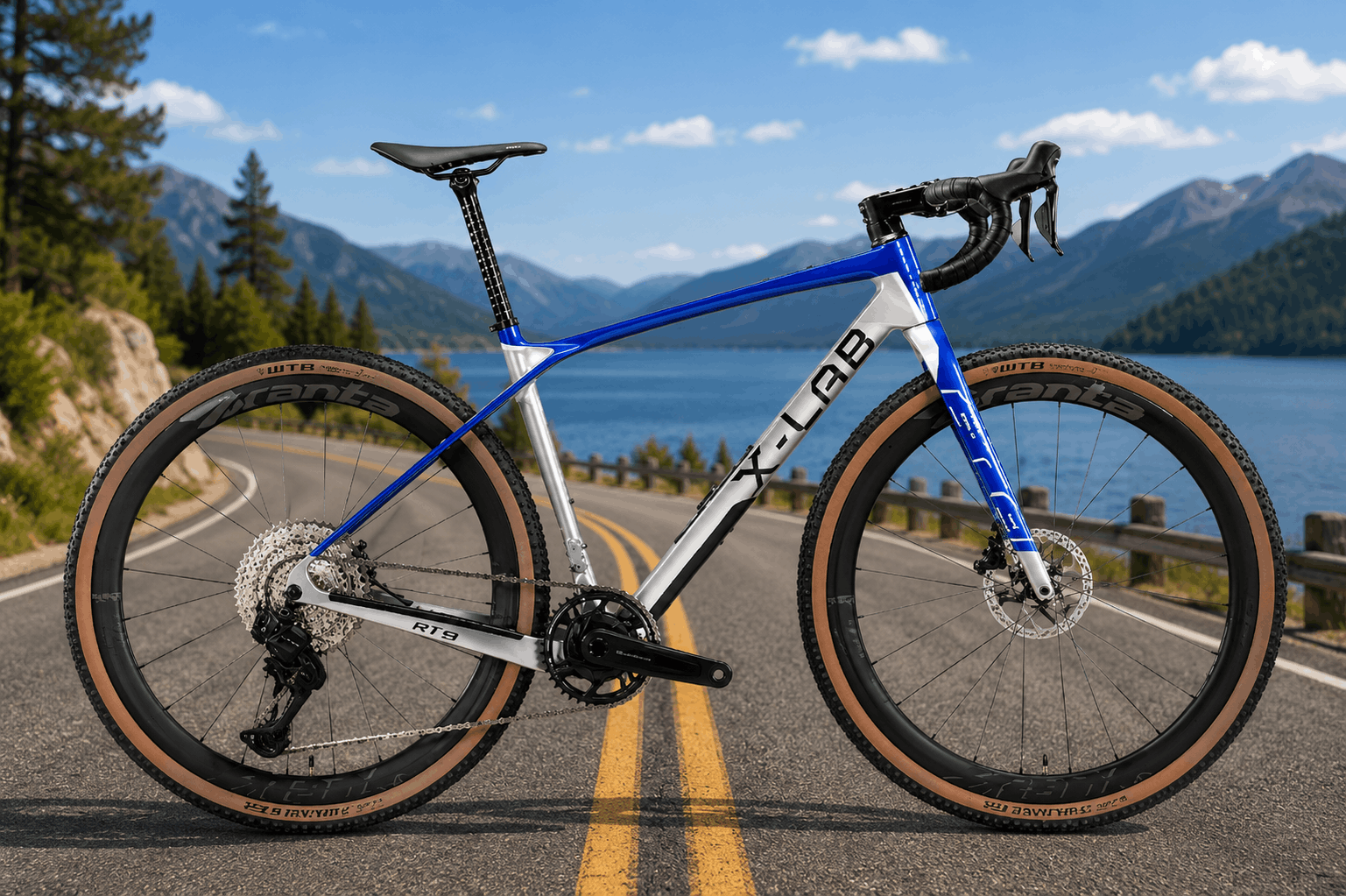
The GT8 is the brand’s first dedicated gravel bike at $3,199: full carbon frame and fork, Shimano GRX 715 1× Di2, internal frame storage, frame and fork accessory mounts, a UDH rear hanger and clearance for tires up to 55mm. For context on what that spec normally costs, compare it against a premium build like the ENVE MOG.
Below that sit the e-bike and fitness models — the ST5+ mid-drive at $1,999, the SP5+ at $1,899 and the SP3 hybrid at $799 — which matter less to performance riders but tell you XDS intends to sell across the whole market, not just the top of it.
2026 X-LAB U.S. Lineup and Pricing
| Model | Type | Key Spec | U.S. Price |
|---|---|---|---|
| RT9 | Ultralight road | Dura-Ace Di2, claimed 550g frame | $9,150 |
| AD9 | Aero race | Dura-Ace Di2, Toray T1100 | $7,999 |
| AD8 | Aero race | 105 Di2, carbon wheels, power meter | $4,499 |
| GT8 | Gravel | GRX 715 Di2, 55mm clearance, storage | $3,199 |
| RS7 | All-road carbon | 105 mechanical, integrated cockpit | $2,099 |
| RS5 | Alloy endurance | CUES 2×11, power meter crank | $1,399 |
How Can X-LAB Sell Bikes at These Prices?
The lazy answer is cheap Chinese labor. The real answer is more interesting, and more threatening to the incumbents.
A traditional bike reaches you through a long chain: brand → in-house engineering → contracted frame factory → component suppliers → distributor → dealer → rider. Every link takes margin.
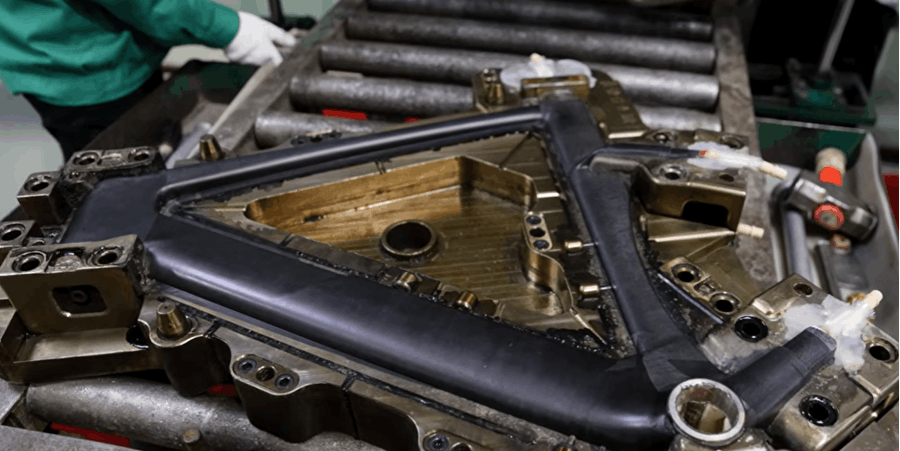
XDS collapses several of those links into one organization. It owns the carbon production. It develops its own cockpits, cranksets, wheels and power meters under the Branta label. It doesn’t pay a factory markup because it is the factory. As James Huang has argued, XDS is leaning on infrastructure advantages that took more than thirty years to build and that essentially no competitor can replicate quickly.
That’s the actual X-LAB advantage. It isn’t a discount. It’s a structurally different cost base.
But Is Buying an X-LAB a Risk?
It would be dishonest to write this article without the other column of the ledger. A bike is a multi-year ownership commitment, and there are legitimate open questions:
- Long-term brand reputation is unproven outside China
- Warranty administration in the U.S. has almost no track record yet
- Proprietary cockpits, seatposts and hangers mean replacement parts come from one source
- Dealer coverage is still thin in much of the country
- Resale value is unknown — and used-market pricing punishes unfamiliar brands
- Long-term crash replacement and support policies are untested
Trek, Specialized, Giant and Cannondale have spent decades building exactly those systems. That advantage is real, and it’s the reason plenty of riders will sit this one out for a few more seasons.
X-LAB Isn’t Following the Typical Direct-to-Consumer Playbook
What surprised me is that X-LAB appears to understand the problem. Rather than going pure direct-to-consumer like most challenger brands, the U.S. strategy leans on independent bike dealers. The brand launched in the U.S. on April 8, 2026, had signed around 60 dealers by Sea Otter, and by August 2026 Bicycle Retailer reported more than 300 U.S. retailers, with framesets arriving through the Port of Long Beach for September delivery at roughly $2,000 to $3,500 depending on model. Bikes ship from a Los Angeles warehouse, not from China.
That directly addresses the biggest fear riders have about buying an unfamiliar Chinese bike: who takes care of me after the sale? A local shop that stocks the brand, gets margin on it and can order a replacement hanger is a materially different proposition from a shipping box and an email address.
Whatever you ride, keeping it dialed is on you. Competitive Cyclist stocks workshop tools, chain care and maintenance essentials — the gear that keeps any frameset, new brand or old, running properly.
Chinese Bicycle Brands Are Changing
X-LAB didn’t arrive in a vacuum. Winspace, Yoeleo, Magene and others have spent the last several years steadily dismantling the assumption that a Chinese-branded carbon product is a knockoff. Riders who bought those wheels and frames largely stopped apologizing for them.
What XDS brings that those brands don’t is the full package: manufacturing scale, in-house component development, WorldTour sponsorship and a dealer-based international distribution strategy. That combination is new.
Could X-LAB Really Challenge Trek, Specialized and Giant?
Not yet — and that’s not the right frame for the question anyway. Set the two columns side by side.
Established brands own: reputation, dense dealer networks, predictable resale value, proven warranty administration and decades of accumulated consumer trust.
X-LAB owns: manufacturing scale, vertical integration, competitive specifications, World Tour validation and aggressive pricing.
The interesting question isn’t which bike is better. It’s whether riders will keep paying a four-figure premium for the name once a competitor with genuine racing credentials is sitting on the same shop floor.
Who Should Consider an X-LAB?
Consider one if: performance per dollar is your primary criterion, you’re comfortable being early on a brand, specification matters more to you than prestige, and there’s an X-LAB dealer within reasonable driving distance.
Wait if: resale value factors into your purchase, you want a dealer in every town you ride through, or you’d rather buy from a brand with a long documented U.S. warranty history.
Either position is defensible. What isn’t defensible anymore is dismissing the bikes on origin alone.
Final Thoughts — X-LAB May Matter More Than Its Bikes Do
The real story here isn’t whether the AD9 is two watts faster or slower than a Tarmac. It’s what happens when one of the companies that has quietly been building the world’s high-end bicycles decides it no longer wants to stay behind the curtain.
If X-LAB executes — if the warranty holds up, the dealers stay supported and the parts keep flowing — the lasting effect won’t be a WorldTour result. It will be a permanent reset of what riders expect a high-performance bicycle to cost. That’s a much harder problem for the incumbents than losing a bike sponsorship.
Frequently Asked Questions
Who makes X-LAB bikes?
X-LAB is the premium performance brand of XDS Carbon-Tech, a bicycle manufacturer founded in Shenzhen, China in 1995. XDS produces roughly 8 million bicycles a year across five factories and has operated as an OEM supplier to major international bike brands for about 31 years. X-LAB is the badge XDS uses to sell its own high-performance bikes outside China.
How much does an X-LAB bike cost?
U.S. pricing runs from $1,399 for the alloy RS5 to $9,150 for the RT9 with Shimano Dura-Ace Di2. The AD9 aero race bike with Dura-Ace Di2 is $7,999, the AD8 with Shimano 105 Di2 is $4,499, the GT8 gravel bike is $3,199 and the carbon RS7 all-road bike is $2,099. Framesets for the AD9, RT9 and GT8 became available to U.S. retailers in September 2026 at roughly $2,000 to $3,500.
Is the X-LAB AD9 a real WorldTour bike?
Yes. The AD9 is the bike raced by the XDS Astana WorldTour team, which replaced Wilier with X-LAB beginning in the 2025 season. It is the first Chinese-branded bicycle raced at the top level of professional road cycling. Independent wind tunnel testing by Cyclingnews found the AD9 competitive with established WorldTour aero bikes, though not the outright fastest frame tested.
Can you get an X-LAB serviced and warrantied in the U.S.?
X-LAB entered the U.S. market in April 2026 through independent bicycle dealers rather than direct-to-consumer sales only, and had more than 300 U.S. retailers by August 2026. Bikes ship from a Los Angeles warehouse. Any competent shop can perform general service, but X-LAB recommends going through an authorized dealer for warranty claims and proprietary component replacement. Long-term U.S. warranty performance remains unproven given how recently the brand launched.
Should I buy an X-LAB instead of a Trek or Specialized?
It depends on what you value. X-LAB offers stronger specification per dollar, including power meters and carbon wheels at price points where established brands typically do not. Trek, Specialized and Giant offer proven warranty support, dense dealer networks and stronger resale value. Riders who prioritize performance per dollar and have local dealer access are good candidates; riders who prioritize resale value or long-term brand track record should wait.
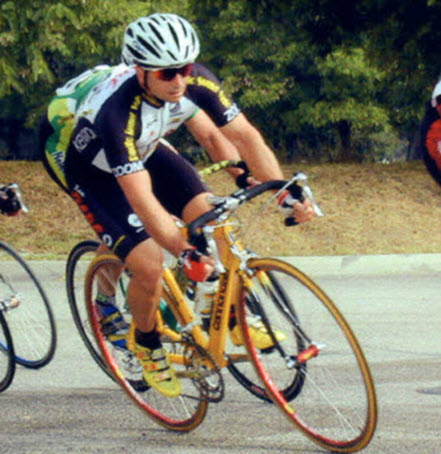
James Hickman is a former USA Cycling Expert-level coach who has worked with cyclists at every level, from beginners to competitive racers. He served as a coach for the Leukemia & Lymphoma Society’s Team In Training program, helping riders prepare for and complete century events. A Masters-category racer himself, he competed and earned podium finishes in Southern California events and holds a Platinum finish at El Tour de Tucson, completing the 100 miles+ in under five hours.
Want a Training Plan Built Around Your FTP?
A faster bike only helps if the engine is trained. Answer 7 quick questions and get a personalized FTP roadmap built around your equipment, schedule and biggest limiter.
Related Reading
 Bicycles | 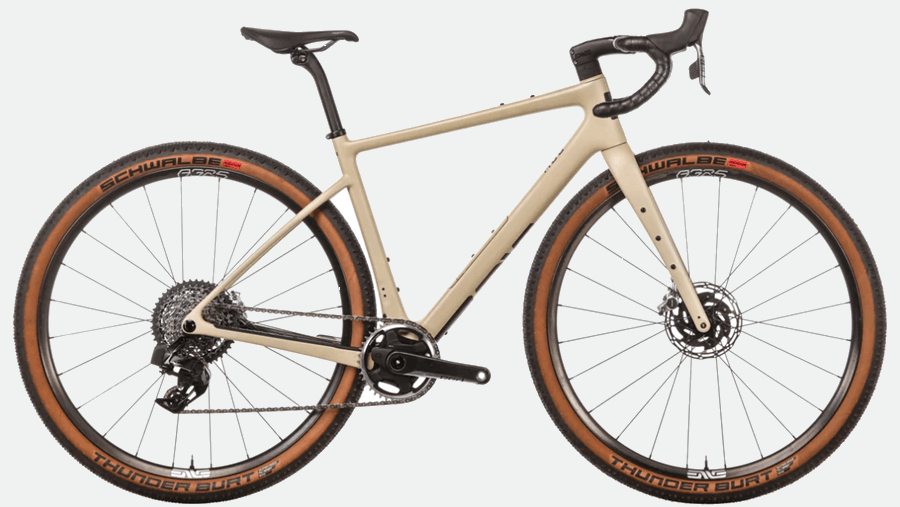 Bicycles ENVE MOG Red AXS Gravel Bike: Carbon Performance Built for Any Terrain |  Bicycles |
Sponsored · Competitive Cyclist
We are an Amazon affiliate and earn from qualified Amazon purchases with no cost to you. This is for ANY product that you purchase through our links. We are also an affiliate for Competitive Cyclist and JensonUSA.