

| Quick Answer: For a 40K time trial lasting about an hour, ride at roughly 95 to 100% of your true FTP, hold power as even as the course allows, and keep the first five minutes controlled. Pace off lap-average power rather than instant watts, and save any extra effort for the final five minutes. |
By James Hickman, former USA Cycling Expert-level coach and Masters-category racer
What the Montréal Worlds Time Trial Shows About Pacing
The elite men’s time trial at the 2026 UCI Road World Championships in Montréal on September 20 covered 39.2 kilometers, almost exactly the distance most of us race, on a fast, twisting course with about 220 meters of climbing and a short uphill finish. Remco Evenepoel won his fourth straight world title and was fastest at every time check. Filippo Ganna rode it differently: he was only 10th at the first check, climbed to second by the third, and finished second, just under a minute back, according to Cyclingnews’ live coverage.
You don’t get official time checks in a local TT, but setting your bike computer to auto-lap every 5 kilometers gives you your own splits to pace against.
Ganna is known for negative splits. He accepted a slower opening to have more left in the second half. Evenepoel, by his own account after the race, felt he had over-paced the first section and was able to keep pushing anyway. That is a margin a world champion can get away with. Most amateurs who open that hard pay for it in the back half, and the controlled start is where the rest of us save the most time.
Why FTP Works for a 40K
FTP is your best estimate of the power you can hold for about an hour, and a 40K takes most amateurs 55 to 75 minutes. That makes the 40K the one race where your FTP number maps almost directly onto race pace.
The number has to be real, though. An FTP inflated by a badly paced test is the most common reason riders blow up at 25K. If your target is built on a number that is 5% too high, you are racing above threshold from the start and the second half will show it.
Retest one to two weeks before the race: far enough out to recover, close enough to reflect current fitness. Test in your TT position. Many riders make noticeably less power on the aero bars than on the hoods, especially early in the season, and your aero number is the one that matters on race day. Our FTP testing guide covers the protocol.
Set Your Target Power
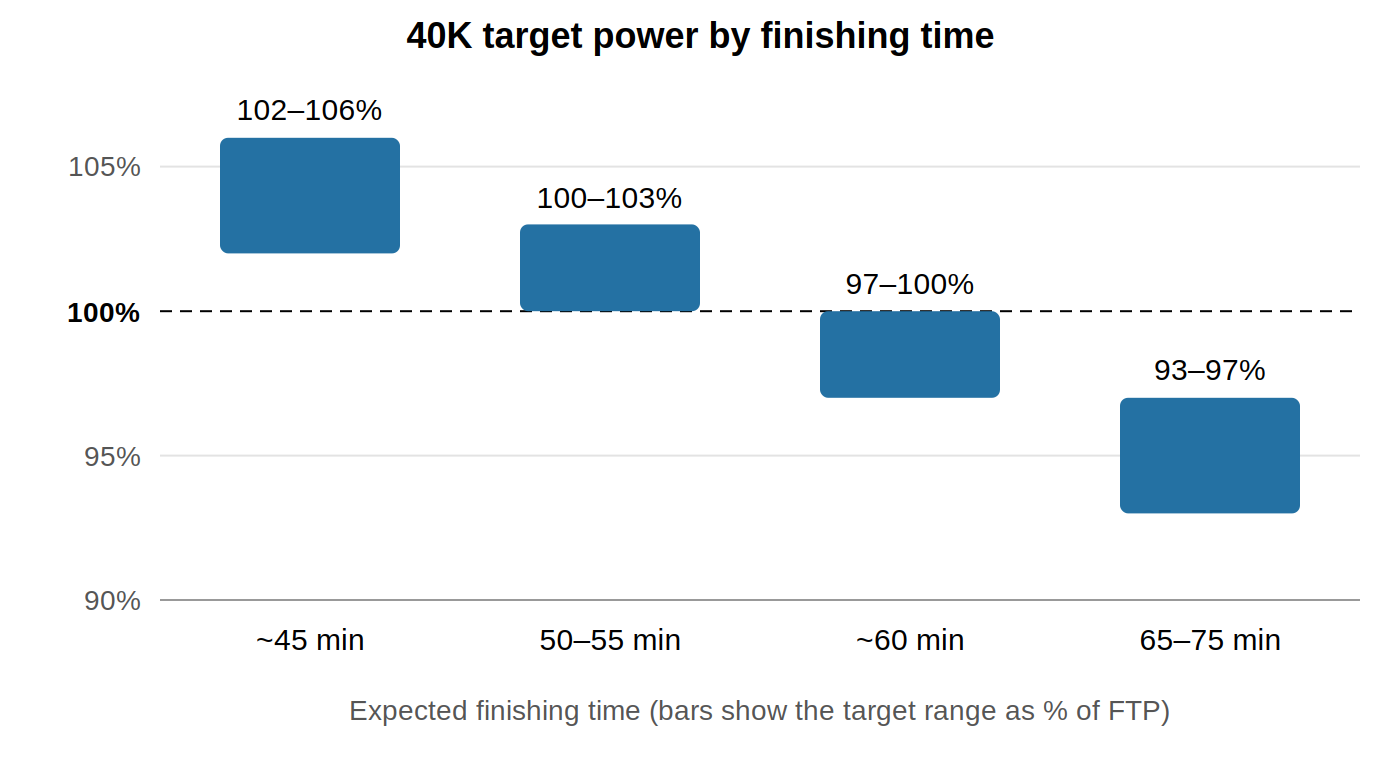
Your target depends on how long you expect to be out there. Shorter efforts can sit slightly above FTP; longer ones need to sit slightly below it. Use these as starting ranges:
| Expected 40K time | Target (% of FTP) | Example at 250 W FTP |
| About 45 minutes | 102–106% | 255–265 W |
| 50–55 minutes | 100–103% | 250–258 W |
| About 60 minutes | 97–100% | 243–250 W |
| 65–75 minutes | 93–97% | 233–243 W |
Then adjust. In heat, drop the target 2 to 3%. If you arrive tired from a hard week, poor sleep or travel, drop it another 2 to 3%. If you have only tested on the hoods, take a few percent off until you have an aero test to go by. None of these adjustments stack into a big number on a normal day; if you find yourself cutting 10%, the problem is the FTP, not the race.
Sponsored · Competitive Cyclist
Pacing a 40K starts with numbers you can trust. The 4iiii Precision 3+ power meter is a straightforward way to train and race with consistent watts.
Choose a Pacing Strategy
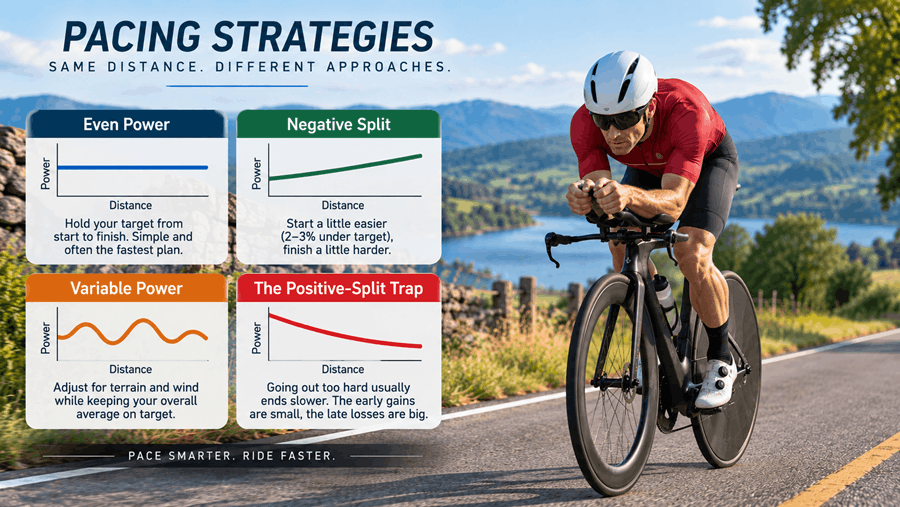
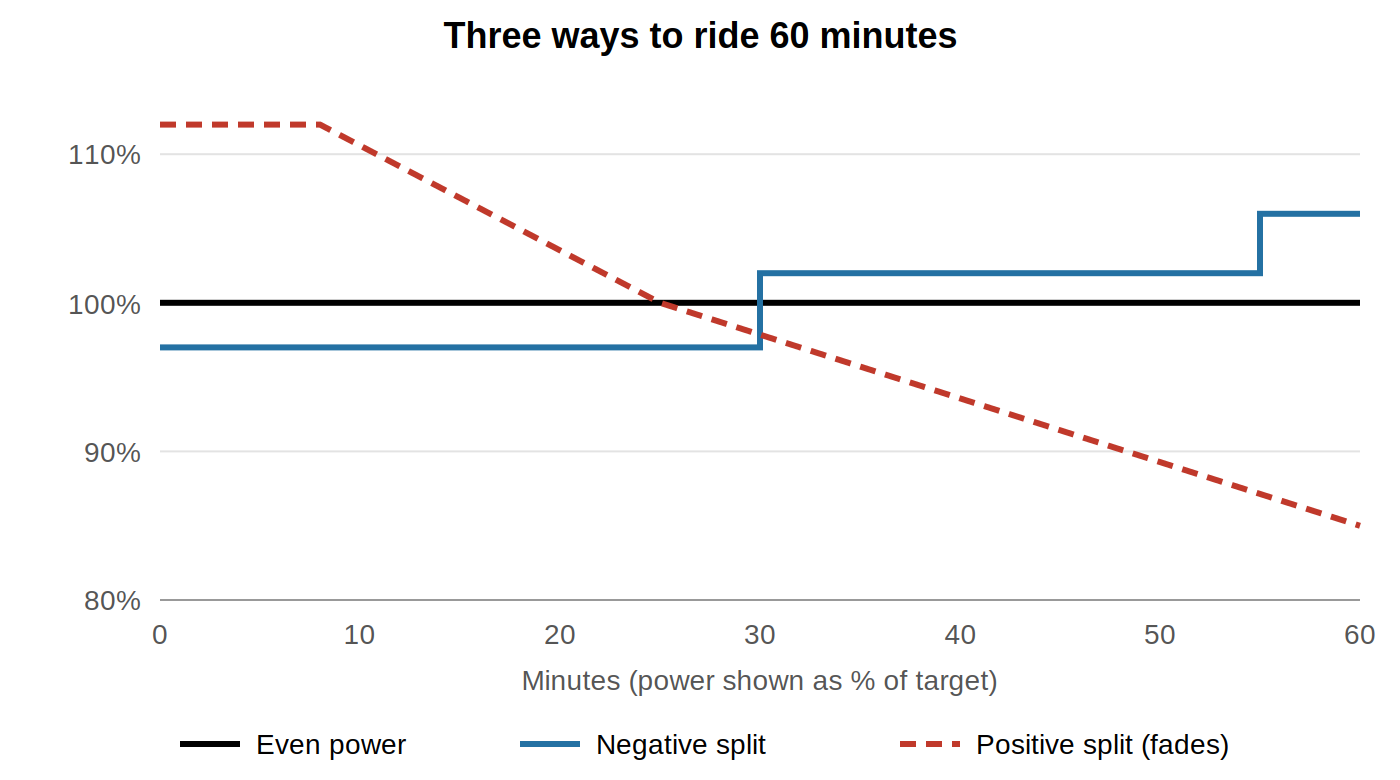
Even power is the default on flat courses. Pick your target and hold it from the first kilometer to the last. It is the simplest plan and, for most riders, the fastest.
Negative split means riding the first half a little easier, around 2 to 3% under target, and the second half a little harder. It is Ganna’s approach, and it suits riders who tend to get carried away early.
Variable power means raising and lowering effort to match terrain and wind while keeping the overall average on target. It is the right plan on rolling or windy courses, covered below.
The positive-split trap is going out hard and fading. Every minute spent well above threshold draws on a limited reserve of anaerobic capacity that does not come back while you are still riding hard. The time you gain in the first 10 minutes is small; the time you lose over the last 20 is not.
Pace to the Course
The principle is simple: spend extra watts where you are slow and save them where you are fast. On a climb or into a headwind, a few extra watts buy real time because speed is low. On a descent or with a tailwind, aerodynamic drag dominates and extra watts buy almost nothing.
Flat courses: ride even power. Rolling courses: push a little over target on the rises and ease slightly over the tops once you are up to speed. Hilly courses: ride the climbs above target and recover on the descents, tucked and pedaling lightly only when pedaling still adds speed. Headwind and tailwind sections: treat a headwind like a climb and a tailwind like a descent. Turns and technical sections: brake before the corner, not in it, and bring speed back up with a smooth effort rather than a sprint.
Keep short surges to about 105 to 110% of FTP. Going harder than that on a rise costs more in recovery than it saves on the clock. After the race, your Variability Index (Normalized Power divided by average power) tells you how controlled you were: aim for 1.05 or lower on flat courses and a little higher, up to around 1.08, on rolling ones. Be realistic about the payoff. Good variable pacing gains seconds, not minutes. The big gains come from not starting too hard.
Plan the Start, Middle and Finish
Minutes 0 to 5: stay within about 5% of target, even when adrenaline says you feel great. You will feel great. Everyone does for the first five minutes.
The middle: settle into target, check lap-average power every five minutes, and make small corrections. This is where the race is won or lost, and it should feel hard but controlled.
The last 5 minutes: empty the tank only if there is something left. If you paced correctly, there will be. Here is a sample plan for a rider with a 250 W FTP aiming for 60 to 65 minutes, using a 240 W target:
| Segment | Power | Cue |
| Start ramp to 5 min | 235–250 W | Ignore the first 30 seconds. Settle breathing and position. |
| 5–20 min | 240 W | Check 5-minute laps. Relax shoulders and hands. |
| 20–40 min | 240 W average | Up to 265–275 W on rises and into wind, around 210–220 W on fast sections. |
| 40–55 min | 240–245 W | Hold the number. Stay in the tuck. Count down segments. |
| Last 5 min | 250 W and up | Build steadily. Go all out only in the final 1 to 2 minutes. |
Use Your Head Unit Correctly
Instant power jumps around with every pedal stroke, bump and gust. Chasing it leads to constant small surges that waste energy. Use 10-second power for moment-to-moment control (3-second power is too twitchy for most riders) and lap-average power to judge whether you are on plan. Set auto-laps at 5 kilometers or 5 minutes.
Normalized Power weights hard efforts more heavily, so it reads higher than average power on a variable course. On a flat TT the two should be close. Heart rate lags effort by 30 seconds or more and drifts upward over an hour, so use it as background information, not as a pacing target. Ride the cadence you trained at, which for most riders falls somewhere in the 85 to 95 rpm range. Use perceived effort as a cross-check: if the numbers say 240 W but it feels like a max effort at 10 minutes, your FTP or your day is off, and you should back off slightly.
Do a zero-offset calibration on the start line area after your warm-up, once the power meter is at outdoor temperature. Keep the screen simple: 10-second power, lap-average power, elapsed time and distance. Set an alert about 5% above target so your head unit tells you when the start is getting away from you. Units like the Garmin Edge 530 or Wahoo ELEMNT Bolt handle custom lap fields and power alerts well.
Amazon Affiliate: I earn from qualified purchases.
Warm-Up and Race-Day Prep
A 20 to 30 minute warm-up works for most riders: 10 to 15 minutes building from easy to tempo, then two or three 1 to 2 minute openers at about 100 to 105% of FTP with easy spinning between, then easy riding. Finish 5 to 10 minutes before your start time so you arrive at the ramp warm but not fatigued. Work backward from your start time, and allow for check-in, the bike check and the walk to the start.
Eat a familiar, carbohydrate-based meal two to three hours before your start. For an effort around an hour, a carbohydrate drink in the last hour before the start and a bottle you can sip on the course are usually enough; a product like Maurten Drink Mix 320 is easy on the stomach. Start well hydrated. If you use caffeine, take a dose you have already tried in training, 30 to 60 minutes before the start. In heat, lower your target, warm up in the shade and use cold drinks.
On the start ramp, be in the gear you want to start in, clipped in, and relaxed. Your first 30 seconds will read high no matter what. Get up to speed and then check your power. Do not sprint off the ramp.
Position, Equipment and Pacing
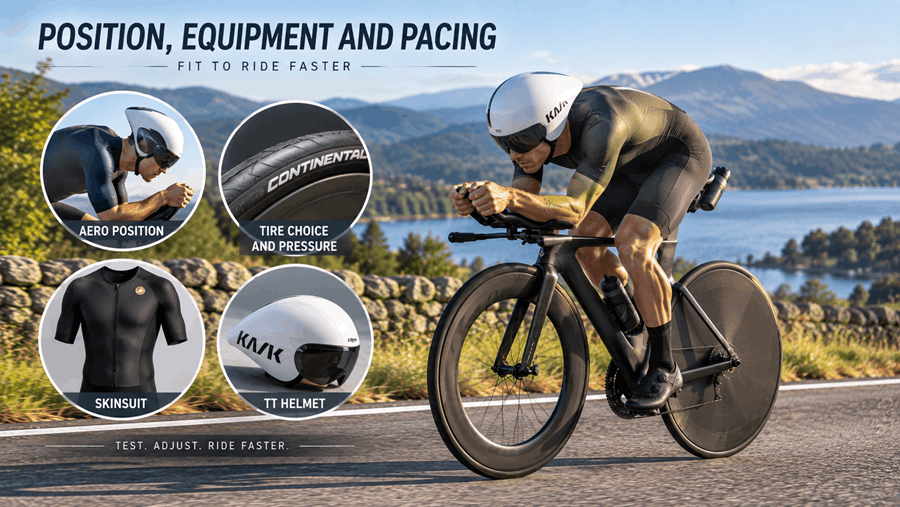
A position you cannot hold for an hour costs more power than it saves in drag. If you have to sit up every few minutes, or your power drops sharply in the tuck, raise the front end until you can hold it. Tire choice and pressure, a skinsuit and a TT helmet all add free speed, but aero gains only count if you can still produce your target power in that position. Test your position at race power before race day, not during the race.
Mental Strategy and In-Race Decisions
Break the race into segments, such as four 10K blocks or the course’s landmarks, and ride one at a time. When you catch a rider, pass decisively and return to your target; do not sprint past and then fade. When you get caught, let them go. Their pace is not your plan. In gusty crosswinds, stay low and loose rather than fighting the bike.
Stick with the plan unless something real changes. A mechanical, a wind shift or rising heat are reasons to adjust. Feeling good at 10 minutes is not. If you lose time to a problem, do not try to win it back in a single surge; return to target and let the average recover.
Train for Your Pacing Plan
In the last six weeks, build around three or four key sessions: over-unders (for example, 3 × 9 minutes alternating 2 minutes at 95% and 1 minute at 105% of FTP), 2 × 20 minutes at target power in your TT position, and a 30 to 40 minute rehearsal at race power two to three weeks out, ideally on a similar course. Each one teaches you what target power feels like in the aero position.
Retest one to two weeks out and set your final target from that result. In race week, cut volume noticeably but keep a couple of short efforts at race power so your legs stay sharp.
After the Race: Review Your File
Look at average power, Normalized Power and Variability Index. Compare your lap splits: if the first 10K was well above your overall average and the last 10K well below, you started too hard. Compare power against speed by section to see where watts bought time and where they did not. Then use what you learn to set the next race’s target. Training and Racing with a Power Meter by Hunter Allen and Andrew Coggan is the standard reference for this kind of analysis.
Common 40K Pacing Mistakes
- Starting too hard: cap the first five minutes at 5% over target.
- Racing on an inflated FTP: retest in your TT position one to two weeks out.
- Chasing instant watts: pace off 10-second and lap-average power.
- Big surges on rises: cap them at about 105 to 110% of FTP.
- Pushing hard on descents and tailwinds: ease slightly and save it for climbs and headwinds.
- Warming up too early or too little: finish 5 to 10 minutes before your start.
- An unholdable position: choose a position you can keep for the whole hour.
Frequently Asked Questions About 40K Time Trial Pacing
What percentage of FTP should I ride a 40K time trial?
Most riders finishing in about an hour should target 97 to 100% of FTP. Riders finishing in about 45 minutes can ride slightly above FTP, around 102 to 106%, and riders taking 65 to 75 minutes should ride slightly below it, around 93 to 97%.
Is even pacing or a negative split better?
On a flat course, even power is usually fastest. A slight negative split, riding the first half 2 to 3% under target and the second half slightly over, is a good choice for riders who tend to start too hard. Both beat a positive split, where a fast start leads to a fade.
What Variability Index is good for a time trial?
Aim for a Variability Index of 1.05 or lower on flat courses. Rolling or technical courses will run a little higher, up to around 1.08. A higher number usually means too many surges or an uneven start.
How long should I warm up for a 40K time trial?
Most riders do best with 20 to 30 minutes, including two or three short openers at about 100 to 105% of FTP. Finish 5 to 10 minutes before your start time.
How do I pace a 40K in wind or hills?
Ride above target on climbs and into headwinds, and ease slightly on descents and with tailwinds, while keeping your overall average on target. Cap short surges at about 105 to 110% of FTP.
How many weeks should I train for a time trial?
With a solid aerobic base, six weeks of focused work is enough to sharpen for a 40K. Build around over-unders, 2 × 20 minutes at target power and a race-pace rehearsal, retest one to two weeks out, and reduce volume in race week.
James Hickman is a former USA Cycling Expert-level coach who has worked with cyclists at every level, from beginners to competitive racers. He served as a coach for the Leukemia & Lymphoma Society’s Team In Training program, helping riders prepare for and complete century events. A Masters-category racer himself, he competed and earned podium finishes in Southern California events and holds a Platinum finish at El Tour de Tucson, completing the 100 miles+ in under five hours.
Related Reading
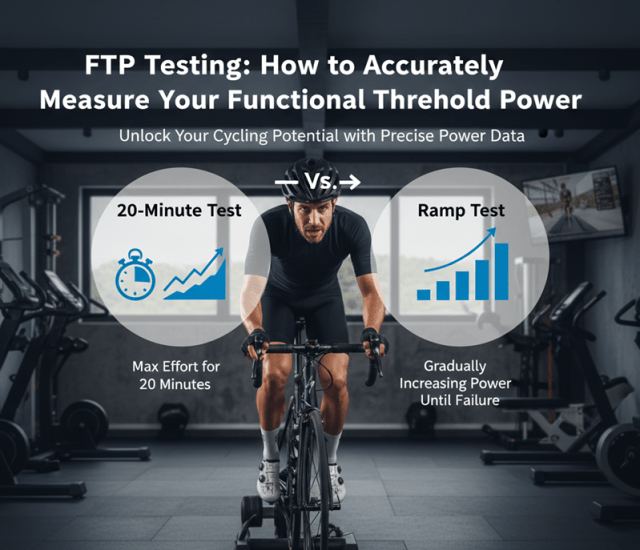 FTP Testing FTP Testing: How to Accurately Measure Your Functional Threshold Power |  Training Zones |  Equipment Power Meters: Complete Guide to Choosing and Using Cycling Power Meters |
Got your target watts? Now raise the number behind them.
Pacing gets the most out of the FTP you have. A higher FTP makes every target faster. Answer 7 quick questions and get a personalized roadmap showing where to focus before your next time trial.
Sponsored · Competitive Cyclist
We are an Amazon affiliate and earn from qualified Amazon purchases with no cost to you. This is for ANY product that you purchase through our links. We are also an affiliate for Competitive Cyclist and JensonUSA. This way we can provide you with competitive pricing and products.