


“`html
Quick Answer: Most recreational cyclists should make Zone 2 the largest part of their weekly riding, but there is no magic percentage that works for everyone. For riders training roughly 5–8 hours per week, about 60–75% of that time at an easy aerobic intensity is a practical starting point. Higher-volume riders can spend an even larger percentage riding easy, while time-crunched cyclists still need enough threshold and VO2max work to improve performance.
By James Hickman, former USA Cycling Expert-level coach and Masters-category racer
Amazon Affiliate I earn from qualified purchases
Zone 2 Is Important — But How Much Do You Really Need?

Zone 2 training has become one of the most talked-about subjects in endurance sports. Spend a little time watching cycling videos or reading training advice and you could easily come away believing that nearly every ride should be Zone 2.
I don’t think it’s quite that simple. Zone 2 is one of the best tools we have for building aerobic fitness, but the amount a cyclist actually needs depends on weekly training volume, goals, experience, and recovery. Someone riding five hours per week should not blindly copy the training distribution of a professional cyclist riding 20 hours.
Coach’s note: I’ve always looked at Zone 2 as the foundation, not the entire house. Build enough aerobic fitness that you can absorb harder training, but don’t become so obsessed with riding easy that you forget why you’re training in the first place.
What Exactly Is Zone 2 Training?
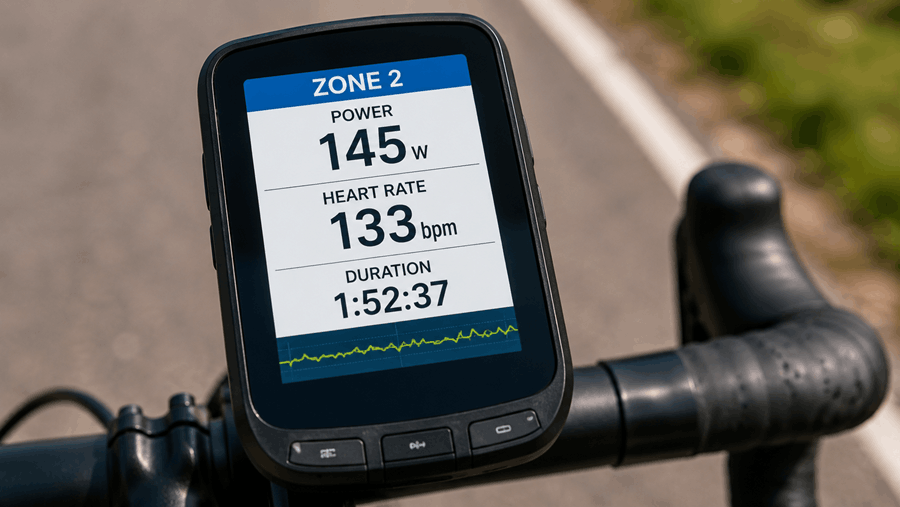
Zone 2 is steady, low-intensity aerobic work performed below your first major physiological threshold. The effort should feel controlled and sustainable. You should be breathing steadily and still able to speak in complete sentences without gasping for air.
Cyclists often define Zone 2 using heart rate or power. Depending on the zone system being used, that might place you somewhere around 60–75% of FTP or roughly 65–75% of maximum heart rate. Those percentages are useful guides, but individual physiology varies enough that I wouldn’t treat them as hard boundaries.
This is also where the old-fashioned talk test remains useful. If you can comfortably carry on a conversation, you’re probably somewhere near the aerobic intensity we’re trying to achieve.
Keep Your Zone 2 Honest: Power is excellent for controlling effort, but heart rate gives you another useful look at how your body is responding. The Polar H10 Heart Rate Monitor is one of the easiest ways to add accurate heart-rate data to a cycling computer or training app. It’s especially useful for riders who have a habit of turning every easy ride into a moderately hard one.
Why So Much Endurance Training Is Easy
The main advantage of Zone 2 isn’t that it produces some adaptation that harder training cannot. The real advantage is that cyclists can accumulate a lot of aerobic work without producing the fatigue that comes with repeated threshold and high-intensity sessions.
Low-intensity endurance training supports mitochondrial development, fat oxidation, cardiovascular fitness, and the ability to sustain work for long periods. More importantly, you can usually recover from it quickly enough to ride again the next day.
Research on endurance athletes has repeatedly shown that successful athletes perform most of their training at relatively low intensities. You’ve probably heard this simplified into the famous 80/20 rule — roughly 80% easy and 20% hard.
The problem comes when cyclists assume 80% is a universal prescription. It isn’t.
Coach’s note: Eighty percent of a 20-hour professional training week is 16 hours of easy riding. Eighty percent of a five-hour recreational week is four hours. Those riders have completely different training problems. Percentages only make sense when you look at the total hours behind them.
How Much Zone 2 Training Do Cyclists Actually Need?
For recreational cyclists, I prefer practical ranges rather than rigid formulas. The following is a reasonable starting point, not a physiological law.
| Weekly Training | Practical Zone 2 Target |
| 3–5 hours | About 2–3 hours |
| 6–8 hours | About 3.5–5.5 hours |
| 9–12 hours | About 6–9 hours |
| 12+ hours | Zone 2 can make up most training volume |
The pattern is straightforward: the more hours you train, the larger the percentage that usually needs to be easy. Trying to perform six or seven hard rides in a ten-hour week would bury most cyclists. Zone 2 allows you to increase training volume without increasing fatigue at the same rate.
More Zone 2 Isn’t Automatically Better

This is where some of the current Zone 2 enthusiasm goes too far. Recent reviews have questioned the idea that training specifically in Zone 2 produces uniquely superior mitochondrial adaptations compared with other endurance intensities. Higher-intensity training remains extremely effective, particularly when the cyclist doesn’t have many hours available.
If you only have five or six hours per week, using nearly all of it for easy riding can leave an important training stimulus on the table. Threshold, VO2max, tempo, and Sweet Spot work all have a place when used correctly.
Zone 2 builds the aerobic engine. Harder training teaches that engine to produce more power.
Long Zone 2 Rides Still Need Fuel
Another mistake is assuming an easy ride doesn’t need nutrition. Once a Zone 2 ride becomes long enough, carbohydrate intake helps maintain output and reduces the recovery cost afterward. You don’t need to fuel a relaxed 45-minute spin like a race, but a two- or three-hour endurance ride is different.
For Longer Zone 2 Rides: Tailwind Endurance Fuel is an easy way to combine carbohydrate and electrolytes in the bottle on longer aerobic rides. For riders who don’t want to constantly unwrap bars or gels during a steady endurance session, drinkable fuel keeps things simple.
Don’t Let Zone 2 Turn Into Zone 3
One of the most common mistakes I see is the rider who starts an endurance ride correctly and slowly lets the intensity creep upward.
A hill comes along. Someone passes you. Then there’s a Strava segment. Before you know it, the easy ride has become a tempo workout.
There’s nothing wrong with tempo training when tempo is the goal. The problem is accumulating moderate fatigue on days that were supposed to help you recover for the workouts that really matter.
Coach’s note: I tell riders to make their easy days easy enough that they can attack the hard days properly. If you’re constantly tired but rarely doing truly difficult workouts, there’s a good chance your easy rides aren’t as easy as you think.
The Bottom Line
So, how much Zone 2 training do cyclists actually need? For most recreational riders, having roughly 60–75% of weekly riding at a genuinely easy aerobic intensity is a reasonable place to start. Riders doing higher training volume may spend an even larger percentage there.
But don’t chase a percentage just because someone on the internet told you 80/20 is the secret. Your training needs to fit the hours you have available, the events you’re preparing for, and the amount of work you can consistently recover from.
Easy enough to recover. Hard enough to stimulate. Consistent enough to matter. That’s the Zone 2 balance I’m looking for.
Frequently Asked Questions
How many hours of Zone 2 should cyclists do each week?
It depends on total training volume. A cyclist training 3–5 hours per week might accumulate roughly 2–3 hours of Zone 2, while someone training 9–12 hours could comfortably accumulate 6–9 hours of low-intensity aerobic riding.
Is 30 minutes of Zone 2 cycling enough?
Yes. Thirty minutes still contributes to aerobic fitness, particularly for beginners or cyclists with limited time. Longer rides allow you to accumulate more aerobic volume, but short Zone 2 sessions performed consistently still have value.
Can cyclists do too much Zone 2 training?
Yes. More Zone 2 is not automatically better if it creates unnecessary fatigue or replaces harder training needed to improve FTP, VO2max, and race-specific performance.
Should cyclists do Zone 2 every day?
Not necessarily. Zone 2 can be performed frequently because its recovery cost is relatively low, but complete recovery days and strategically placed higher-intensity sessions still belong in most cycling training plans.
Is Zone 2 better than Sweet Spot training?
Neither is universally better. Zone 2 is ideal for accumulating aerobic volume with manageable fatigue, while Sweet Spot delivers a larger training stimulus in less time. Many recreational cyclists benefit from using both.
Not sure where to focus your training?
Answer 7 quick questions and get a personalized FTP roadmap built around your fitness level, available training time, and biggest limiter — in about two minutes.
James Hickman is a former USA Cycling Expert-level coach who has worked with cyclists at every level, from beginners to competitive racers. He served as a coach for the Leukemia & Lymphoma Society’s Team In Training program, helping riders prepare for and complete century events. A Masters-category racer himself, he competed and earned podium finishes in Southern California events and holds a Platinum finish at El Tour de Tucson, completing the 100 miles+ in under five hours.
Related Reading
 Training |  Training |  Training Progressive Overload for Cyclists: How to Build Power Without Burning Out |
Sponsored · Competitive Cyclist
We are an Amazon affiliate and earn from qualified Amazon purchases with no cost to you. This is for ANY product that you purchase through our links. We are also an affiliate for Competitive Cyclist and JensonUSA. This way we can provide you with competitive pricing and products.
“`