

Great Starter Bike For Beginners

This comprehensive guide covers everything beginners need to know about selecting a great starter bike. Choosing your first bicycle requires understanding key components, sizing, and features that make cycling enjoyable and safe.
What Makes a Great Starter Bike? Key Features to Look For
A great starter bike prioritizes stability, comfort, and reliability over speed or advanced features. The frame geometry should position riders upright for better visibility and reduced strain on the back and neck.
Frame materials significantly impact performance and price. Aluminum frames offer the best balance of weight, durability, and cost for beginners. Steel frames provide excellent comfort through natural vibration dampening but weigh more. Carbon fiber remains expensive and unnecessary for new cyclists.
Gear systems should remain simple. Single-speed bikes work well for flat terrain, while 7-21 speed systems handle varied topography without overwhelming complexity. Avoid bikes with more than 21 gears initially.
Brake systems must provide reliable stopping power. Rim brakes cost less and offer adequate performance for beginners. Disc brakes provide superior stopping power in wet conditions but require more maintenance and increase costs.
Wheel size affects handling characteristics. 26-inch wheels offer maneuverability, 27.5-inch wheels balance rolling efficiency with control, and 29-inch wheels roll over obstacles easily but reduce agility.
Comfort features include padded saddles, ergonomic grips, and suspension elements. However, excessive padding often causes discomfort during longer rides. Quality saddles match rider anatomy rather than maximize cushioning.
Types of Starter Bikes: Road vs Mountain vs Hybrid
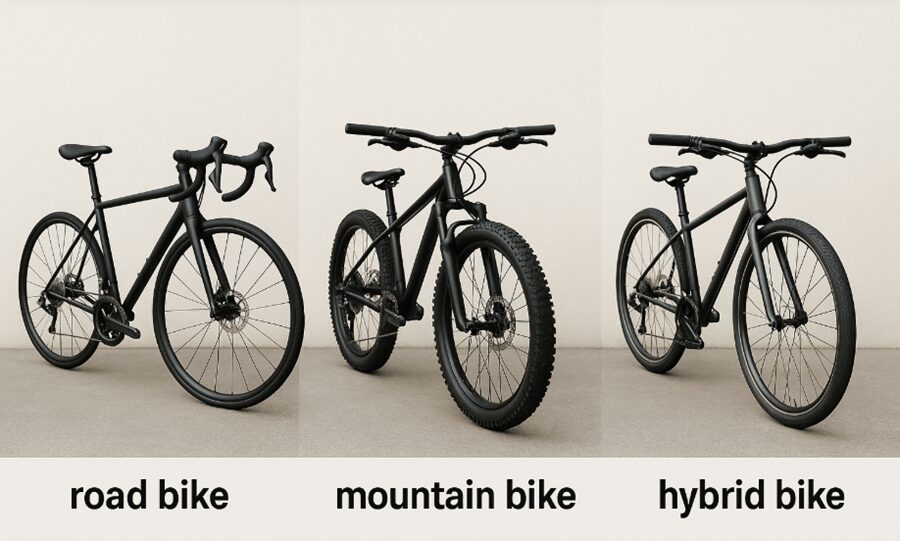
Road bikes excel at speed and efficiency on paved surfaces. They feature drop handlebars, narrow tires (23-28mm), and aggressive geometry. Road bikes suit beginners planning primarily street riding and fitness goals.
Mountain bikes handle rough terrain with wide tires (2.0-2.5 inches), flat handlebars, and suspension systems. Hardtail mountain bikes include front suspension only, while full-suspension models add rear shock absorption. Beginners should start with hardtails for lower costs and simpler maintenance.
Hybrid bikes combine road and mountain bike features. They use flat handlebars for upright positioning, medium-width tires (32-40mm), and versatile gearing. Hybrid bikes represent the most practical choice for beginners riding varied terrain.
Comfort bikes prioritize upright positioning and cushioned saddles. They work well for casual neighborhood rides but limit performance potential. Consider comfort bikes only for very short, leisurely rides.
Cruiser bikes feature classic styling with wide saddles and swept-back handlebars. Single-speed cruisers suit flat terrain, while multi-speed versions handle hills. Cruisers emphasize style over performance.
Electric bikes (e-bikes) provide motor assistance but complicate maintenance and increase costs significantly. Beginners should master traditional cycling before considering e-bikes.
How to Choose the Right Size Bike for Beginners

Proper bike sizing prevents discomfort and injury while maximizing efficiency. Frame size represents the most critical measurement, typically specified in inches for mountain bikes and centimeters for road bikes.
Stand over height determines whether riders can safely mount and dismount. Stand over the top tube with both feet flat on the ground. Allow 1-2 inches clearance for road bikes and 2-4 inches for mountain bikes.
Reach affects comfort and control. Proper reach allows slight elbow bend when gripping handlebars with shoulders relaxed. Excessive reach causes back strain, while insufficient reach cramps positioning.
Saddle height impacts pedaling efficiency and knee health. Proper height allows 25-30 degree knee bend at the bottom of the pedal stroke. Too high causes hip rocking, too low reduces power and strains knees.
Professional bike fitting services optimize positioning for individual anatomy. Many bike shops provide basic fitting with purchases. Invest in professional fitting for bikes costing over $800.
Frame size charts provide starting points, but test riding remains essential. Different manufacturers use varying geometries, making actual fit more important than listed sizes.
Adjustability allows fine-tuning after purchase. Stems, seat posts, and handlebars can be adjusted within limits. However, major sizing errors cannot be corrected through adjustments alone.
Essential Features Every Beginner Bicycle Should Have

Reliable brakes form the most critical safety component. Rim brakes use pads that squeeze wheel rims, while disc brakes employ rotors and calipers. Both systems work effectively when properly maintained.
Gear systems should match intended terrain. Single-speed bikes eliminate complexity for flat areas. 7-speed systems handle moderate hills, while 21-speed setups tackle varied topography. More gears add weight and complexity without proportional benefits for beginners.
Quality wheels affect ride quality and durability. Machine-built wheels using 36 spokes provide strength and easy repair. Hand-built wheels offer superior quality but cost more. Avoid wheels with fewer than 32 spokes for durability.
Tires significantly impact performance and safety. Width affects rolling resistance and comfort. Narrower tires roll faster but provide less comfort and traction. Wider tires offer stability and puncture resistance at the cost of speed.
Saddle comfort depends on proper width and firmness rather than excessive padding. Quality saddles support sit bones without causing pressure points. Replace stock saddles if discomfort persists after proper adjustment.
Handlebars determine riding position and control. Flat bars provide upright positioning and easy control. Drop bars allow multiple hand positions and aerodynamic positioning but require adaptation time.
Pedals range from basic platform designs to clipless systems. Platform pedals accommodate any footwear and allow easy foot removal. Clipless pedals improve efficiency but require special shoes and practice.
Best Starter Bike Brands: Trusted Options for New Cyclists

Trek offers comprehensive beginner bike lines with excellent dealer support. The FX series provides quality hybrid bikes, while the Domane line features comfortable road bikes. Trek’s lifetime warranty on frames demonstrates build quality confidence.
Giant produces value-oriented bikes with solid components and reliable performance. The Escape series delivers versatile hybrid bikes, while the Contend line offers affordable road bikes. Giant’s manufacturing scale enables competitive pricing.
Specialized focuses on performance and innovation across all price points. The Sirrus series provides efficient hybrid bikes, while the Allez line features lightweight road bikes. Specialized dealers typically offer superior fitting services.
Cannondale emphasizes aluminum frame expertise with comfortable geometry. The Quick series delivers responsive hybrid bikes, while the CAAD line provides race-inspired road bikes. Cannondale’s lifetime frame warranties protect long-term investments.
Budget-friendly brands like Diamondback, Schwinn, and Mongoose offer acceptable quality at lower prices. These brands work well for casual riders but may lack durability for frequent use or dealer support for service.
Direct-to-consumer brands like Canyon, YT, and Commencal eliminate dealer markups but require self-assembly and limit test riding opportunities. Consider these options only after determining proper sizing and desired features.
Budget Guide: How Much to Spend on Your First Bike

Entry-level bikes ($300-600) provide basic functionality for casual riding. Expect steel frames, basic components, and limited adjustability. These bikes suit occasional riders planning short distances on smooth surfaces.
Mid-range bikes ($600-1200) offer aluminum frames, reliable components, and better adjustability. Component quality improves durability and performance. This range suits regular riders planning varied terrain and longer distances.
High-end beginner bikes ($1200-2000) feature lightweight frames, quality components, and excellent adjustability. These bikes accommodate serious fitness goals and frequent riding. Consider this range only after confirming cycling commitment.
Additional costs include essential accessories. Budget $150-300 for helmet, lights, lock, pump, and basic tools. Many shops offer accessory packages with bike purchases at discounted prices.
Maintenance costs average $100-200 annually for regular tune-ups and basic repairs. Learning basic maintenance reduces ongoing costs but requires time investment and tool purchases.
Used bikes can provide excellent value but require careful inspection. Check frame integrity, component wear, and shifting/braking performance. Factor potential repair costs into used bike pricing.
Safety First: Must-Have Gear for Beginning Cyclists

Helmets provide essential head protection and are legally required in many areas. Proper helmet fit requires level positioning, secure strap adjustment, and minimal movement when shaking the head. Replace helmets after any impact or every 3-5 years.
Lights ensure visibility during dawn, dusk, and night riding. Front lights should produce at least 200 lumens for urban riding and 400+ lumens for unlit roads. Rear lights must be visible from 500 feet minimum.
Reflective clothing increases visibility during low-light conditions. Reflective vests, arm bands, and ankle straps reflect vehicle headlights effectively. Bright colors also improve daytime visibility.
Basic tool kits enable roadside repairs and adjustments. Include tire levers, spare tube, portable pump, multi-tool, and chain tool. Practice tire repairs at home before needing roadside fixes.
First aid supplies address common cycling injuries. Include bandages, antiseptic wipes, pain relievers, and emergency contact information. Waterproof containers protect supplies from weather.
Emergency identification should include medical conditions, emergency contacts, and insurance information. ICE (In Case of Emergency) apps store this information accessibly on smartphones.
Basic Bike Maintenance Every Beginner Should Know

Tire pressure affects rolling resistance, comfort, and puncture protection. Check pressure weekly using a gauge. Maintain pressure within sidewall-specified ranges. Under-inflation increases rolling resistance and puncture risk.
Chain maintenance prevents premature wear and ensures smooth shifting. Clean chains monthly using degreaser and clean rags. Apply bicycle-specific lubricant after cleaning. Wipe excess lubricant to prevent dirt accumulation.
Brake inspection ensures reliable stopping power. Check pad wear monthly and replace when grooves disappear. Adjust cable tension if brake levers pull too close to handlebars. Clean brake surfaces regularly.
Gear adjustment maintains smooth shifting performance. Most adjustment issues stem from cable stretch or dirt accumulation. Basic barrel adjuster tweaks can resolve minor shifting problems. Complex issues require professional service.
Cleaning extends component life and maintains appearance. Rinse bikes after muddy rides and wash monthly with mild soap. Avoid high-pressure washing near bearings and electronic components.
Storage protection prevents weather damage and theft. Indoor storage eliminates weather exposure. Outdoor storage requires weather-resistant covers and secure locking systems.
Where to Buy Your First Bike: Shop vs Online

Local bike shops provide personalized service, professional fitting, and ongoing support. Test riding opportunities ensure proper fit and comfort. Assembly and initial adjustments are included. Warranty service and repairs remain convenient.
Online retailers offer competitive pricing and broader selection. Direct-to-consumer brands eliminate dealer markups. However, assembly requirements and fitting challenges complicate purchases. Return policies may not cover sizing issues.
Box stores provide lowest prices but minimal service. Assembly quality varies significantly. Component specifications often differ from bike shop equivalents despite similar model names. Warranty service may be limited.
Used bike sources include online marketplaces, classified ads, and consignment shops. Inspect frames for cracks, check component wear, and test all functions. Factor potential repair costs into pricing decisions.
Timing affects pricing and selection. Spring brings new model introductions and full inventory. Fall offers discounts on current-year models. End-of-season sales provide best pricing on remaining inventory.
Financing options extend bike budgets but increase total costs. Shop financing, credit cards, and personal loans offer different terms. Compare interest rates and consider cash purchases when possible.
Getting Started: Your First Rides and Building Confidence

Route selection impacts early cycling experiences significantly. Start with quiet neighborhood streets, park paths, or rail-trails. Avoid busy roads, steep hills, and technical terrain initially. Gradually progress to more challenging routes.
Skill development requires systematic practice. Master starting, stopping, and turning in safe areas. Practice emergency braking and obstacle avoidance. Build endurance gradually with progressively longer rides.
Traffic awareness develops through experience and education. Learn traffic laws, hand signals, and road positioning. Assume drivers don’t see cyclists and ride defensively. Consider cycling education courses for comprehensive training.
Group riding opportunities provide motivation, safety, and social benefits. Local cycling clubs often organize beginner-friendly rides. Bike shops frequently sponsor group rides for customers. Online platforms connect local cyclists.
Goal setting maintains motivation and tracks progress. Start with distance or time goals rather than speed objectives. Document rides using smartphone apps or cycling computers. Celebrate improvements and milestones.
Weather adaptation extends riding seasons and builds experience. Start with favorable conditions and gradually ride in light rain or wind. Proper clothing and equipment enable comfortable riding in varied conditions.
We are an Amazon affiliate and earn from qualified Amazon purchases with no cost to you. This is for ANY product that you purchase through our links.
JUST STARTING OUT? HERE ARE SOME MUST HAVE ITEMS TO GET YOU GOING!
The Essential Gear Every New Cyclist Needs:
✅ **Schwinn Discover Hybrid Bike**
*Perfect starter bike for road and light trails*
⭐⭐⭐⭐⭐ 4.6/5 (3,247 reviews)
[Check Price on Amazon →]
✅ **Giro Isode MIPS Helmet**
*Budget-friendly protection with MIPS safety technology*
⭐⭐⭐⭐⭐ 4.5/5 (2,891 reviews)
[Check Price on Amazon →]
✅ **BV Bicycle Light Set (Front & Rear)**
*USB rechargeable lights for safe riding*
⭐⭐⭐⭐⭐ 4.7/5 (8,432 reviews)
[Check Price on Amazon →]
✅ **Schwinn Bike Pump with Gauge**
*Simple, reliable pump for home use*
⭐⭐⭐⭐ 4.4/5 (4,156 reviews)
[Check Price on Amazon →]
✅ **Park Tool MTB-3.2 Rescue Tool**
*Compact multi-tool for roadside repairs*
⭐⭐⭐⭐⭐ 4.8/5 (1,923 reviews)
[Check Price on Amazon →]
✅ **Bell Flat Defense Tubes (2-Pack)**
*Puncture-resistant tubes to prevent flats*
⭐⭐⭐⭐ 4.3/5 (3,674 reviews)
[Check Price on Amazon →]
✅ **Planet Bike A.R.S. Bike Saddle**
*Comfort upgrade for longer rides*
⭐⭐⭐⭐ 4.4/5 (2,187 reviews)
[Check Price on Amazon →]
✅ **Kryptonite Keeper U-Lock**
*Essential security for your new investment*
⭐⭐⭐⭐⭐ 4.5/5 (5,832 reviews)
[Check Price on Amazon →]
✅ **CamelBak Podium Water Bottle **
*Stay hydrated with easy-squeeze bottles*
⭐⭐⭐⭐⭐ 4.6/5 (7,291 reviews)
[Check Price on Amazon →]
✅ **Sportneer Bike Trainer Stand**
*Convert your bike for indoor training*
⭐⭐⭐⭐ 4.3/5 (4,892 reviews)
[Check Price on Amazon →]
If you enjoyed reading this weeks article, don’t miss out on more classic bike goodness! Visit our website at classicjapanesebicycles.com for an extensive collection of timeless Japanese bikes and their unique stories. Plus, check out our YouTube channel, Bicycle Restoration Man, for detailed restoration videos and showcases of our finished projects. Subscribe and join our community of bike enthusiasts!