

AMP Research Engineering: When Mercedes-Benz Built a Legitimate Mountain Bike
 SPECIAL THANKS TO THE SPOKEN FOR THE IMAGES CONTAINED IN THIS ARTICLE!
By James Hickman — Former USA Cycling Expert Coach, Masters Racer, Platinum Finisher at El Tour de Tucson
Quick Answer: What Makes This AMP Research B5 Special?
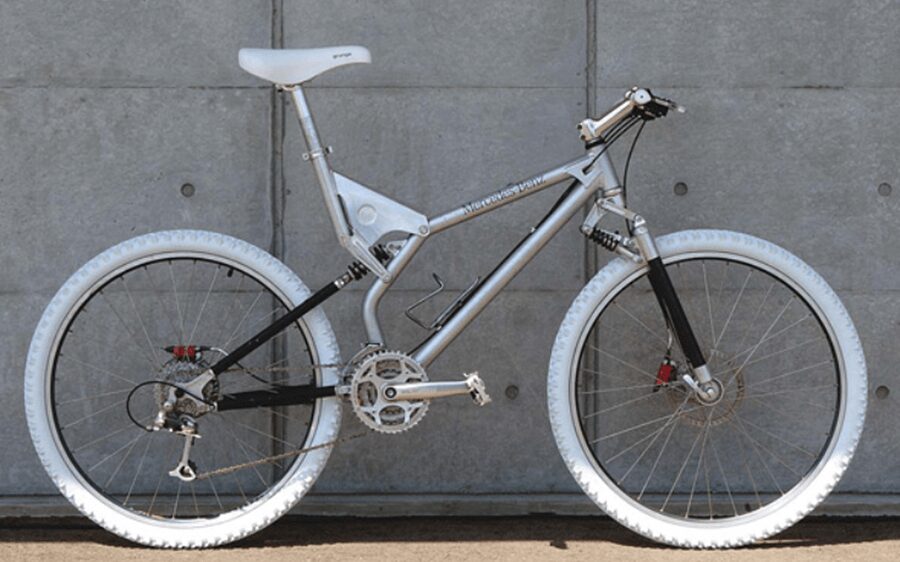
This is a rare 1998 AMP Research B5 — a limited collaboration between suspension pioneer AMP Research and Mercedes-Benz. It uses Horst Leitner’s Horst Link four-bar suspension design, the same patented system later licensed to Specialized’s FSR platform, along with an F4 carbon fiber fork and carbon seat stays — advanced materials for a mountain bike of this era. Restored by Vanguard Designs with a modernized drivetrain, brakes, and wheelset, it preserves the historically significant suspension and carbon components that make this build noteworthy for collectors.
The AMP Research-engineered 1998 Mercedes-Benz B5 represents a rare convergence of genuine innovation in automotive-bicycle collaborations, utilizing patented suspension technology and high-end componentry that transcended the typical marketing exercises and badge-engineering conventions common to such partnerships.
Horst Link Suspension Architecture and Patent Implementation
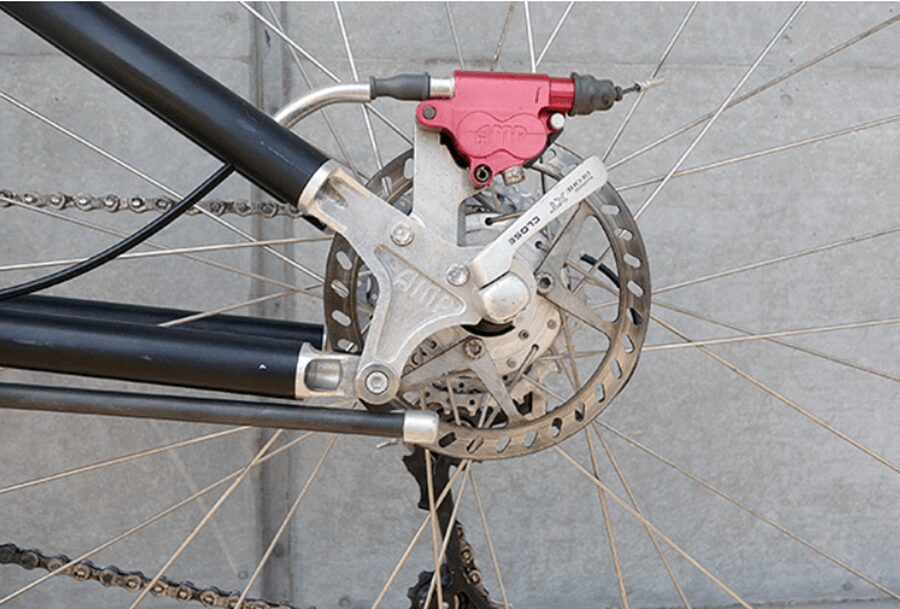
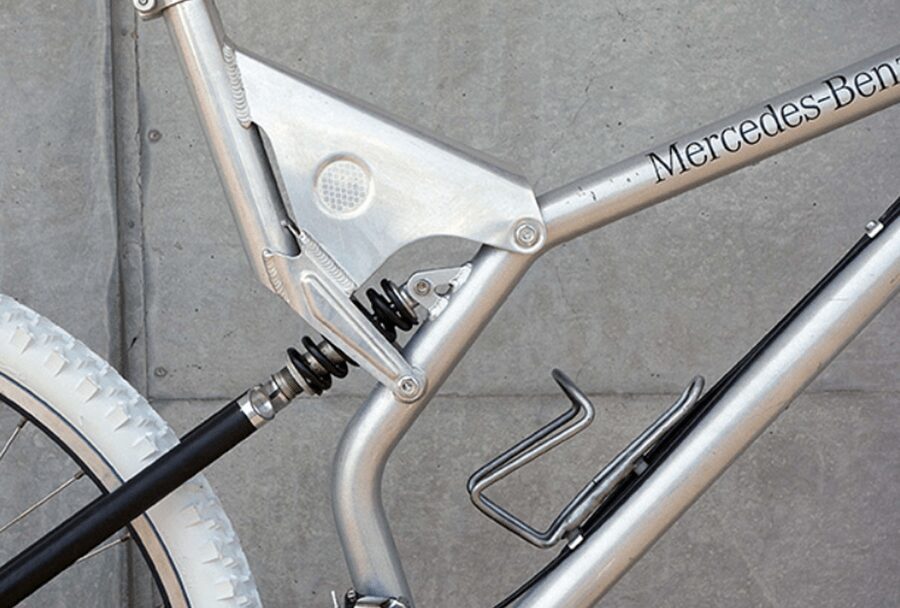
The AMP Research B5 utilizes Horst Leitner’s four-bar linkage system, with a pivot positioned between the chain stay and seat stay near the rear axle. This placement is the defining feature of the design: by isolating the rear triangle’s pivot from the drivetrain forces, the system reduces brake jack and helps the suspension continue moving freely even under braking, while maintaining more consistent chain tension through the travel range than simpler single-pivot designs of the era.
This licensed patent became the foundation for Specialized’s FSR platform, along with implementations at Mongoose, Rocky Mountain, and Univega — a testament to how significant Leitner’s design was to full-suspension mountain bike development in the 1990s. Mercedes-Benz’s decision to partner with AMP Research, rather than a conventional bicycle manufacturer, reflected a genuine commitment to engineering credibility over simple badge partnership.
Finish Line Wet Bicycle Chain Lube
F4 Carbon Fork and Stay Integration Technology
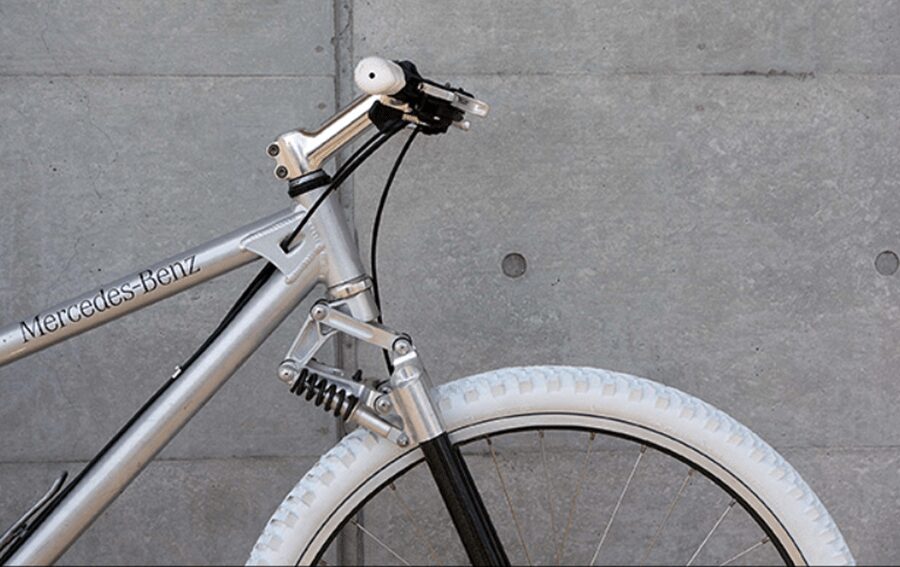
The original F4 carbon fiber fork pairs a bonded aluminum steerer tube with carbon fiber lower legs, using elastomer damping — standard technology for high-end suspension forks of the late 1990s, before air springs became the industry norm. The fork is sized for the 26-inch wheel standard that defined mountain biking at the time.
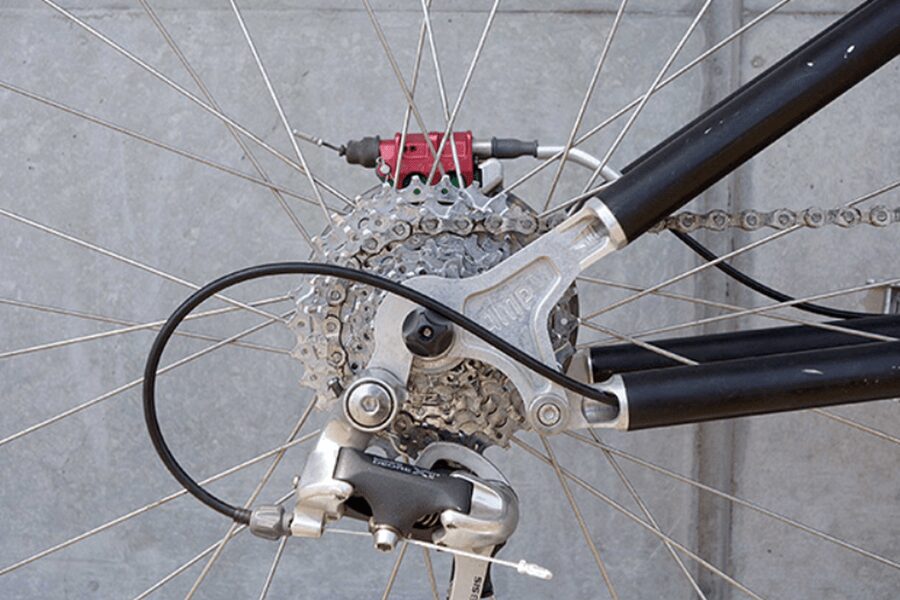
The carbon fiber seat stays were advanced for 1998, reflecting AMP Research’s broader push to bring aerospace-influenced composite construction into mountain bike suspension design. Pairing an aluminum main triangle with carbon stays was a deliberate approach to balance stiffness where it mattered (the front triangle and pivot junctions) with compliance through the rear end — a hybrid-material strategy few manufacturers were attempting at this level in the late ’90s.
Shimano B01S Resin Disc Brake Pads
Vanguard Restoration Specifications and Component Updates
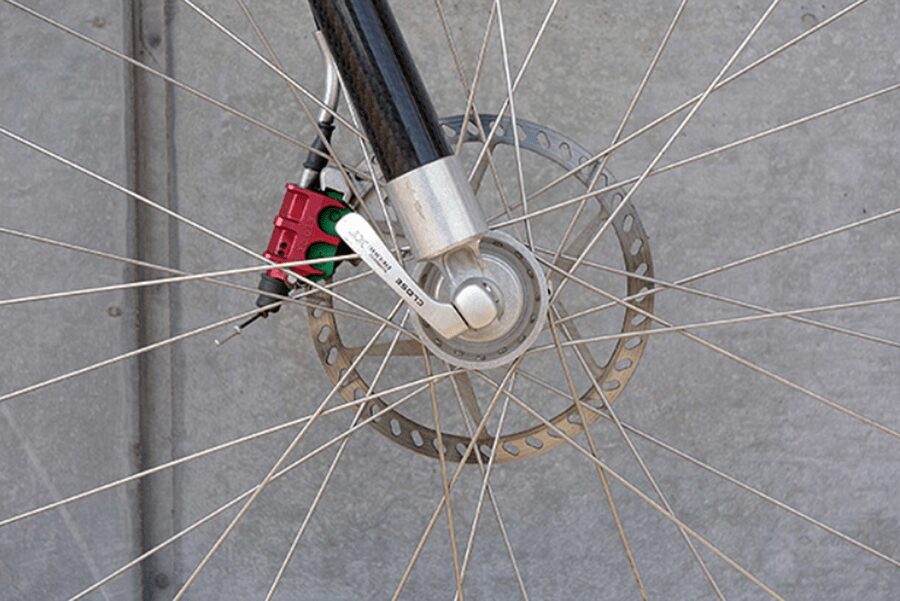
Vanguard Designs preserved the bike’s original suspension components and carbon elements — the fork and seat stays that define this build — while modernizing the drivetrain, brakes, and wheelset to improve everyday rideability. The restoration approach prioritized keeping the bike’s historically significant elements intact — the AMP Research suspension and carbon components that make this build noteworthy — while updating wear components for actual use rather than static display.
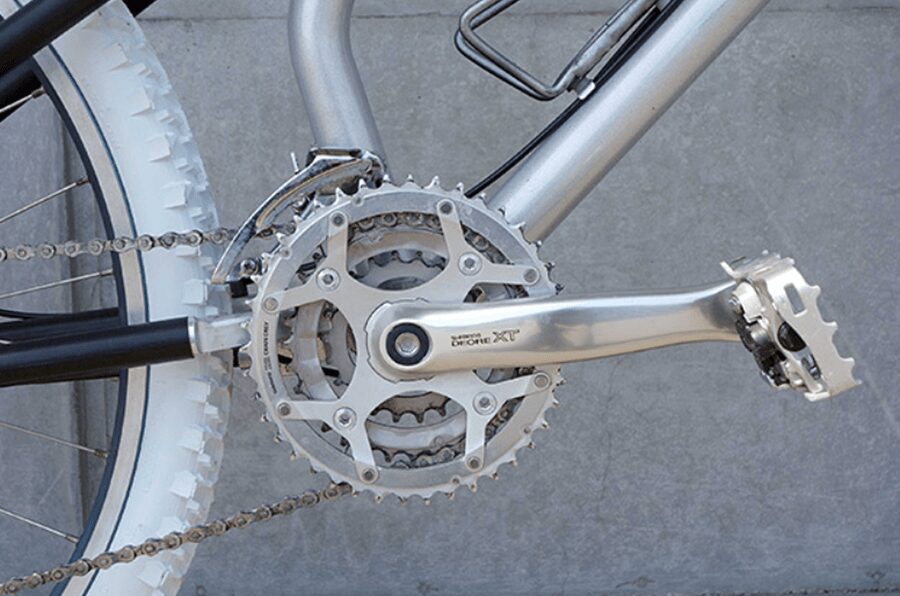
Frequently Asked Questions
What is AMP Research known for?
AMP Research, founded by Horst Leitner, pioneered the Horst Link four-bar suspension system — a design that became so influential it was later licensed to Specialized for their FSR platform, along with implementations at Mongoose, Rocky Mountain, and Univega.
What makes this a “Mercedes-Benz” mountain bike?
This is a rare 1998 AMP Research B5 built as a limited collaboration with Mercedes-Benz, reflecting a genuine engineering partnership rather than a simple badge exercise, given AMP Research’s reputation in suspension design at the time.
How does the Horst Link suspension design work?
The system places a pivot between the chainstay and seatstay near the rear axle, isolating it from drivetrain forces. This reduces brake jack and allows the suspension to continue moving more freely under braking compared to simpler single-pivot designs common in the 1990s.
What’s unique about this bike’s fork and frame materials?
The original F4 carbon fiber fork pairs a bonded aluminum steerer with carbon fiber lower legs and elastomer damping — standard technology for high-end suspension forks before air springs became the industry norm. The carbon fiber seat stays were advanced for 1998, part of AMP Research’s broader push toward aerospace-influenced composite construction.
What did the Vanguard Designs restoration include?
Vanguard Designs preserved the bike’s original suspension components and carbon elements — the fork and seat stays that define the build — while modernizing the drivetrain, brakes, and wheelset to improve everyday rideability.
James Hickman is a former USA Cycling Expert-level coach who has worked with cyclists at every level, from beginners to competitive racers. He served as a coach for the Leukemia & Lymphoma Society’s Team In Training program, helping riders prepare for and complete century events. A Masters-category racer himself, he competed and earned podium finishes in Southern California events and holds a Platinum finish at El Tour de Tucson, completing the 100 miles+ in under five hours.
Best Cycling Products
Park Tool CG-2.4 Chain Gang Cleaning System
Continental Gatorskin Bike Tire Set
Topeak Road Morph G Bike Pump
Cygolite Hypershot 250 Tail Light
Wahoo ELEMNT Bolt V2 GPS Computer
We are an Amazon affiliate and earn from qualified Amazon purchases with no cost to you. This is for ANY product that you purchase through our links. We are also an affiliate for Competitive Cyclist and JensonUSA. This way we can provide you with competitive pricing and products.
If you enjoyed learning about this week’s featured bicycle, don’t miss out on more classic bike goodness! Visit our website at classicjapanesebicycles.com for an extensive collection of timeless Japanese bikes and their unique stories. Plus, check out our YouTube channel, Bicycle Restoration Man, for detailed restoration videos and showcases of our finished projects. Subscribe and join our community of bike enthusiasts!